
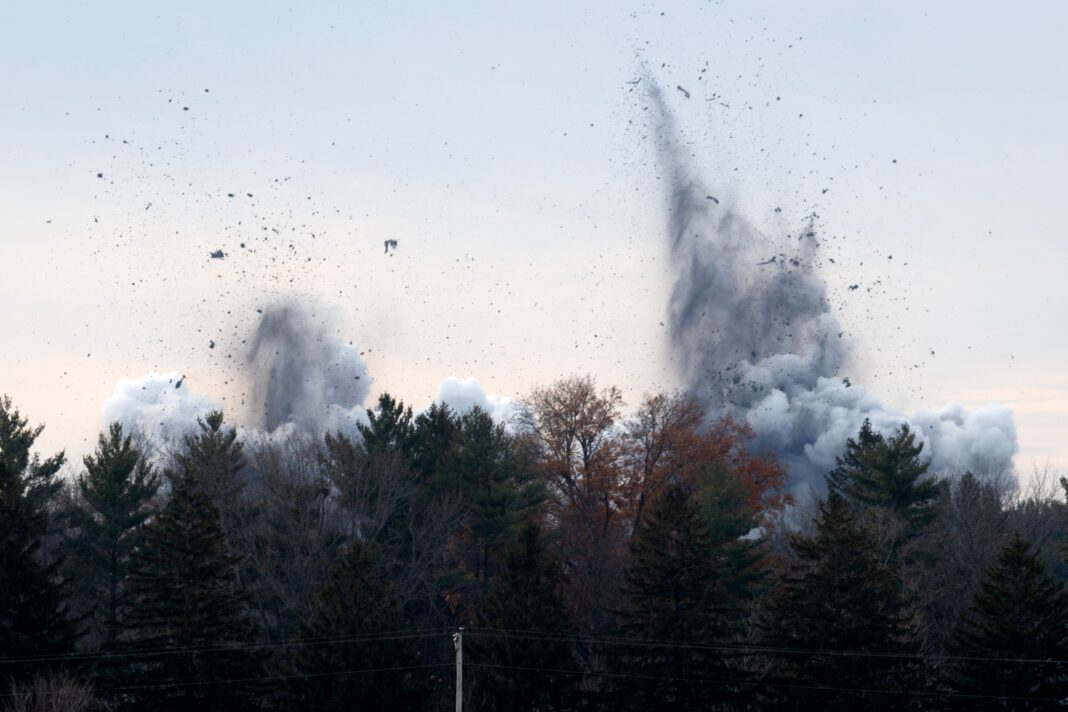
Early results from Iowa’s controlled lead detonation show minimal signs of environmental contamination. Officials caution that more rigorous testing will take days to complete.
The detonation was carried out as part of a planned operation, drawing attention from regulators and local residents. Initial readings suggest lead levels remain low near the blast site.
Monitoring teams have begun collecting soil, air, and water samples for laboratory analysis. These tests will provide a clearer picture of any potential spread.
Health officials say the early findings are encouraging but not conclusive. They emphasize that short-term readings cannot replace thorough scientific review.
The real work now shifts to sustained environmental monitoring. Experts will track lead particles over time to assess long-term risks.
Local authorities have not issued any evacuation or health advisories based on the initial data. They plan to share further results as they become available.
The incident highlights the challenges of managing hazardous materials during controlled detonations. Careful oversight and transparent reporting will be essential in the coming weeks.