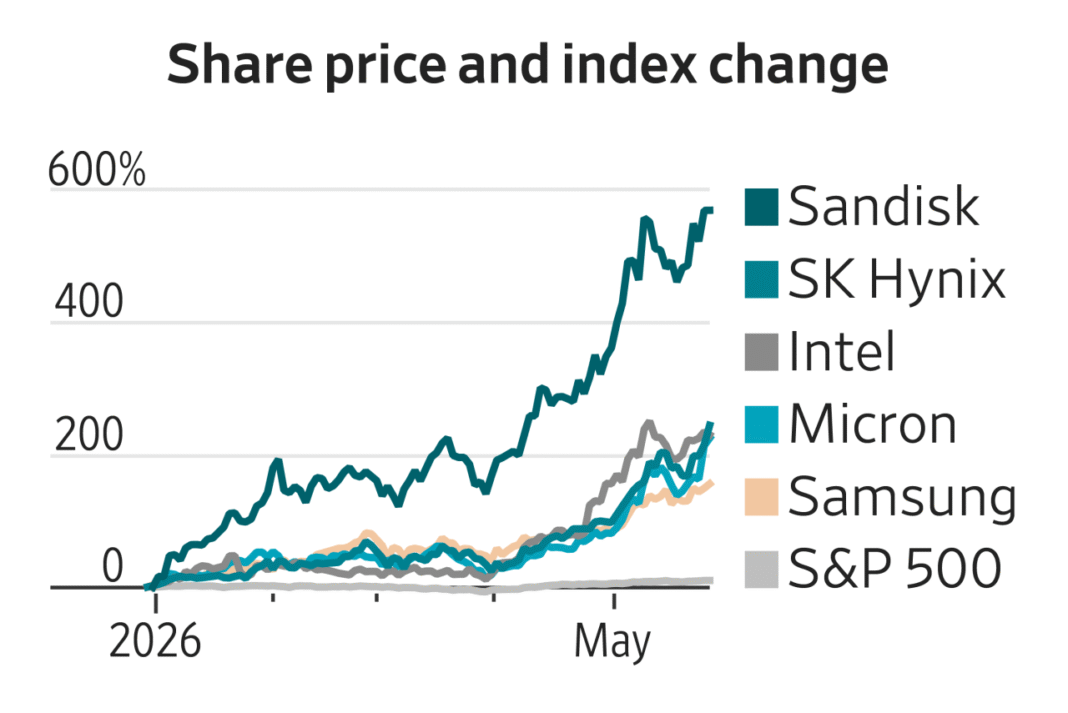
The global semiconductor sector has reached a combined market value of $5.7 trillion, driven by surging demand for chips used in artificial intelligence, data centers, and consumer electronics. The rally has lifted major stock indexes from a period of geopolitical uncertainty and economic slowdown.
Shares of leading chip manufacturers have recorded substantial gains over the past year. Companies like Nvidia, AMD, and Intel have seen their valuations climb sharply as AI applications require more powerful processors. This trend has also benefited equipment makers and materials suppliers.
Investors are questioning how long the rally can last. Some analysts point to historical patterns where semiconductor booms were followed by inventory gluts and price corrections. Others argue that the current demand cycle is structurally different due to long-term AI adoption.
The industry now plays a larger role in the broader market than ever before. Chip stocks account for a significant portion of gains in the S&P 500 and the Nasdaq. Their performance has become a key indicator for investor sentiment about technology and innovation.
Supply chain constraints remain a concern. While manufacturing capacity has expanded, geopolitical tensions and export controls continue to create uncertainty. These factors could limit production growth and affect future revenues.
Valuations are another point of debate. Price-to-earnings ratios for many chip stocks have risen to levels that some consider stretched. Earnings growth will need to keep pace to justify current prices, according to market observers.
The rally has also drawn attention to smaller chip companies. Firms specializing in memory chips, analog components, and automotive semiconductors have joined the upward trend. Their gains reflect broader demand across multiple industries.
Regulatory environments in key markets like the United States, China, and Europe will be crucial. Government investments in domestic chip production aim to reduce reliance on foreign suppliers. These policies could reshape competitive dynamics over time.
The near-term outlook remains positive for chip makers, but risks are mounting. Investors should monitor earnings reports, supply chain developments, and macroeconomic conditions. The current run may have further room to grow, but caution is warranted.