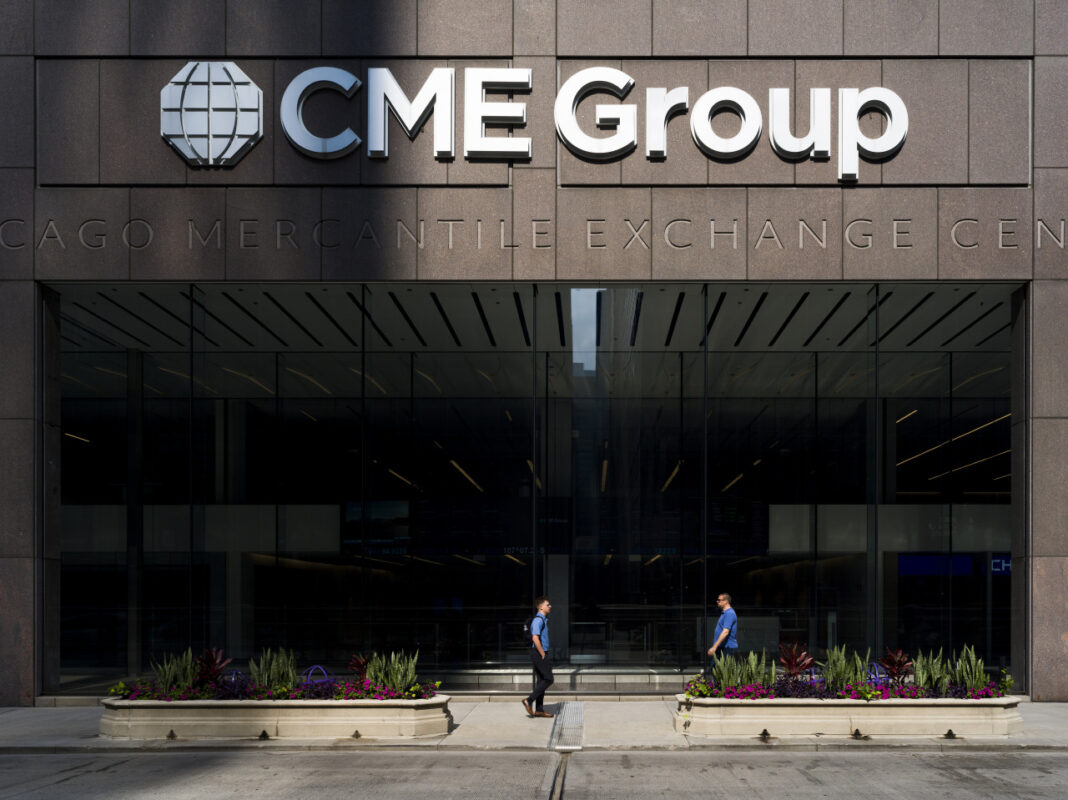
CME Group has filed a lawsuit against the Commodity Futures Trading Commission to block Kalshi from offering perpetual futures, known as “perps,” in the United States.
The CFTC recently approved Kalshi’s plan to list these popular products. CME, the dominant derivatives exchange, argues the regulator violated federal law by granting that approval.
CME contends the CFTC overstepped its authority by allowing a smaller exchange to compete directly with its own offerings. The lawsuit claims the decision undermines established market safeguards.
Perpetual futures are a type of derivatives contract without an expiration date. They have become widely used in cryptocurrency markets for speculative trading.
Kalshi, a retail-focused prediction market platform, received regulatory clearance to list perps on products tied to economic and political events. The company has positioned itself as a disruptor in regulated derivatives.
The CFTC has not yet formally responded to the lawsuit. Market observers expect the case to test the agency’s discretion in approving novel financial instruments.
The legal challenge may delay Kalshi’s rollout of perp contracts in the U.S. market. The outcome could reshape how retail traders access these derivatives.
CME’s move signals growing friction between established exchanges and newer platforms seeking to expand into regulated spaces. The case highlights tensions around innovation versus market stability.