
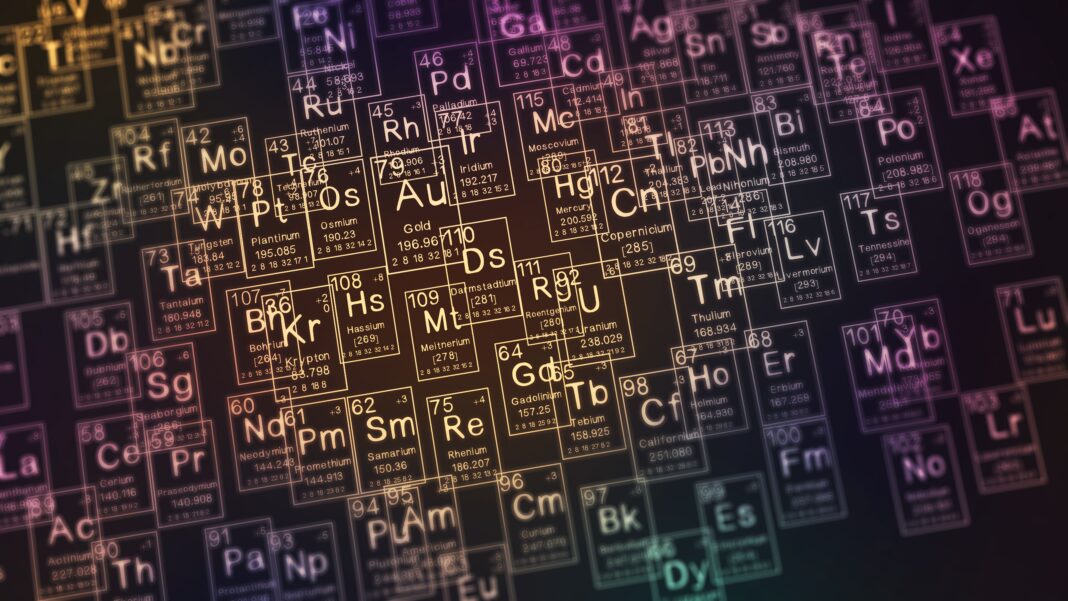
Physicists are exploring whether dark matter follows complex rules similar to ordinary chemistry. A new study suggests these invisible particles may form their own periodic table. The idea remains theoretical but could reshape how scientists view the universe.
Dark matter makes up most of the mass in the cosmos yet emits no light. Its true nature has puzzled researchers for decades. The new work proposes that dark matter may interact through hidden forces.
These interactions could allow dark matter particles to bind together into varied structures. That process would mirror how atoms combine in the visible world. Researchers describe it as a parallel chemistry governed by unknown rules.
The study builds on existing models of particle physics. It tests whether dark matter could have a rich internal structure rather than being simple and inert. Such complexity would open new paths for detection.
Scientists would need to rethink how they organize the fundamental components of the universe. A dark periodic table would sit alongside the known one. The comparison helps explain the proposal to general audiences.
No experiment has yet confirmed these ideas. The research stays within theoretical physics for now. Observational evidence remains the next crucial step.
The findings could guide future searches for dark matter signals. Researchers hope to identify subtle effects that reveal hidden interactions. For now, the parallel chemistry remains a compelling hypothesis.