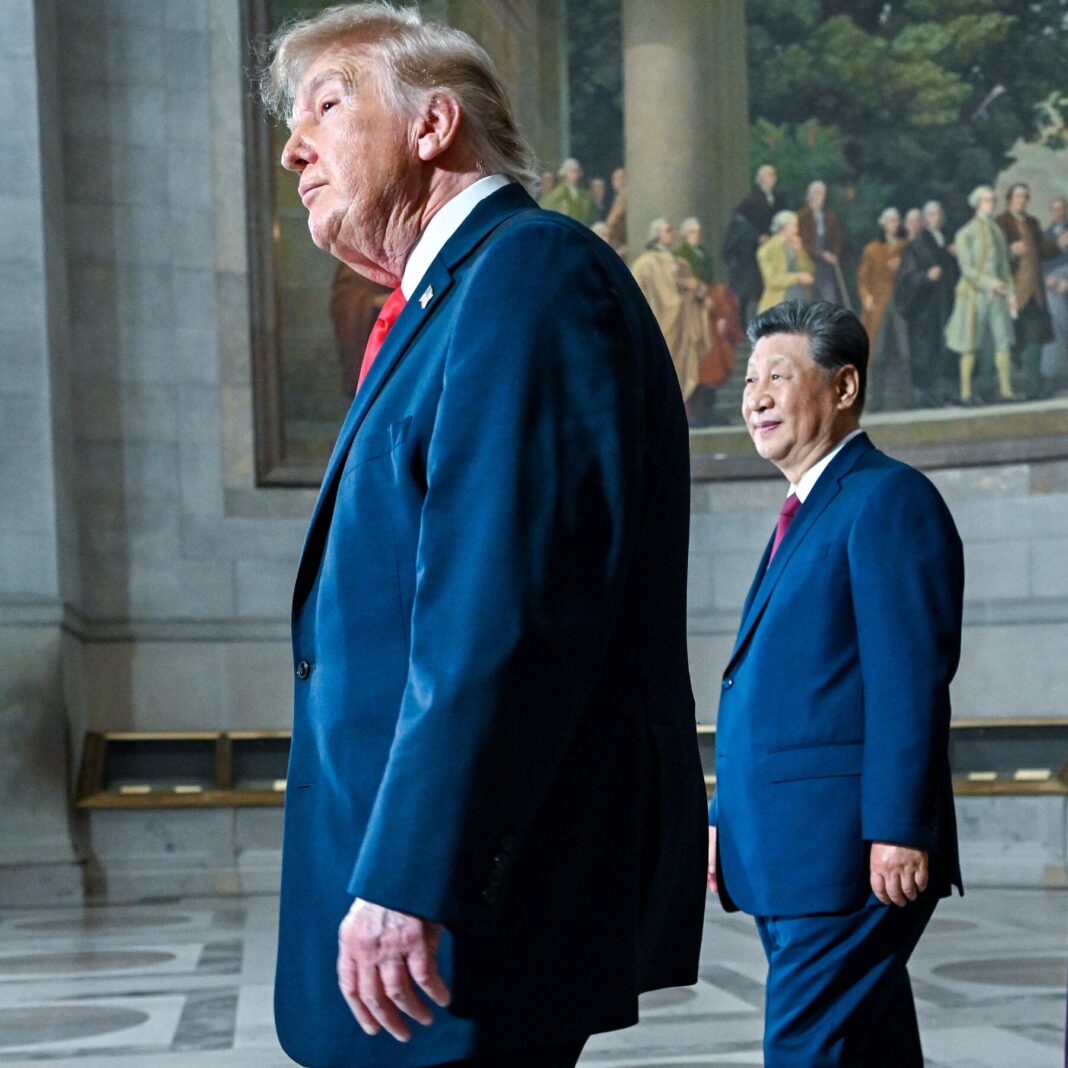
President Trump’s recent remarks on China have unsettled prominent critics in Washington. His comments appeared to soften years of confrontational rhetoric toward Beijing.
The shift comes as hard-liners push for tougher restrictions on Chinese technology. Many view the competition for artificial intelligence as a decisive, zero-sum race.
Trump’s meeting with Chinese President Xi Jinping signaled a willingness to engage directly. The gesture drew sharp criticism from lawmakers who favor a more aggressive stance.
Nvidia CEO Jensen Huang has also drawn attention for his public comments on China policy. His company’s chips sit at the center of the U.S.-China tech rivalry.
Huang has argued that overly strict export controls could backfire. He contends such limits may accelerate China’s push to build its own chip industry.
Critics in Washington warn that easing pressure on Beijing risks handing over strategic advantages. They say A.I. leadership is now the defining contest between the two powers.
The debate exposes a widening divide over how to handle China’s rise. Some favor engagement and negotiation; others call for firm deterrence and isolation.
Trump’s stance has intensified that disagreement within his own party. The coming months will test whether his approach reshapes U.S. policy toward China.