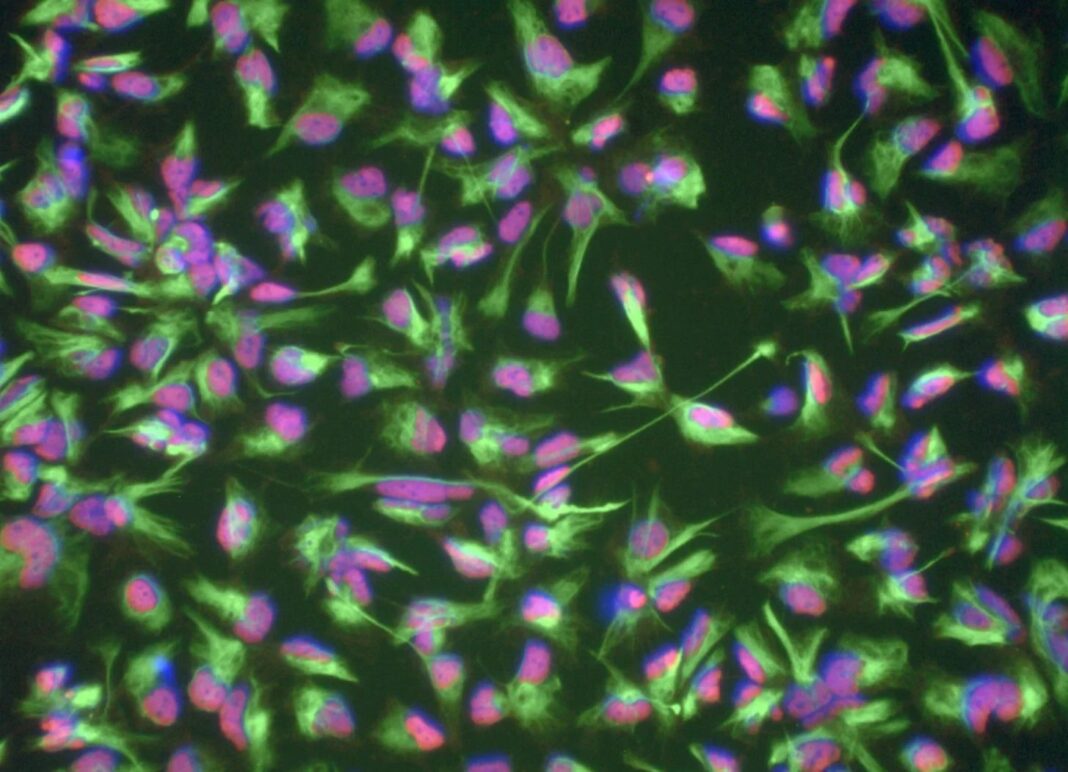
Scientists in Germany have developed a method to gradually reverse the biological age of human cells by decades. The approach allows researchers to observe de-aging as it unfolds, a step earlier experiments could not achieve. The work sets a new benchmark for studying cellular rejuvenation.
Previous rejuvenation studies typically pushed cells backward in a single, abrupt step. That rapid reset made it difficult to follow what changed along the way. The German team instead slowed the process, turning back the cells’ clocks in controlled stages.
The gradual method gave researchers a continuous view of the transition. They could monitor molecular changes at each stage rather than only comparing start and end points. This produced a detailed timeline of how cells shed age-related traits.
Cells carry chemical marks that record biological age, often called epigenetic clocks. Reprogramming factors can reset these marks, but fast resets can blur the sequence of events. Slowing the process preserved that sequence for closer study.
The researchers reported that cells regained youthful characteristics without losing their original identity. The stepwise approach appears to reduce the disruption seen in faster reprogramming methods. That distinction matters for eventual medical applications.
The findings offer a reference point for future de-aging research. Scientists can now compare new rejuvenation techniques against a tracked, gradual standard. The benchmark may help separate genuine rejuvenation from temporary stress responses.
Questions remain about whether the effect holds in living tissues and whole organisms. Most of the work so far has focused on cells in laboratory conditions. Translating the results into therapies will require further testing.
The study adds precision to a fast-moving field. By showing how cells age in reverse, step by step, it gives researchers a clearer map of the process. That map could guide safer and more effective anti-aging treatments.