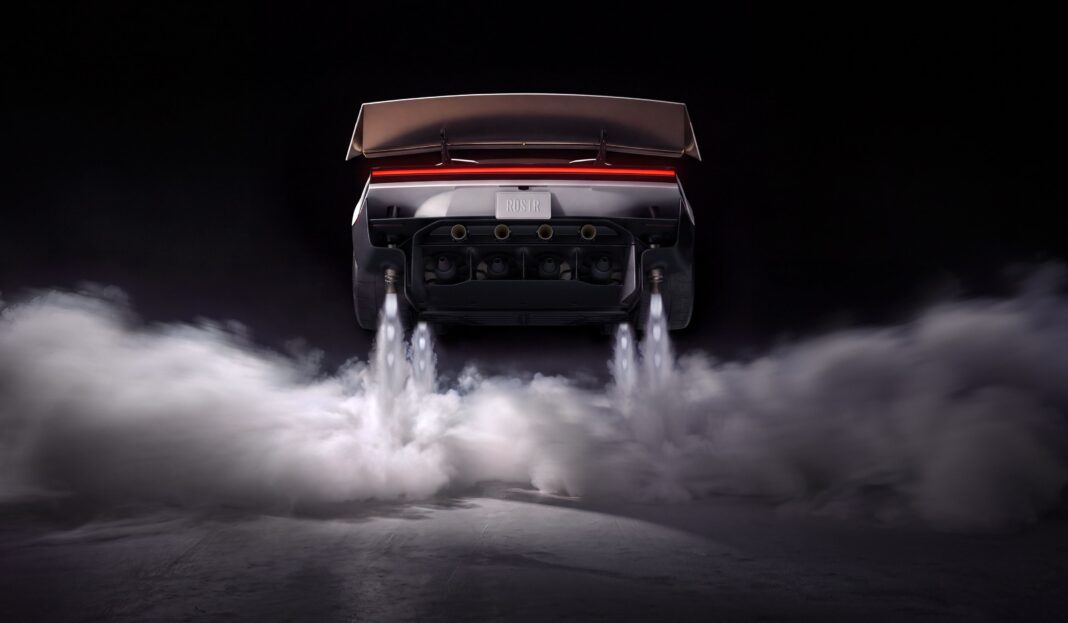
Tesla’s new Roadster 2 can reach speeds over 230 mph. The company achieved this through a radical redesign of aerodynamics. The car essentially sucks itself to the road at high speeds.
Traditional sports cars rely on wings and spoilers to create downforce. These add drag, which limits top speed and efficiency. Tesla took a different approach with the Roadster 2.
The vehicle uses a system of fans and ducts to manage airflow underneath the chassis. This creates a low-pressure zone beneath the car. The result is strong downforce without the drag penalty of large wings.
Battery placement and a flat underbody also play key roles. The heavy battery pack sits low, lowering the center of gravity. Air flows smoothly under the car, reducing turbulence.
Active suspension adjusts ride height in real time. At speed, the car hovers just millimeters above the road. This maximizes the ground effect that keeps it stable.
The powertrain delivers instant torque to all four wheels. Each wheel can be controlled independently for better grip. This helps the car put its power down without spinning out.
Cooling remains a major challenge at 230 mph. Tesla redesigned the front end to channel air to radiators and brakes. Heat management is critical for sustained high-speed runs.
The Roadster 2 is not just about straight-line speed. It combines aerodynamic tricks with electric torque and smart software. Tesla has effectively made a car that flies while staying glued to the ground.