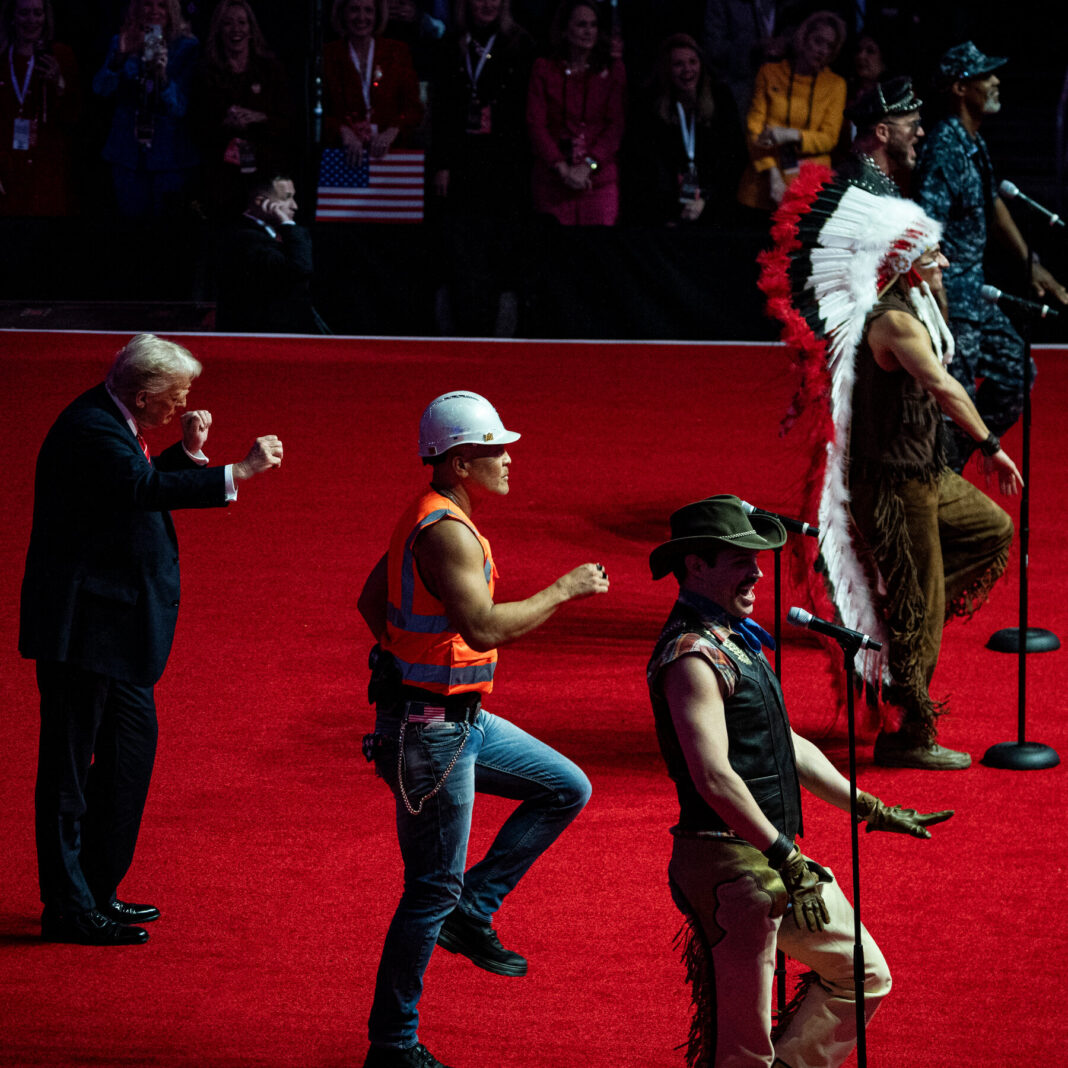
President Donald Trump has repeatedly embraced the Village People’s disco hit “Y.M.C.A.” as a campaign and rally anthem, but the relationship between the president and the band is far from straightforward.
The song, originally released in 1978, became a staple at Trump’s political events during his 2020 campaign and continued into his 2024 run. The president frequently dances to the track, and his campaign uses it as a celebratory finale.
Trump claimed on social media that Victor Willis, the lead singer of the Village People, was with him “right from the beginning.” Willis, however, has expressed mixed feelings about the association.
In 2020, Willis sent a cease-and-desist letter to the Trump campaign, objecting to the use of the song. He later reversed his stance, saying he did not want to deny the campaign the right to play the music.
Willis has stated that while he does not endorse Trump, he also does not believe he has the legal authority to stop the campaign from using the song. He has acknowledged that the track has taken on a new life as a political anthem.
The song’s lyrics refer to the Young Men’s Christian Association, a nonprofit organization. Trump’s use of it has been linked to his supporters’ enthusiastic participation in a dance move that mimics the letters of the song’s title.
The Village People themselves have had a complicated relationship with Trump. The group’s original members have publicly stated they do not support the president, while Willis has attempted to navigate the situation diplomatically.
Despite the tension, the track has become a defining element of Trump’s public events. It generates a strong reaction from both supporters and critics, highlighting the song’s enduring cultural impact.
The controversy shows how a song created in a different era can be repurposed for modern political messaging. It also illustrates the challenges artists face when their work becomes tied to political figures.
Ultimately, the association between Trump and “Y.M.C.A.” remains a unique example of music intersecting with political identity, despite the creators’ initial resistance.