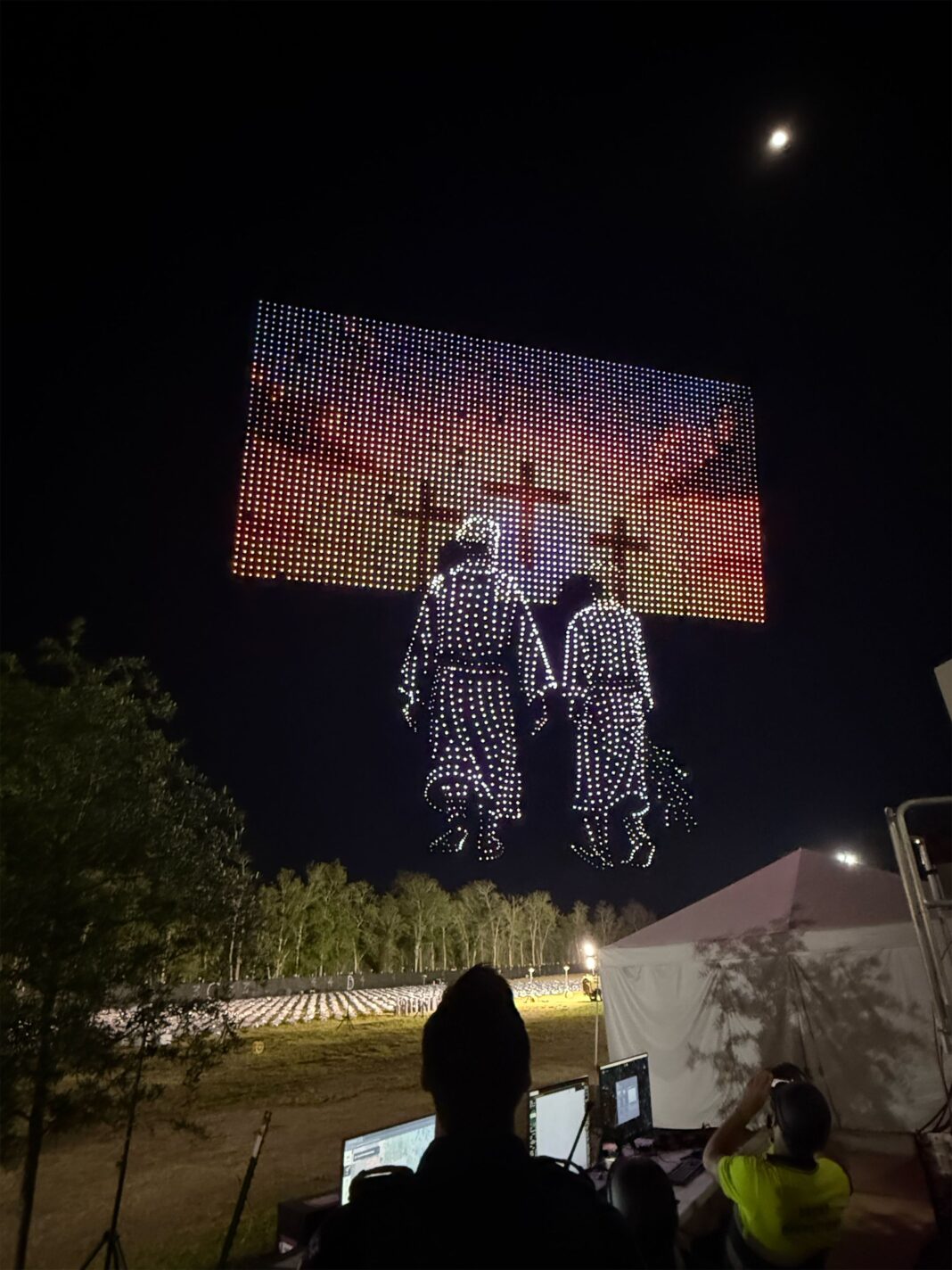
Drones swarm over Texas fields, replacing fireworks with programmable light. A recent spectacle in the Lone Star State showcased thousands of synchronized drones forming intricate patterns in the night sky. The event drew crowds seeking more than entertainment.
The technology behind these displays has advanced rapidly. Companies now deploy fleets of drones that communicate in real-time, creating images ranging from simple shapes to complex animations. The precision required rivals military operations.
For some attendees, the experience transcends spectacle. Organizers note a growing emotional response from audiences, with many describing the shows as spiritual. The coordinated lights against a dark backdrop evoke awe similar to religious gatherings.
Critics question the environmental and noise impacts compared to traditional fireworks. Drone shows produce less pollution and can be quieter, but the energy consumption for charging thousands of batteries remains a concern. The industry is addressing these issues through improved efficiency.
The commercial potential drives rapid adoption. Event planners, theme parks, and cities are replacing fireworks with drone displays for celebrations. Costs are dropping as the technology becomes more accessible, opening new markets.
Regulatory challenges persist. Airspace approvals and safety protocols require coordination with local authorities. The Federal Aviation Administration provides guidelines, but each event demands specific permissions and risk assessments.
The cultural shift may have lasting effects. Drone shows offer a modern ritual that blends technology and community. Whether they will replace fireworks permanently remains uncertain, but their impact on public gatherings is already clear.