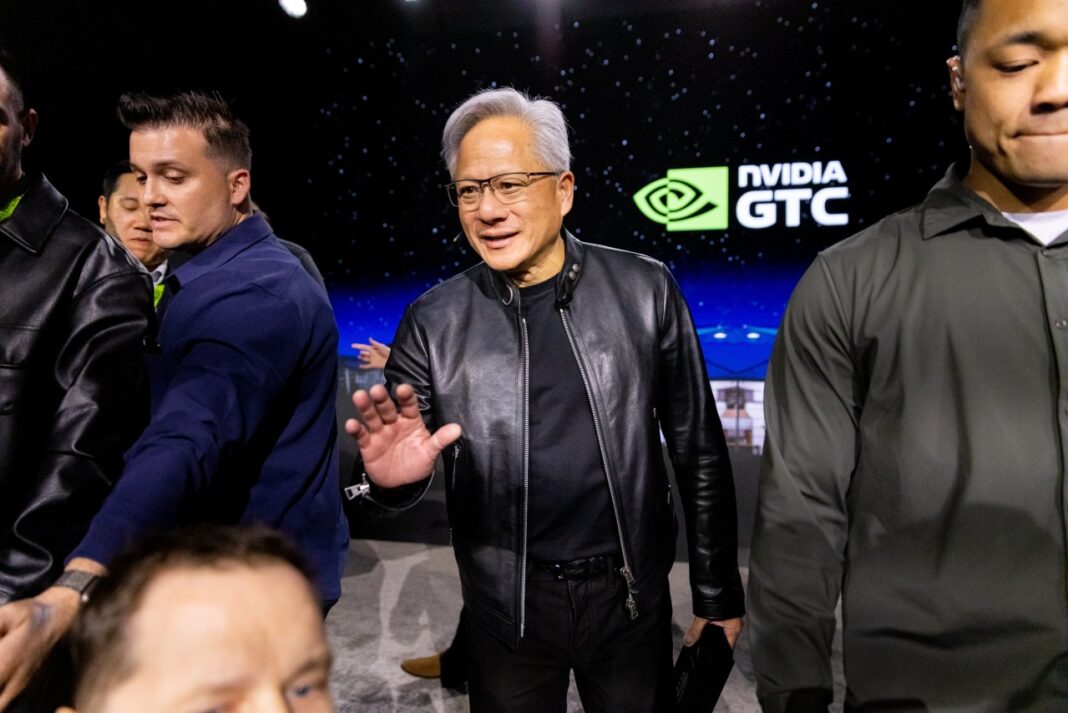
Investors are pushing Nvidia for clearer answers as the company’s role in the AI economy faces new scrutiny. The chip maker became a Wall Street favorite by supplying critical hardware for artificial intelligence systems. Now shareholders want evidence that its semiconductors, rather than CEO Jensen Huang, are the true source of its indispensability.
Nvidia’s rise has been fueled by soaring demand for its AI chips, which power data centers and advanced computing tasks. That success made the company a bellwether for the broader AI trade. But the stock’s dramatic run has raised expectations for detailed proof of durable competitive advantage.
Questions are mounting over whether Nvidia’s hardware leadership can hold as rivals and customers develop their own chips. Investors are looking for concrete technical and financial metrics, not just executive vision. The company’s next earnings report and public comments will face close reading.
The pressure reflects a broader shift in how markets value AI companies. Early enthusiasm has given way to demands for measurable results and transparent roadmaps. Nvidia must show that its chip architecture and software ecosystem create lasting barriers to entry.
Jensen Huang has been a prominent voice for the AI boom, but his personal profile alone cannot sustain investor confidence. Shareholders want to see product performance, customer commitments, and supply chain resilience. Those factors will determine whether Nvidia keeps its premium valuation.
Competition is intensifying from established chip makers and new entrants backed by major technology firms. Some large customers are designing custom silicon to reduce reliance on Nvidia. The company’s response will be a key test of its technical depth and business model.
Nvidia’s ability to prove its semiconductors are the core of its advantage will shape its next chapter. Clear disclosure on chip capabilities, adoption, and long-term demand will be essential. Investors are no longer satisfied with narrative; they want verifiable proof.