
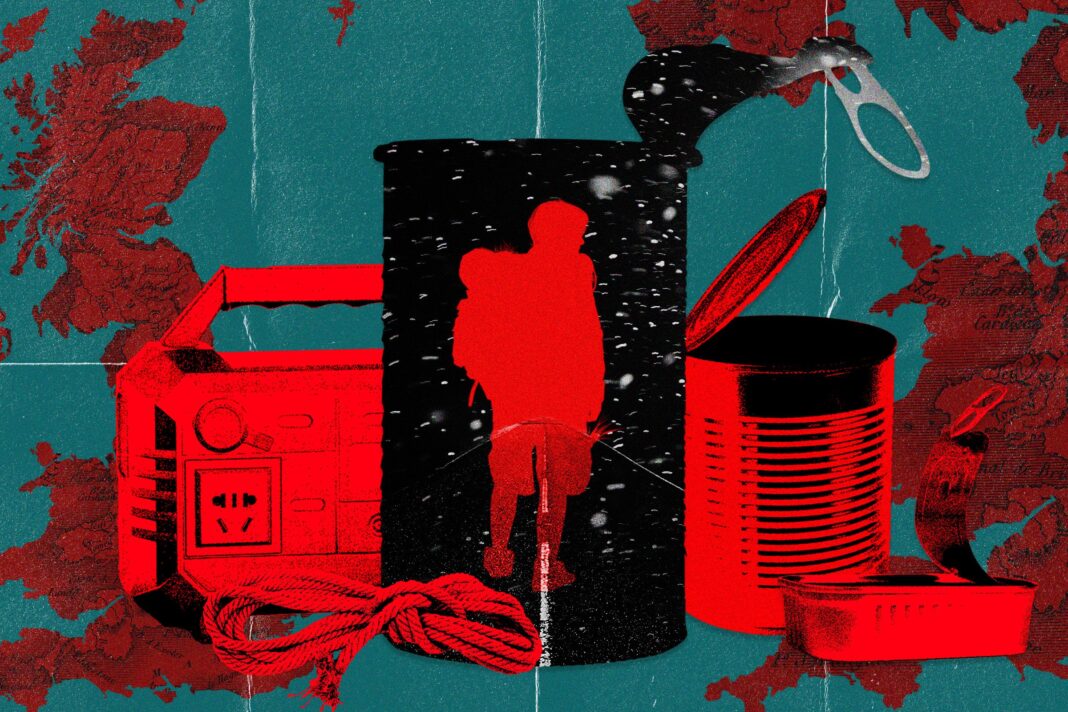
UK preppers are watching their cause go mainstream. The government now warns people to stockpile supplies for extreme weather events. Cyber attacks also continue to cripple critical infrastructure across Europe.
The shift marks a turning point for a community long seen as fringe. Official guidance now echoes advice preppers have shared for years. Stockpiling food, water, and power backups has moved into the mainstream.
Emergency planners point to a growing list of threats. Floods, storms, and grid failures rank among the most likely disruptions. Digital attacks on power and water systems add a newer concern.
The term normalcy bias describes a common human tendency. People underestimate the risk of disasters and assume daily life will continue. Preppers argue this mindset leaves households unprepared when systems fail.
Government campaigns now encourage basic readiness steps. These include keeping several days of supplies and planning for communication outages. The advice stops short of urging full-scale survivalist preparation.
UK preppers describe a mix of vindication and concern. Many say the mainstream shift validates years of warnings. Others worry that public interest will fade once immediate threats pass.
Retailers report rising demand for storage gear and emergency kits. Community groups are also sharing checklists and local contacts. The focus is on practical steps rather than extreme scenarios.
Analysts say the trend reflects wider anxiety about fragile systems. Climate change and cyber risk make disruptions more likely, not less. Preparedness is increasingly framed as routine household planning.