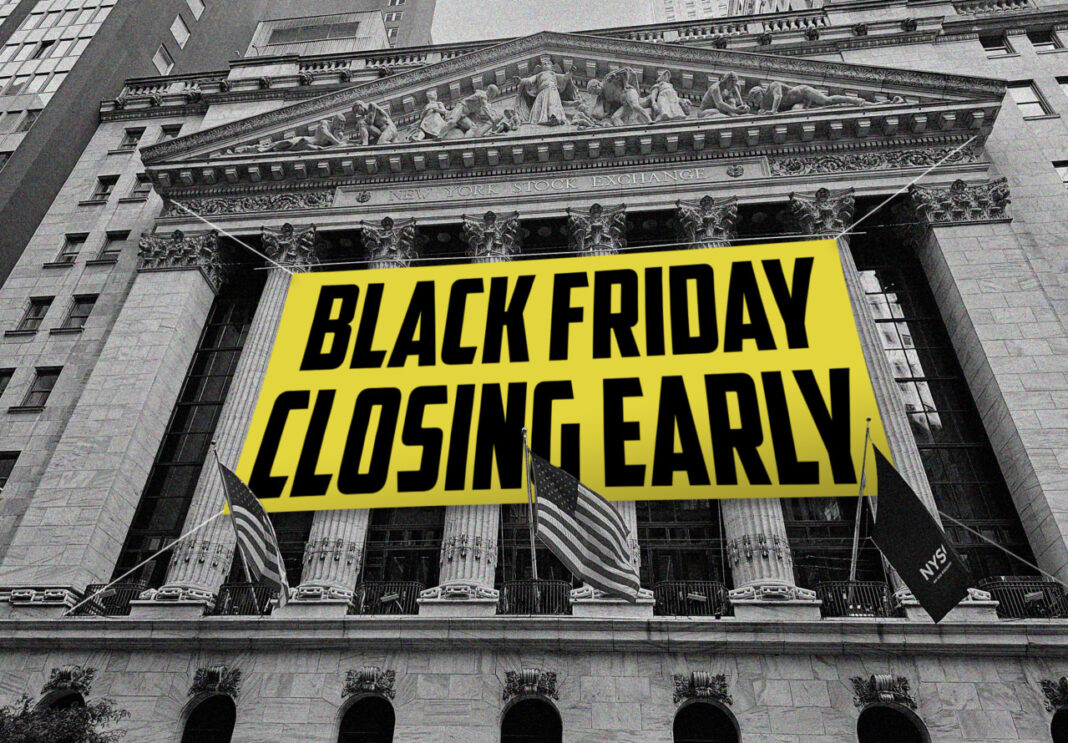
The U.S. stock market will operate on a shortened schedule on Black Friday, the day after Thanksgiving. Major exchanges close early, though they do not shut down entirely for the holiday.
The New York Stock Exchange and Nasdaq will close at 1 p.m. Eastern time. That is three hours earlier than the usual 4 p.m. closing bell. Bond markets follow a similar abbreviated timeline.
The early close applies to equities, options, and most exchange-traded products. Regular trading hours begin at 9:30 a.m. Eastern as usual. The compressed session gives traders less time to react to news.
Black Friday is not a federal holiday, so markets remain open in a limited capacity. The shortened day has become a standard part of the annual trading calendar. Volume on Wall Street tends to be lighter during the session.
Many institutional investors and traders take the day off after Thanksgiving. Thin staffing can lead to wider price swings and reduced liquidity. Retail investors should expect quieter-than-normal conditions.
The early closure also affects settlement and order processing timelines. Trades made on Black Friday still settle on the standard schedule. Investors planning transactions should confirm cutoff times with their brokers.
Markets will resume a full schedule the following Monday. The next major holiday closure comes in late December for Christmas. Investors should plan around the abbreviated trading day accordingly.