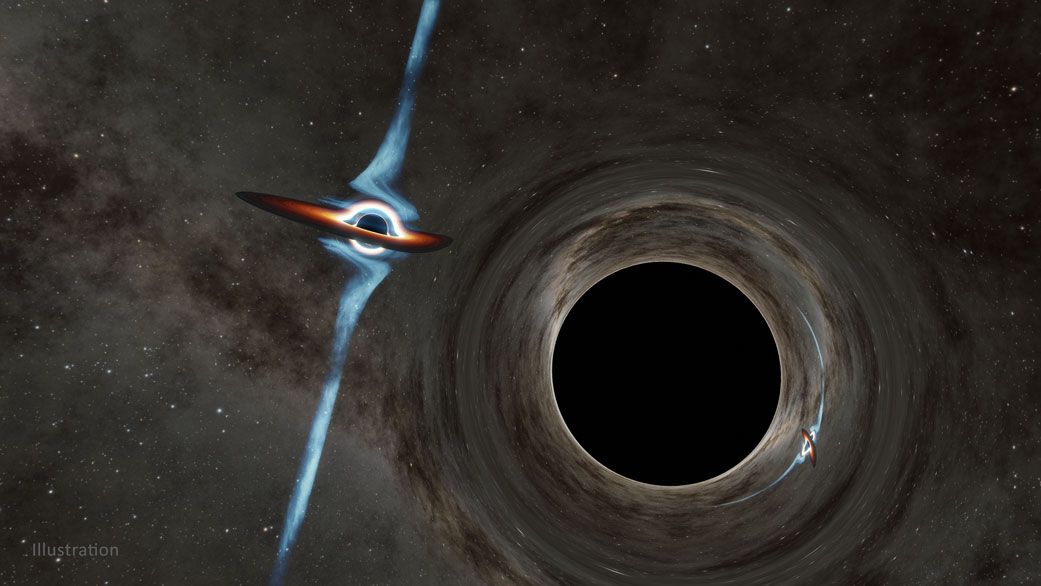
Astronomers have long puzzled over black holes that defy conventional explanation. These objects are too massive to have formed from a single dying star, yet not large enough to qualify as supermassive black holes. For years, their origins remained a mystery.
New research now provides the first solid evidence for how these “impossible” black holes came to exist. Scientists believe they formed through the rapid mergers of smaller black holes in dense star clusters. This process allows black holes to grow to intermediate sizes over cosmic time.
The findings address a significant gap in astrophysics. Previously, black holes were neatly divided into stellar-mass and supermassive categories. The existence of intermediate-mass black holes, with masses between a hundred and a million suns, seemed to contradict known formation pathways.
Data from gravitational wave observatories played a key role in the breakthrough. These instruments detected ripples in spacetime caused by collisions between black holes. Analysis of these signals revealed patterns consistent with growth through repeated mergers.
Computer simulations confirmed the theory. Models showed that black holes in crowded environments can merge multiple times, steadily increasing in mass. This happens faster in early galaxies where star clusters were denser and more chaotic.
The discovery changes how scientists understand black hole evolution. It suggests that many black holes once considered outliers are actually common products of galactic environments. The universe may be full of these intermediate black holes waiting to be detected.
Future observations will test these findings further. Next-generation gravitational wave observatories and improved telescopes should identify more examples. For now, the study offers a clear answer to a long-standing cosmic puzzle.