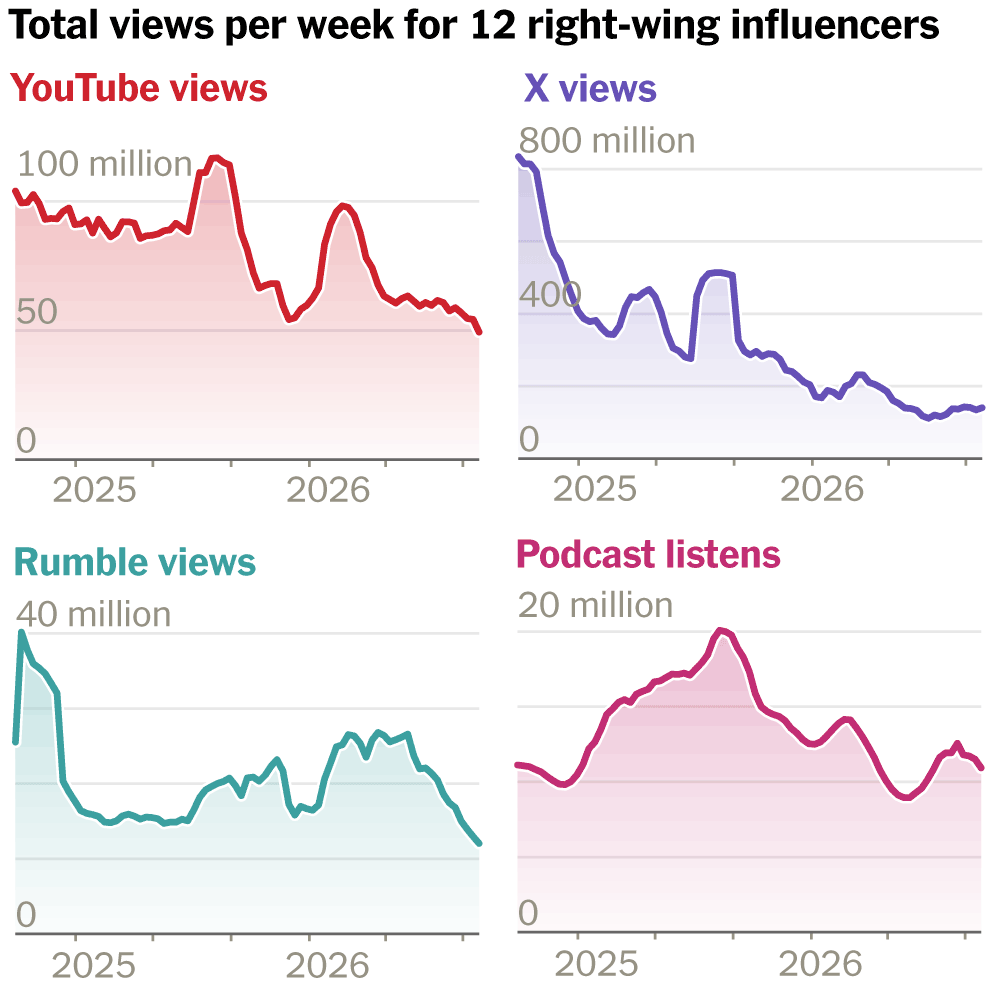
The pro-Trump media ecosystem, once a unified force behind President Trump, is now fractured by internal disputes and declining audiences. This splintering poses a significant challenge for Republicans as they prepare for the midterm elections. Key right-wing influencers are increasingly turning their fire on each other instead of on Democratic opponents.
The fragmentation stems from a mix of personal rivalries, strategic disagreements, and shifting viewer preferences. Several prominent hosts and online personalities have engaged in public spats over messaging and endorsements. These feuds have spilled onto social media, distracting from unified political goals.
Data shows a noticeable drop in viewership and engagement across several major conservative platforms. Audiences appear fatigued by the constant infighting and are seeking alternative sources of information. This decline is particularly acute among younger demographics, who are drifting toward newer, more independent voices.
Republican strategists worry this discord will depress turnout among the party’s base. A divided media landscape means less coherent messaging on key issues like the economy and foreign policy. Without a single, dominant narrative, mobilizing voters becomes a more complex task.
The situation is further complicated by the rise of new media startups that reject traditional party lines. These outlets are gaining traction by criticizing both Democrats and establishment Republicans. Their success highlights a growing appetite for content that challenges the status quo from all angles.
Some established figures are attempting to broker peace, urging rivals to focus on shared goals. However, these efforts have yielded limited results, as personal grievances often take precedence over political unity. The lack of a central authority to enforce discipline has allowed the chaos to persist.
For the GOP, the timing could not be worse, with critical primaries and general elections on the horizon. A fragmented media environment reduces the efficiency of campaign advertising and get-out-the-vote efforts. Candidates are now forced to navigate a crowded and hostile information space to reach potential supporters.
Analysts suggest the splintering reflects broader ideological tensions within the conservative movement itself. Debates over trade, foreign intervention, and cultural issues continue to divide the coalition. These underlying conflicts are now playing out publicly through media proxies.
Whether the ecosystem can reunite before the elections remains an open question. The current trajectory suggests continued volatility and further audience erosion. Republicans may need to adapt their strategies to a media landscape that is no longer a reliable megaphone for the party’s agenda.