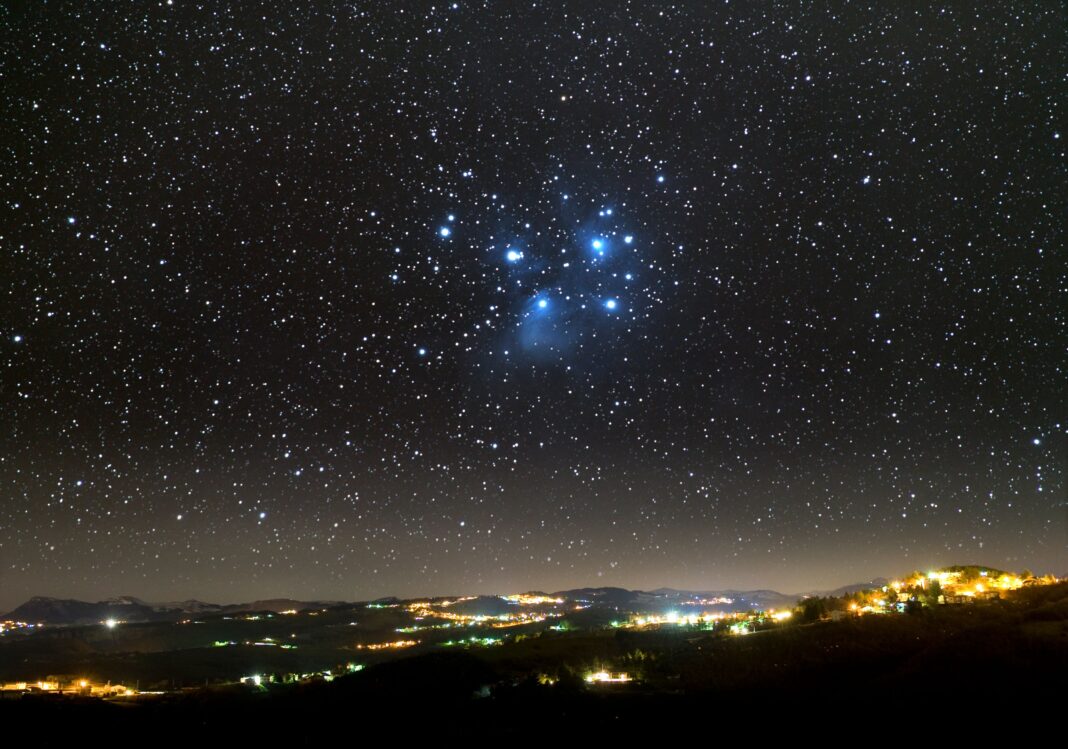
September opens with a rare celestial alignment known as the Diamond Moon. This event occurs when a bright planet sits close to a full moon, creating a striking visual contrast. Venus will appear as a brilliant point of light near the lunar edge.
Early September offers prime viewing for planetary enthusiasts. Saturn reaches opposition on September 11, placing it directly opposite the sun in the sky. This positioning makes the ringed planet visible all night and at its maximum brightness.
The autumn equinox arrives on September 22, marking the official start of fall in the Northern Hemisphere. This date brings nearly equal hours of daylight and darkness. Astronomers often use this period to observe seasonal shifts in star patterns.
A partial lunar eclipse will darken part of the moon’s surface on September 18. Observers in Europe, Africa, and Asia will get the best views of this event. The eclipse begins in the late evening hours and lasts for roughly two hours.
September also delivers a reliable meteor shower known as the Aurigids. This shower peaks on September 1, producing about six meteors per hour under clear skies. The display is modest but steady.
Jupiter continues to dominate the morning sky throughout the month. A small telescope will reveal its four largest moons shifting positions nightly. This provides an easy entry point for beginners learning to track planetary motion.
Mercury makes a brief appearance in the evening twilight around September 20. This fleet planet stays low on the horizon, so viewers should seek an unobstructed view to the west. Binoculars can help spot it before it sets.
Night sky observers should also watch for the zodiacal light after the new moon on September 8. This faint, pyramid-shaped glow appears in the east before dawn. It results from sunlight scattering off interplanetary dust particles.
Clear skies and minimal moonlight will create favorable conditions for deep-sky observation in the second half of September. Star clusters, nebulae, and distant galaxies become more accessible without lunar interference.
Mark the dates now and prepare your equipment. September offers a packed schedule of events that rewards both casual stargazers and seasoned astronomers.