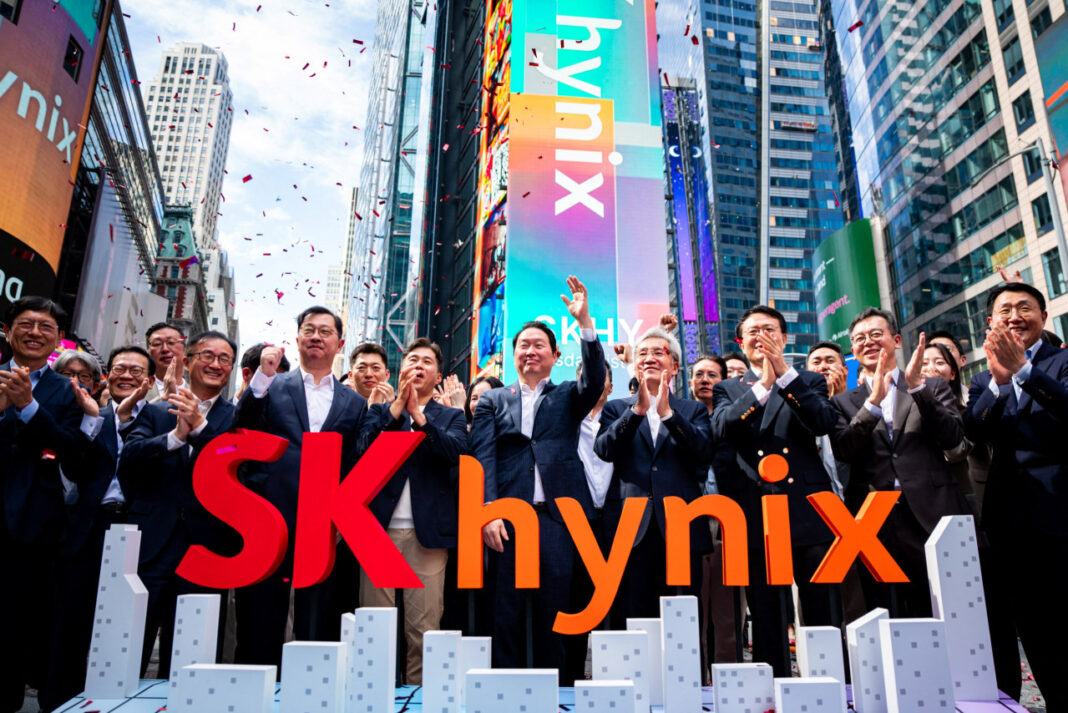
A new warning sign is emerging in financial markets, centered on unusually large price gaps for the same company stock listed in different countries. SK Hynix, a major South Korean semiconductor maker, is trading at a significant premium on its American depositary receipts compared to its shares in Seoul. Such a disparity should not exist in efficient markets.
The gap highlights potential distortions driven by investor behavior and market structure. American depositary receipts, or ADRs, represent foreign shares traded on U.S. exchanges. Typically, arbitrage keeps these prices aligned, but that mechanism has broken down for SK Hynix.
The premium has widened due to surging demand from U.S. investors eager to gain exposure to artificial intelligence chips. SK Hynix is a key supplier of high-bandwidth memory used in AI systems. This demand has pushed the ADR price far above the underlying Korean stock.
Regulatory and logistical barriers prevent quick price equalization. Converting shares between the two markets involves costs, time, and currency risk. Many investors cannot easily exploit the gap, allowing it to persist longer than normal.
This situation mirrors past bubble patterns, where enthusiasm for a sector or stock leads to pricing anomalies. The disconnect suggests that some investors are paying a premium for convenience or perceived scarcity rather than underlying value. Such conditions often precede market corrections.
For individual investors, the warning is clear: buying the ADR means overpaying compared to the local listing. The gap may shrink if sentiment shifts or arbitrageurs find ways to close it. Anyone holding the U.S.-traded shares could face losses if prices realign.
The SK Hynix example serves as a case study in market inefficiency during speculative periods. It underscores the importance of comparing prices across exchanges before investing. Ignoring these differences risks buying into a bubble that may burst without warning.