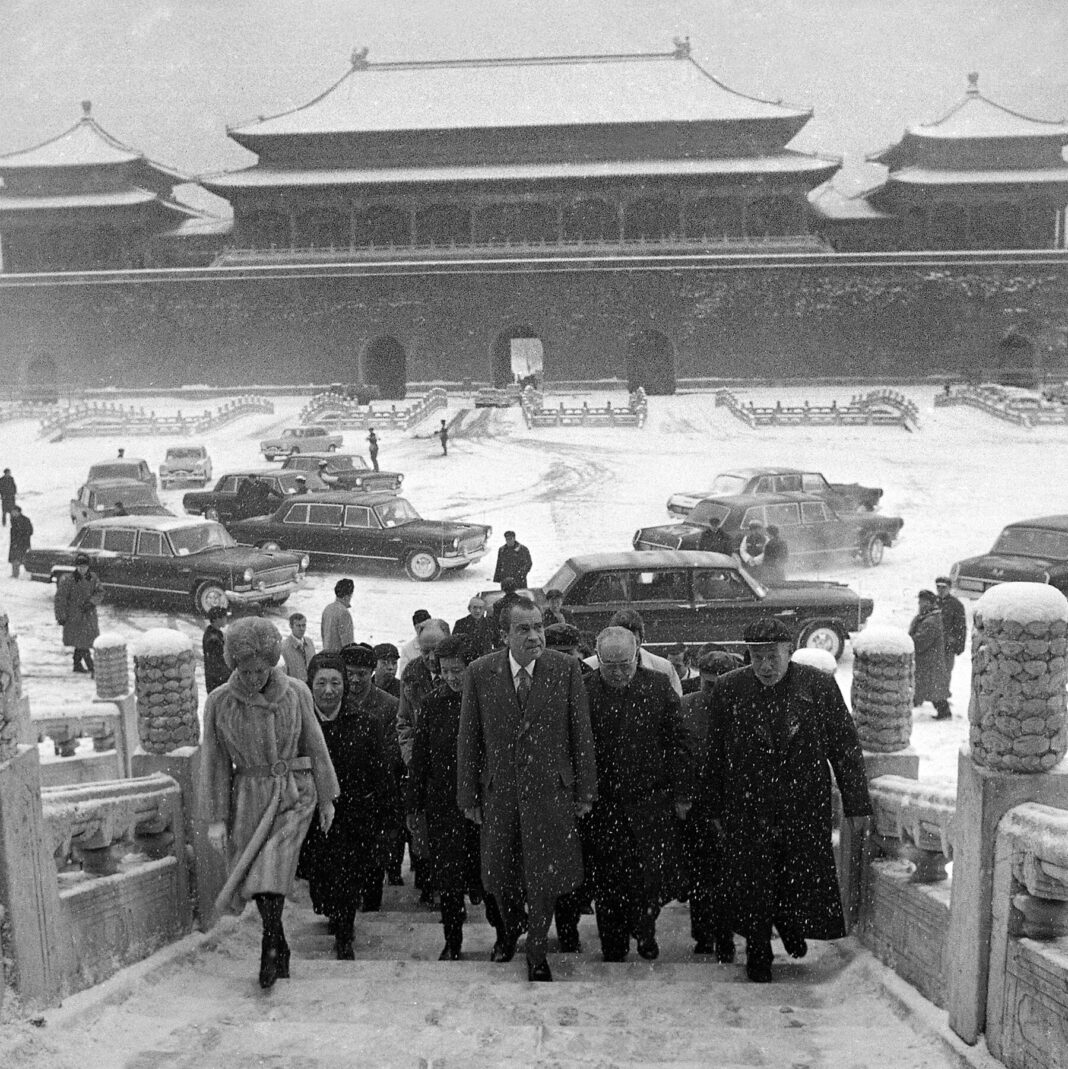
President Trump’s visit to Beijing marks a significant shift in U.S.-China relations. The diplomatic landscape has grown more combative in recent decades. This trip follows a long history of high-stakes presidential engagement with China.
The relationship began with Richard Nixon’s landmark 1972 visit. That trip ended decades of isolation and opened a new era of cooperation. It was a strategic move to counterbalance the Soviet Union during the Cold War.
Later administrations built on that foundation. Presidents from Reagan to Obama expanded trade and cultural exchanges. This period saw China integrate into the global economy, joining the World Trade Organization in 2001.
By the time Donald Trump took office, tensions had begun to rise. Trade imbalances, intellectual property disputes, and security concerns fueled friction. Trump’s approach shifted from engagement to confrontation, marked by tariffs and tough rhetoric.
Trump’s Beijing visit continues this trend but also reflects continuity. Every president since Nixon has sought a personal meeting with Chinese leaders. These visits often serve as a barometer for the broader state of relations.
The current visit occurs amid a backdrop of technological rivalry and geopolitical tension. Issues like Taiwan, the South China Sea, and human rights remain flashpoints. Both sides face pressure to manage competition without triggering open conflict.
Despite the combative tone, economic interdependence remains a powerful link. The two nations are deeply tied through supply chains, trade, and investment. Any rupture would carry global consequences.
The legacy of Nixon’s gambit endures, but its goals have evolved. The question now is whether competition or cooperation will define the next chapter. Trump’s visit offers a glimpse into that uncertain future.