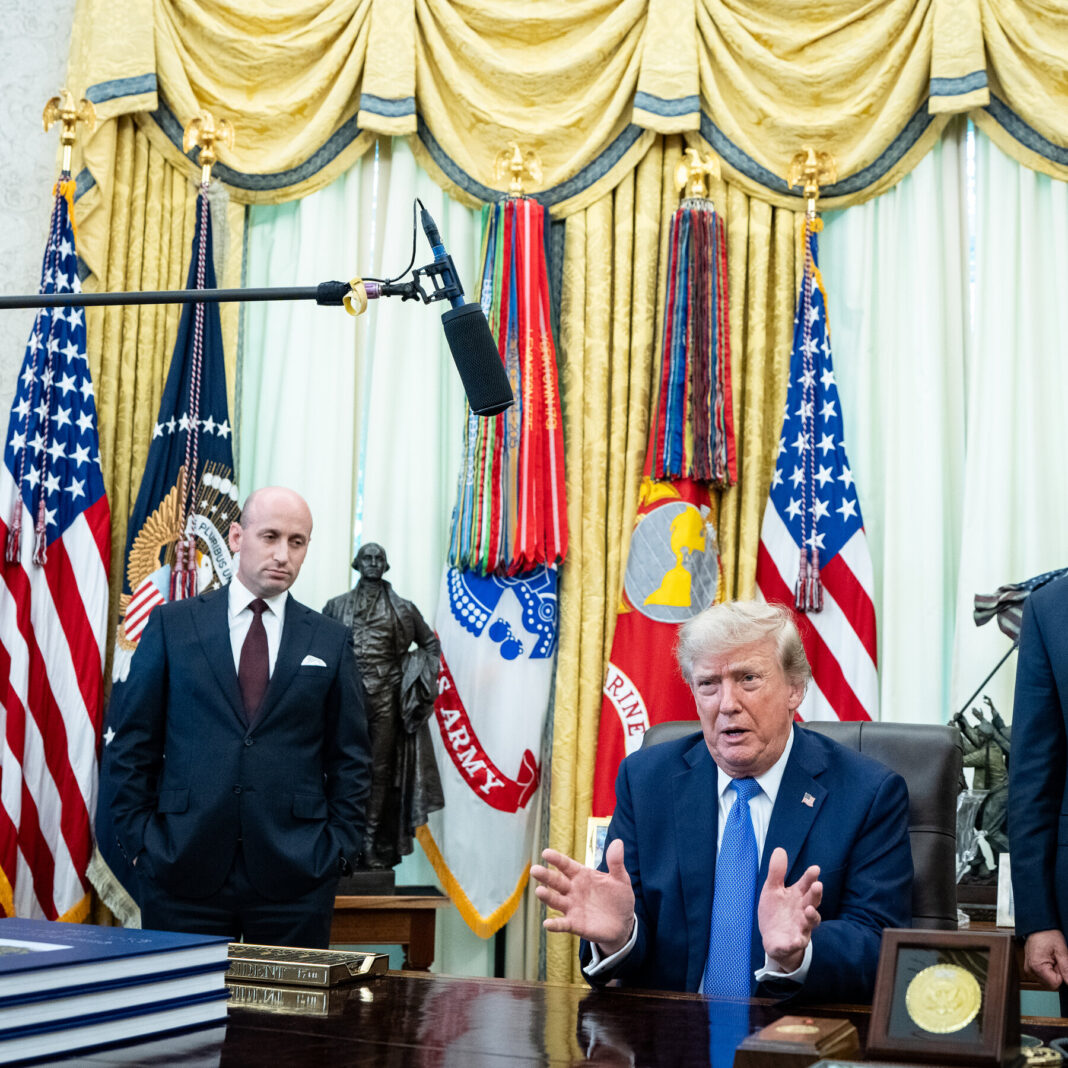
President Trump signed executive orders on Wednesday targeting birthright citizenship and what his administration calls “birth tourism,” reigniting a contentious legal fight over the Constitution’s 14th Amendment.
The orders come after the Supreme Court ruled June 30 that President Trump’s previous efforts to end birthright citizenship were unconstitutional. That decision struck down a 2025 executive order that sought to deny citizenship to children born in the United States to undocumented immigrants.
The new directive follows a similar path but introduces additional measures aimed at restricting travel and visa issuance for pregnant individuals. Administration officials said the goal is to close loopholes that allow foreigners to enter the country solely for the purpose of giving birth.
Birthright citizenship guarantees automatic citizenship to nearly all children born on U.S. soil, regardless of their parents’ immigration status. The policy has been a cornerstone of American law for over a century, upheld by the Supreme Court in the 1898 case United States v. Wong Kim Ark.
Legal experts quickly questioned whether the new orders would withstand judicial review. They argue the Supreme Court’s recent ruling set a binding precedent that blocks the president from altering citizenship rules through executive action alone.
White House press secretary defended the orders as a necessary step to protect national sovereignty. She claimed that birth tourism drains public resources and undermines immigration enforcement efforts.
Immigrant advocacy groups have announced plans to file lawsuits within days. They contend that the new measures are an indirect attempt to circumvent the court’s decision and will unfairly harm families seeking a better life.
The administration’s actions have split lawmakers along party lines. Republican supporters praised the move as a fulfillment of campaign promises, while Democratic leaders denounced it as an unconstitutional overreach targeting vulnerable populations.
Analysts note that the orders could also affect U.S. visa policies for temporary visitors, potentially requiring additional documentation from pregnant travelers. Airlines and travel agencies have yet to issue guidance on how they will respond.
The legal battle is expected to move quickly through lower courts, with a possible appeal to the Supreme Court. Observers say the outcome could shape immigration law and citizenship policy for years to come.
No timeline has been set for implementation of the orders, but the Department of Homeland Security has been instructed to draft enforcement rules. Public hearings on the matter are anticipated in the coming months.