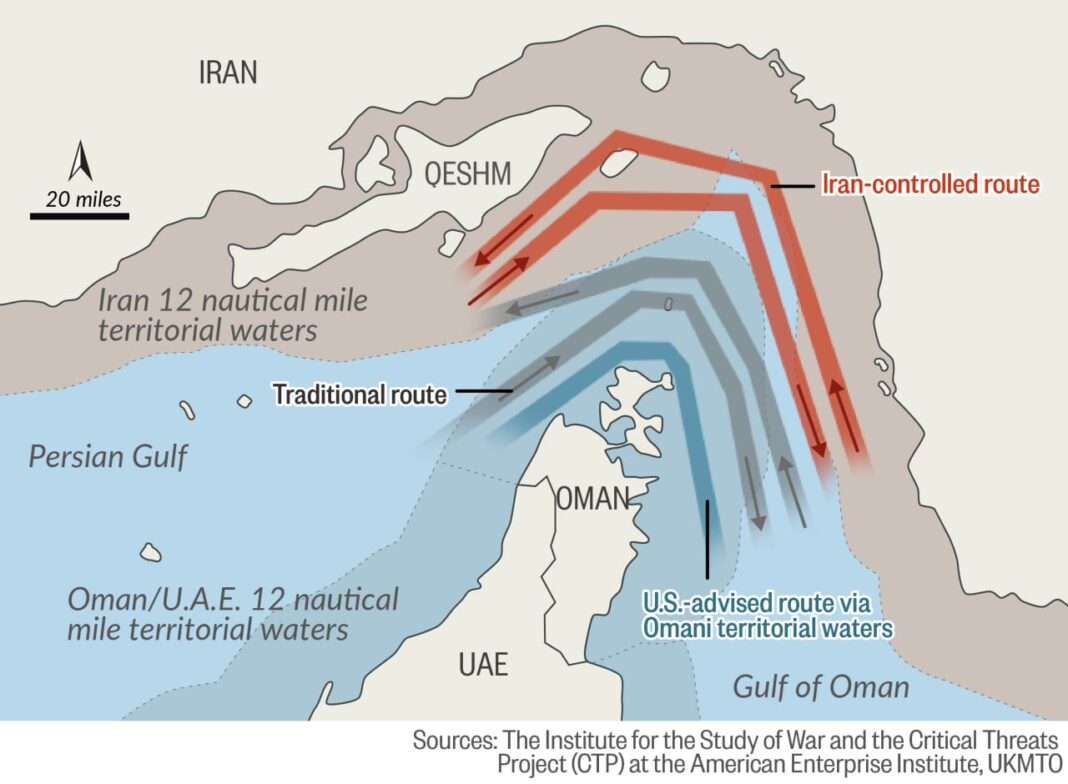
The Trump administration is directing oil tankers to navigate the Strait of Hormuz through a single, narrow shipping lane. The goal is to reduce the risk of confrontation with Iran and ensure the safe passage of vessels through the critical waterway.
The strait is a vital chokepoint for global oil supplies. Roughly 20% of the world’s petroleum passes through it daily. Any disruption there can quickly rattle global energy markets.
If the U.S. succeeds in shepherding more vessels out of the strait safely, hundreds of ships still stuck on either side could finally move. This includes massive oil tankers waiting to deliver their cargo.
Clearing that backlog would allow those tankers to reach their markets. That would help relieve some of the pressure that has driven global crude prices up more than 50%.
The narrow shipping lane represents a strategic shift in how the U.S. wants to manage maritime traffic in the region. It aims to create a predictable and organized flow of traffic.
Iran has previously threatened to block the strait or disrupt shipping in response to sanctions. The new guidelines are meant to minimize opportunities for such actions.
Oil markets have been watching the situation closely. Any sign of safe passage could help stabilize prices and ease supply concerns.
The success of this plan depends on cooperation from both commercial shipping companies and allied naval forces. The U.S. Navy has already increased its presence in the area.
Traders and analysts will be watching for any changes in tanker traffic patterns. A steady flow through the strait could signal a reduction in geopolitical risk premiums on oil.