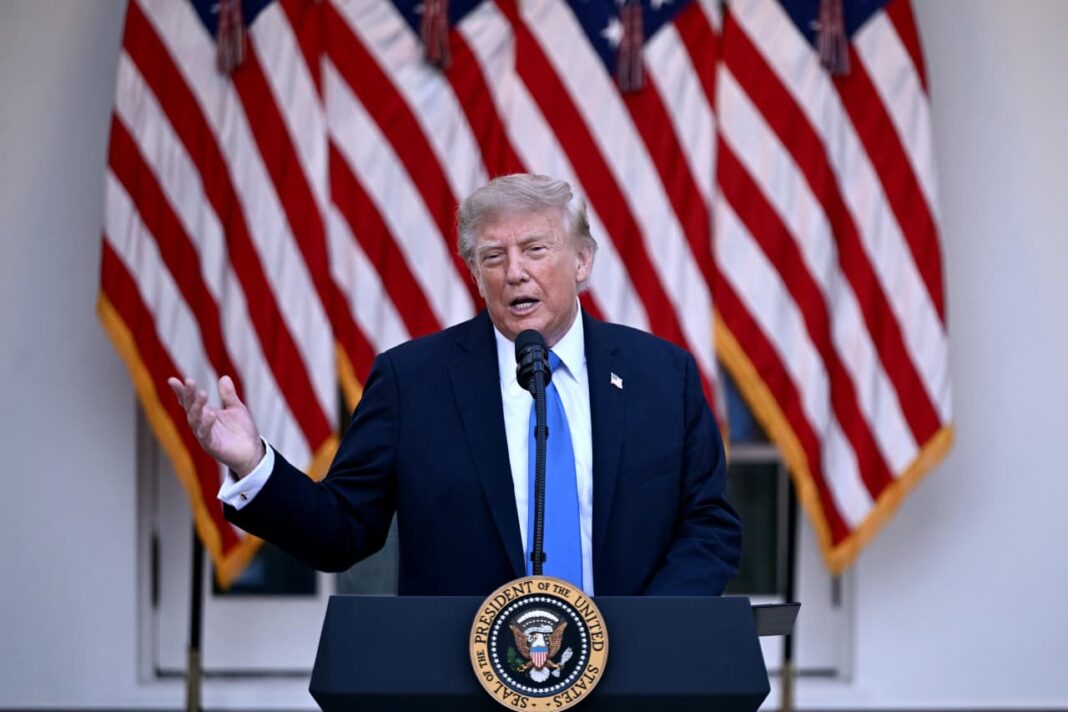
President Donald Trump suggested halting trade with countries that hold trade surpluses against the U.S. unless the Federal Reserve cuts interest rates, drawing swift criticism from economists Friday. The proposal, made publicly during a recent address, targets nations with favorable trade balances as a pressure tactic on monetary policy.
Analysts warn the move could deliver an economic shock, disrupting supply chains and raising costs for American businesses and consumers. Trade restrictions of this scale would likely reverse gains from recent tariff negotiations, experts noted.
The Federal Reserve operates independently from the White House, setting rates based on employment and inflation data. Trump’s threat does not legally compel the central bank to act, but it intensifies political pressure ahead of upcoming policy meetings.
Economists argue that linking trade policy to rate decisions confuses two distinct areas of governance. Trade deficits reflect broader economic factors, including savings rates and currency values, rather than simple unfair practices, researchers said.
Retaliation risks loom large, as affected countries could impose their own tariffs on U.S. exports. Such actions might harm key sectors like agriculture and manufacturing, which rely heavily on international markets.
Market reactions remained cautious following the statement, with investors weighing potential fallout against existing economic momentum. Stock indexes showed modest movement, while bond yields reflected uncertainty over future rate paths.
Previous tariff threats have sometimes served as negotiation tools rather than final policy, analysts observed. However, the direct coupling of trade action to Fed decisions marks an unusual escalation in presidential pressure.
A rate cut could support economic growth in the near term, but policymakers face persistent inflation concerns. The Fed has held rates steady recently, awaiting clearer signals on price stability.
Observers suggest that any trade disruption would test the resilience of U.S. supply networks, which have already faced strain from geopolitical tensions. Businesses may delay investments until clarity emerges on trade and monetary directions.
The proposal faces significant legal and logistical hurdles, as broad trade bans would require congressional approval or emergency powers with limited precedent. Enforcement mechanisms remain undefined, adding further uncertainty.
Economists from various institutions described the idea as counterproductive, noting that sustained economic expansion relies on stable trade relations and predictable central bank policy. Short-term political gains could sacrifice long-term stability.
The situation remains fluid, with no formal policy drafted at this stage. Analysts expect continued volatility in trade and financial discussions until concrete actions clarify the administration’s intent.