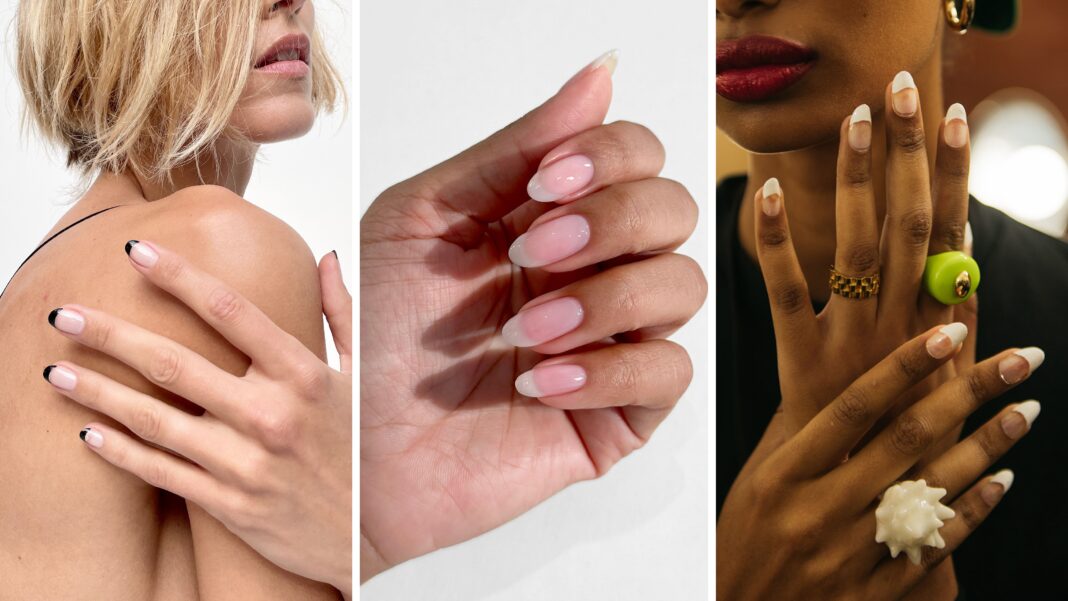
The French manicure, a nail style defined by its nude base and white tips, has sparked debate since its rise to prominence decades ago. Its origins are often misattributed, with many assuming it emerged from Parisian fashion houses. In reality, the look was popularized in the late 1970s by Jeff Pink, an American nail expert who sought a versatile design for Hollywood actresses.
Pink created the style to save time on film sets, eliminating the need for frequent polish changes between costumes. He named it after the French capital to market it as an elegant, high-fashion staple. The technique quickly moved from celebrity trailers to mainstream salons, becoming a symbol of polished, understated glamour.
Despite its widespread appeal, the French manicure has consistently divided opinion within the beauty industry. Critics have long dismissed it as outdated or overly conservative, linking it to rigid standards of femininity. Supporters, however, argue that its simplicity offers a clean canvas that suits nearly every wardrobe and occasion.
The style has also faced technical challenges, as traditional application requires a steady hand to perfect the white tip. Over the decades, this difficulty has led to innovations such as stencils and press-on alternatives, broadening accessibility for home users. These adaptations have kept the look relevant, even as trends shift toward bold colors and abstract art.
Cultural perceptions have further fueled the divide, with the French manicure interpreted differently across generations. In the 1980s and 1990s, it signaled professional polish, often featured in corporate settings. More recently, younger audiences have reclaimed it, adding neon or pastel tips to subvert its conventional image.
The design’s endurance is notable in an industry that frequently cycles through short-lived fads. Its 50th anniversary has prompted renewed discussion about what the manicure represents—timeless refinement or a dated relic. Industry experts note that its flexibility has allowed it to evolve, blurring lines between classic and contemporary.
Color variations now challenge the original two-tone formula, from metallic edges to glossy finishes that mimic natural nails. These reinterpretations have introduced the French manicure to new markets, while purists maintain that only the white-and-nude original counts. This ongoing tension ensures the style remains a talking point among nail artists and clients alike.
For beauty professionals, the French manicure continues to serve as a foundational skill, testing precision and attention to detail. Its presence in fashion shows and red carpets confirms that the basic concept retains cultural weight, even when reimagined. As the debate persists, one fact remains clear: the style’s capacity to provoke strong reactions proves its lasting significance in modern aesthetics.