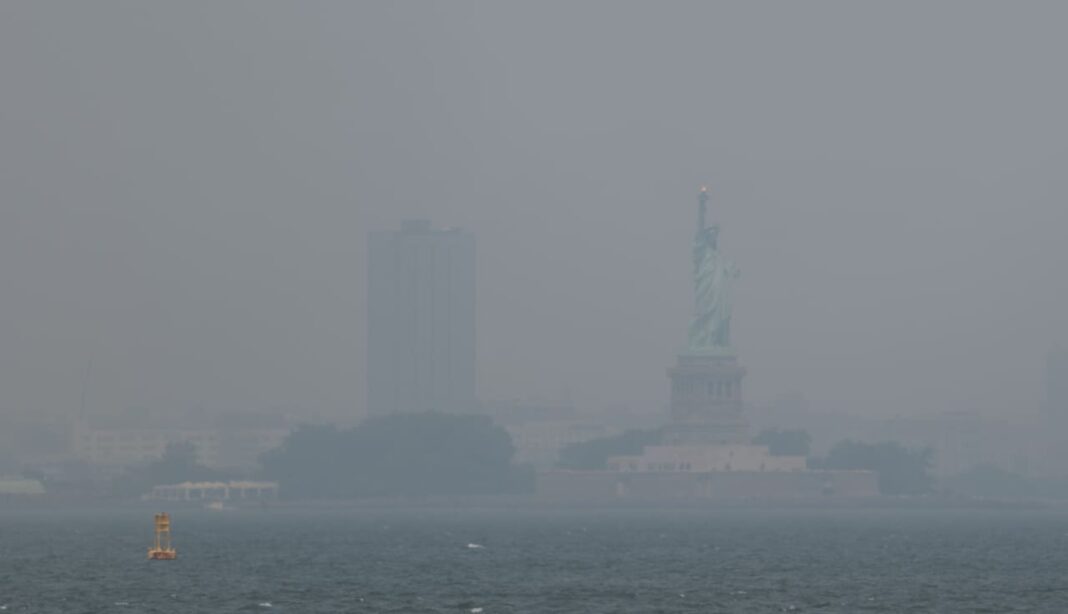
Wildfire smoke has engulfed several major U.S. cities, turning their air quality hazardous. Chicago, Detroit, Minneapolis and New York City are now ranked among the world’s most polluted cities. The smoke comes from ongoing wildfires in Canada, drifting southward and blanketing the Midwest and Northeast.
Health experts warn this is a serious public health issue. The smoke contains fine particles known as PM2.5, which can penetrate deep into the lungs. “It is a growing cardiovascular threat,” one expert noted, linking the smoke to increased risks of heart attacks and strokes.
Air quality index readings in these cities have reached unhealthy or very unhealthy levels. The AQI measures pollutants like ozone and particulate matter. Readings above 150 are considered unhealthy for everyone, and some cities have exceeded 200.
Local officials are urging residents to stay indoors and limit outdoor activities. N95 masks are recommended for anyone who must go outside. People with heart or lung conditions, children and older adults are especially vulnerable.
The smoke is expected to persist for several days due to weather patterns. Wind direction and fire intensity will determine how long the unhealthy conditions last. Forecasts show little immediate relief for affected areas.
Air purifiers can help improve indoor air quality. Closing windows and doors also reduces exposure to outdoor smoke. Running air conditioning on recirculate mode is another effective measure.
This crisis highlights the growing link between climate change and public health. Human-caused wildfires and warming temperatures are making such events more frequent. Experts stress that preventive measures and early warnings are critical for protecting communities.