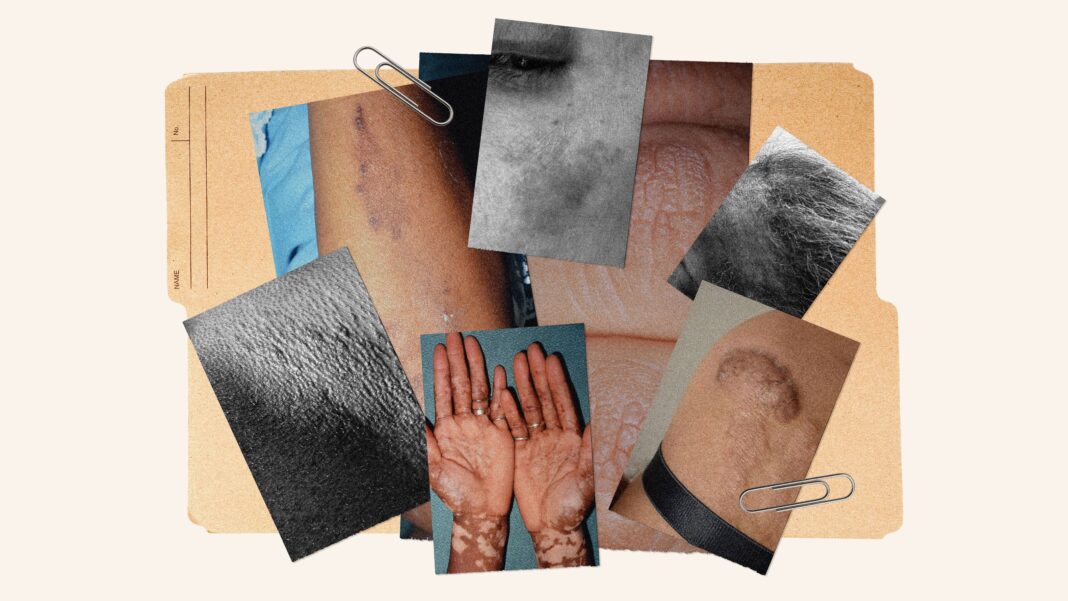
**11 Common Skin Conditions on Dark Skin and How to Treat Them**
Dermatologists report that certain skin conditions occur more frequently on melanin-rich skin. These range from keloids and vitiligo to hyperpigmentation and melanoma. The structural differences in darker skin require specific treatment approaches to avoid complications.
**Keloids** are raised scars that grow beyond the original wound boundary. They form when the body produces excess collagen during healing. Treatments include silicone sheets, corticosteroid injections, and laser therapy. In severe cases, surgical removal may be recommended, though recurrence is possible.
**Vitiligo** causes pigment loss in patches. It occurs when melanocytes stop producing melanin. Topical corticosteroids, calcineurin inhibitors, and light therapy can help restore color. Camouflage makeup is also an option for temporary coverage.
**Hyperpigmentation** appears as dark spots after inflammation. Acne, eczema, or insect bites often trigger it. Sun protection is critical. Dermatologists prescribe hydroquinone, retinoids, or chemical peels to lighten spots. Patience is key since treatment takes months.
**Melasma** presents as brown or gray-brown patches on the face. It is linked to hormonal changes and sun exposure. Combination therapy using sunscreen, topical creams, and procedures like microneedling often yields results. Avoid triggers like birth control pills when possible.
**Pseudofolliculitis barbae** causes razor bumps in the beard area. Curved hairs grow back into the skin, causing inflammation. Prevention involves proper shaving technique, electric clippers, or chemical depilatories. Laser hair removal offers a longer-term solution.
**Keratosis pilaris** creates rough, bumpy patches on arms and thighs. It results from keratin buildup in hair follicles. Moisturizers containing urea or lactic acid help smooth the skin. Gentle exfoliation also reduces the bumps.
**Dermatosis papulosa nigra** manifests as small, dark growths on the face and neck. These benign growths are most common in people with darker skin. They can be removed with cryotherapy, electrosurgery, or laser treatment for cosmetic reasons.
**Acne** can leave persistent dark marks on dark skin. Prompt treatment with benzoyl peroxide or salicylic acid helps. Early intervention by a dermatologist reduces the risk of scarring and hyperpigmentation.
**Eczema** appears as dry, itchy patches that may darken over time. It results from a compromised skin barrier. Fragrance-free moisturizers, mild corticosteroids, and wet wrap therapy provide relief. Avoiding irritants is essential.
**Tinea versicolor** causes lighter or darker patches on the skin. This fungal infection thrives in warm, humid conditions. Antifungal shampoos or creams usually clear the infection. Recurrence is common without preventive care.
**Melanoma** in dark skin often occurs on palms, soles, or under nails. It can be overlooked due to its unusual locations. Regular self-exams and dermatologist screenings are vital for early detection. Treatment depends on the stage.