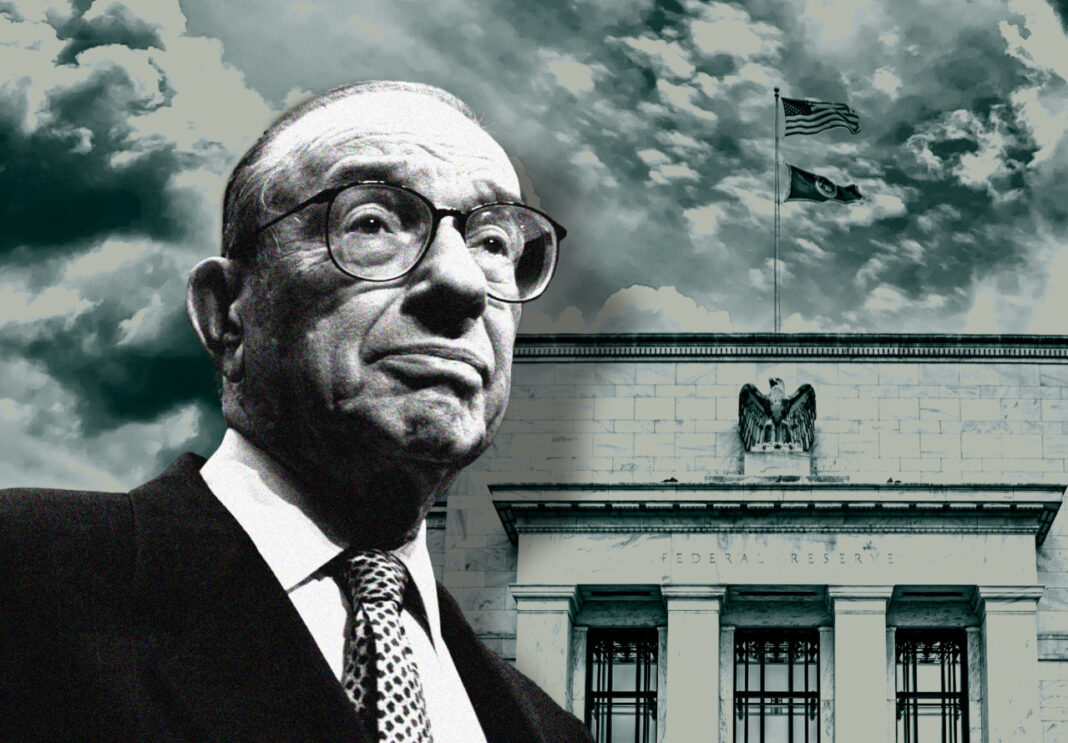
Alan Greenspan, former chairman of the Federal Reserve, has died at age 100, leaving behind a complex legacy that continues to shape central banking today. His tenure introduced a policy approach known as the “Greenspan put,” which shifted the Fed’s role toward protecting financial markets from steep downturns.
The “Greenspan put” refers to Greenspan’s tendency to lower interest rates or intervene during market crises, such as the 1987 stock market crash and the dot-com bubble burst. This strategy aimed to cushion investors from losses, signaling that the Fed would step in during turbulent times.
This approach created an expectation among market participants that the central bank would act as a safety net. Critics argue it encouraged excessive risk-taking, as traders felt protected from severe consequences.
Greenspan’s policies opened the door to issues that still bedevil the Fed today, including debates over how much the central bank should intervene in markets. His legacy raises questions about the balance between stabilizing the economy and preventing moral hazard.
Under Greenspan’s leadership, the Fed maintained relatively low interest rates for extended periods, fueling asset bubbles. The housing bubble of the mid-2000s, which contributed to the 2008 financial crisis, is often tied to his low-rate policies.
Supporters credit Greenspan with steering the U.S. through economic booms and limiting inflation. They point to his decisions that fostered growth and lowered unemployment during much of his tenure from 1987 to 2006.
However, later critics highlight that his strategies prioritized short-term market relief over long-term risks. The Greenspan put’s legacy is a central bank more willing to shield markets, a stance that remains controversial today.