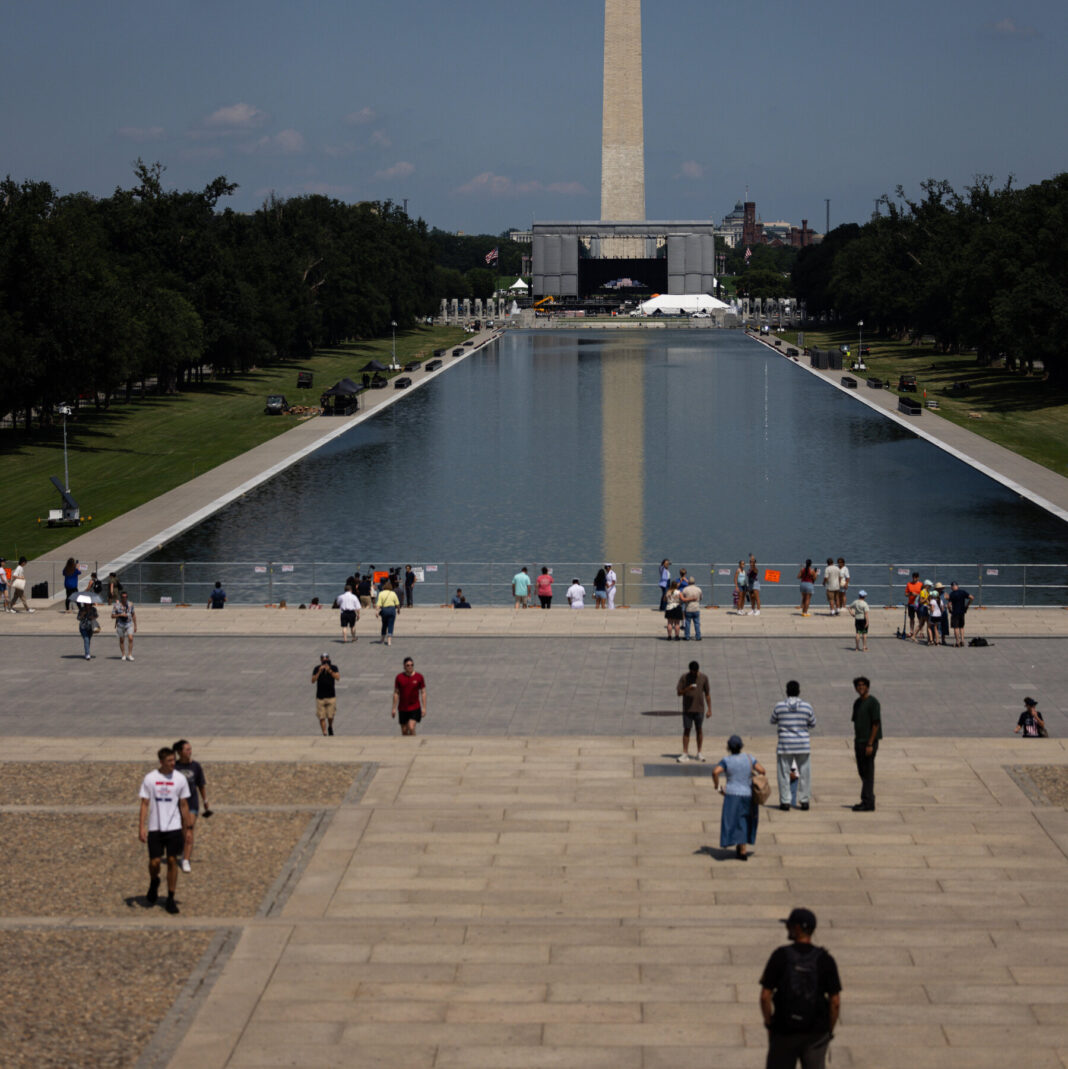
President Trump has transformed large sections of Washington, D.C., into a patchwork of construction sites and fortified zones. The changes are part of his effort to demonstrate that only he can improve the nation’s capital.
Fences now line numerous streets and public spaces across the city. National Guard members are stationed at key intersections and government buildings. The security presence has become a permanent feature of daily life for residents and visitors.
Construction projects have also multiplied throughout the district. New barriers and checkpoints have altered the city’s traditional open layout. The result is a landscape that blends urban development with military-style infrastructure.
The administration has framed these changes as necessary for public safety and order. Critics argue the measures create an atmosphere of control rather than improvement. Local leaders have voiced concerns about the impact on the city’s character.
Tourists walking near the National Mall now navigate between temporary walls and guard posts. Some streets have been closed to regular traffic, forcing detours for commuters. The city’s iconic monuments are frequently surrounded by additional fencing.
Supporters say the actions reflect a commitment to protecting federal property and officials. They point to reduced crime statistics in newly secured zones. The White House has not indicated when or if the measures will be scaled back.
The transformation has sparked debate over the balance between security and civic openness. For now, Washington remains a city reshaped by barriers and uniformed personnel. The long-term effects on its identity and daily life continue to unfold.