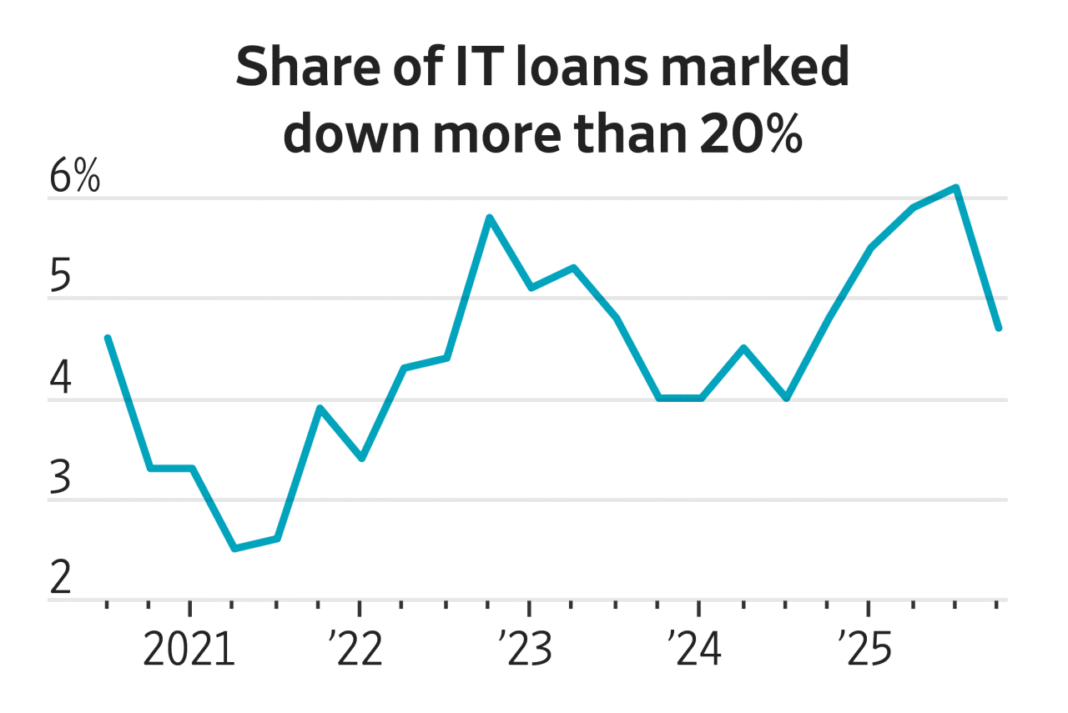
Software lenders are seeing a growing share of their private debt portfolios fall into distress, even before the full impact of artificial intelligence begins reshaping the software industry.
In 2025, the percentage of private software loans that declined in value by more than 20% reached its highest level in five years. This marks a significant shift for a sector once considered a safe bet for debt investors.
The downturn is not tied to a single event, but reflects a combination of maturing business models and shifting market conditions. Many software companies that secured loans during the low-interest-rate era are now struggling to meet growth expectations.
Rising interest rates have made it harder for these firms to refinance or service their debt. Investors are now scrutinizing cash flow and profitability more closely than in previous years.
The emergence of generative AI has added another layer of uncertainty. While AI presents new opportunities, it also threatens to disrupt traditional software revenue streams, leaving some lenders wary.
Some industry observers have begun using terms like “SaaS-pocalypse” to describe the potential fallout. The concern is that AI could accelerate the decline of legacy software products before new revenue models take hold.
Lenders are now tightening terms and demanding greater transparency from software borrowers. The days of easy credit for the sector appear to be fading.
This trend may continue as the market digests the dual pressures of higher financing costs and rapid technological change. The software loan market is adjusting to a new, more cautious normal.