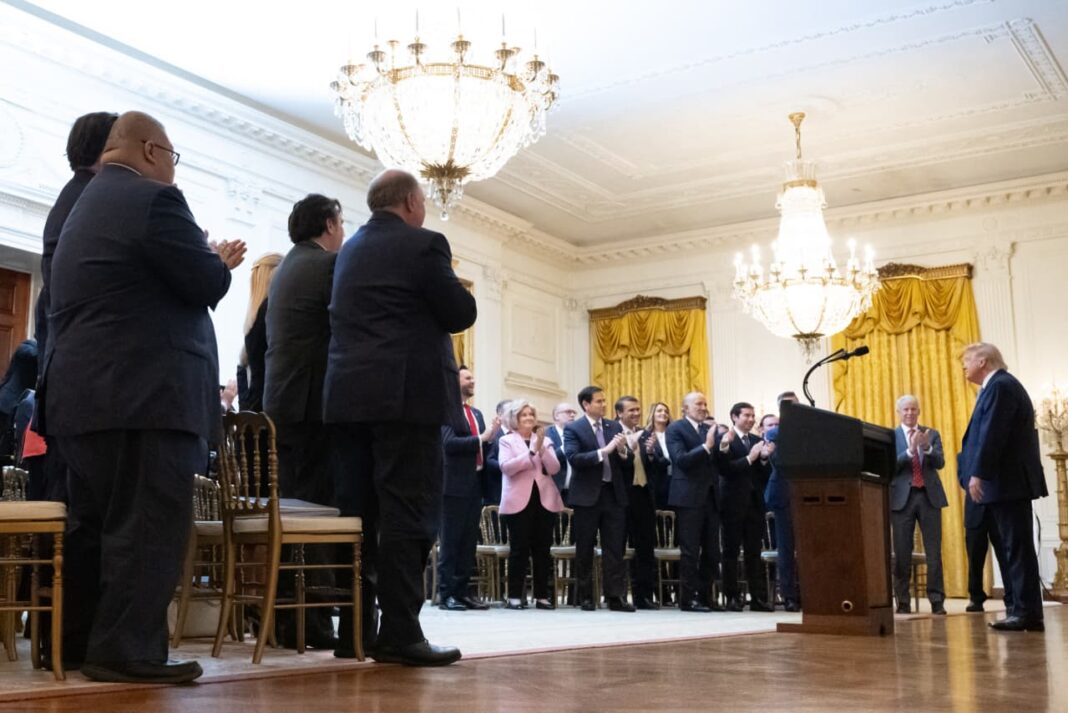
Former President Donald Trump’s recent speech on U.S. election integrity included accusations of foreign interference, specifically targeting China. The comments may unsettle investors who value political stability.
Market participants often react negatively to political uncertainty. Allegations of election meddling can create doubts about the legitimacy of future electoral processes. Such doubts can lead to unpredictable policy environments.
When leaders question election security, it can erode public trust in institutions. This erosion often translates into market volatility. Investors typically seek predictable governance structures.
The focus on China in this context adds another layer of complexity. Trade tensions between the U.S. and China have already influenced global markets. Any escalation in rhetoric could disrupt supply chains and investment flows.
Historical patterns show that markets dislike unexpected political disruptions. Speeches that challenge electoral norms may introduce new variables for analysts. These variables make long-term economic forecasting more difficult.
A lack of confidence in election outcomes can also reduce consumer and business spending. Uncertainty around the leadership transition often freezes capital investments. This hesitation can slow economic growth.
Global investors monitor U.S. political rhetoric closely. Any signal of instability can prompt capital shifts to safer assets. This movement can affect currency values and bond markets.
The speech might also impact international perceptions of U.S. democracy. Foreign investors may reassess risk premiums for American assets. Such reassessments can lead to broader market adjustments.
For now, the immediate market response may be muted. But sustained focus on election integrity could have longer-term consequences. Traders and portfolio managers should watch for further developments.