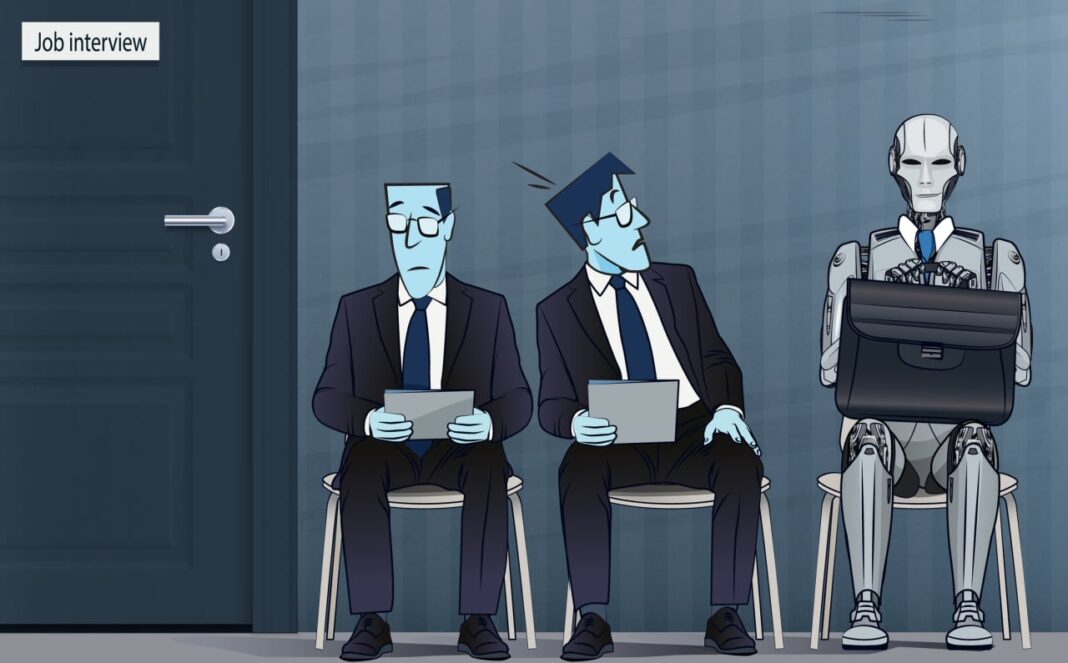
Older workers are confronting a dual threat: potential Social Security cuts and the accelerating pace of workplace changes driven by artificial intelligence. These forces may push some employees toward earlier retirements than they originally planned.
A recent analysis projects that AI adoption could disproportionately affect older employees. Many of these workers have skill sets that are less aligned with the new tools and workflows emerging across industries. Employers are increasingly prioritizing AI literacy and adaptability in their hiring and retention decisions.
This shift places older staff at a disadvantage. They often have more difficulty retraining for technology-heavy roles, particularly when competing with younger colleagues who have grown up with digital systems. Companies may also prefer to invest in reskilling younger workers who have longer expected tenures.
The financial implications are significant. Workers forced to retire early risk reducing their Social Security benefits, which are calculated based on lifetime earnings. A shorter career often means smaller monthly payouts, creating lasting financial strain during retirement years.
Social Security’s own funding challenges compound the problem. The program faces a projected shortfall that could lead to benefit reductions by the mid-2030s if Congress does not act. This creates a double hit for older workers who may lose both income and future benefits.
Some industries are more exposed than others. Roles involving routine data processing, scheduling, and basic customer service are particularly vulnerable to automation. Older workers concentrated in these fields face the highest risk of displacement.
The trend is not uniform across all professions. Jobs requiring high levels of human judgment, emotional intelligence, or physical dexterity remain more resilient to AI disruption. But even these roles may evolve, requiring workers to continuously update their skills.
For older employees, the timeline to adapt is shorter. Those in their 50s and early 60s have fewer years left to recover from career disruptions. This makes proactive planning—including financial preparation and targeted skill development—increasingly urgent.
Employers also bear responsibility. Forward-thinking companies are beginning to implement age-inclusive retraining programs that recognize the value of experienced workers. Failure to adapt could mean losing institutional knowledge and operational stability.
The broader economy faces a potential mismatch. Rapid AI adoption could leave a generation of older workers without viable employment options just when they need income most. Policymakers may need to consider targeted support and re-employment programs.
Early retirement may be the only choice for some. But the decision should ideally come from personal choice, not from displacement by technology. Workers today must actively monitor their industry’s evolution and prepare for multiple possible futures.