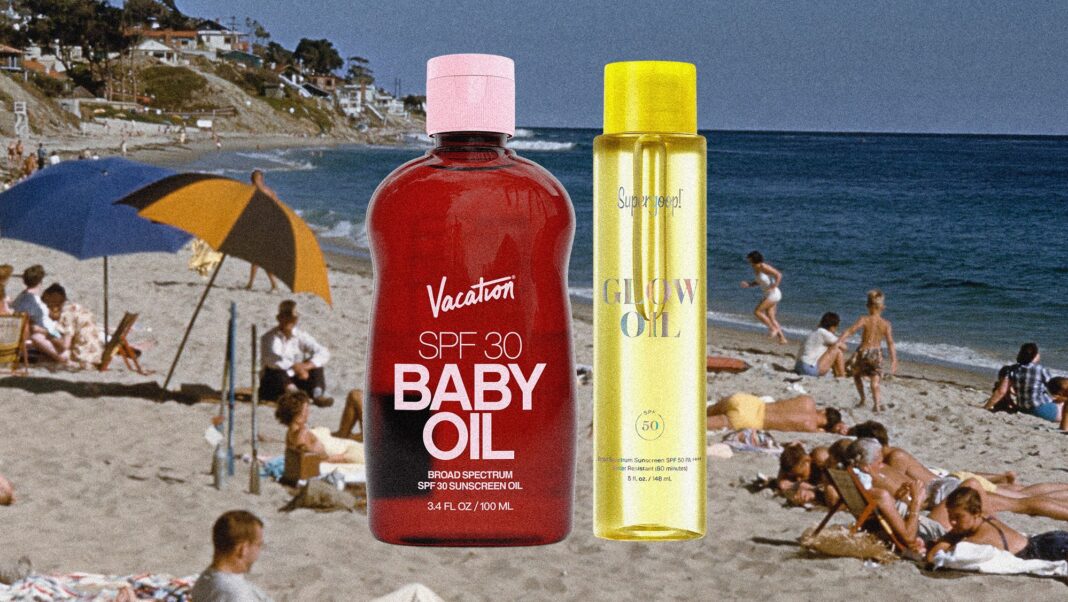
Are Sunscreen Oils Just Tanning Oils in Disguise? Experts Weigh In
Glossy, shimmery SPF products are gaining popularity on social media and store shelves. These high-shine formulas promise sun protection with a luminous finish. But experts question whether they truly shield the skin or simply revive tanning culture.
Dermatologists explain that sunscreen oils often contain lower concentrations of physical blockers like zinc oxide. Many rely on chemical filters that absorb UV radiation rather than reflecting it. This can leave skin vulnerable if not applied generously and frequently.
The texture of sunscreen oils also raises concerns about proper application. A thin, spreadable oil may tempt users to use less product than recommended. For adequate protection, most people need about a shot glass full of sunscreen for the entire body.
Some formulas marketed as “sunscreen oils” lack clear SPF labeling or offer only minimal protection. Experts advise checking for broad-spectrum coverage and an SPF of 30 or higher. Without these markers, the product may function more like a tanning oil.
The appeal of a dewy, sun-kissed look drives demand for these products. However, this aesthetic can encourage longer sun exposure without reapplication. Dermatologists warn that even one bad sunburn significantly increases skin cancer risk.
Historically, tanning oils were designed to accelerate tanning with little to no UV protection. While modern sunscreen oils include some SPF, their glossy finishes might still promote risky behavior. Users may skip other protective measures like hats or seeking shade.
Experts recommend sticking to tried-and-true sunscreens with robust protection. Lotions, creams, and sticks often provide more reliable and even coverage. For those who enjoy a luminous finish, applying a separate highlighter over a trusted SPF is safer.
Ultimately, the best sunscreen is one you will use consistently and correctly. Consumers should read labels carefully and prioritize protection over shine. Tanning culture may be evolving, but the science of sun safety remains unchanged.