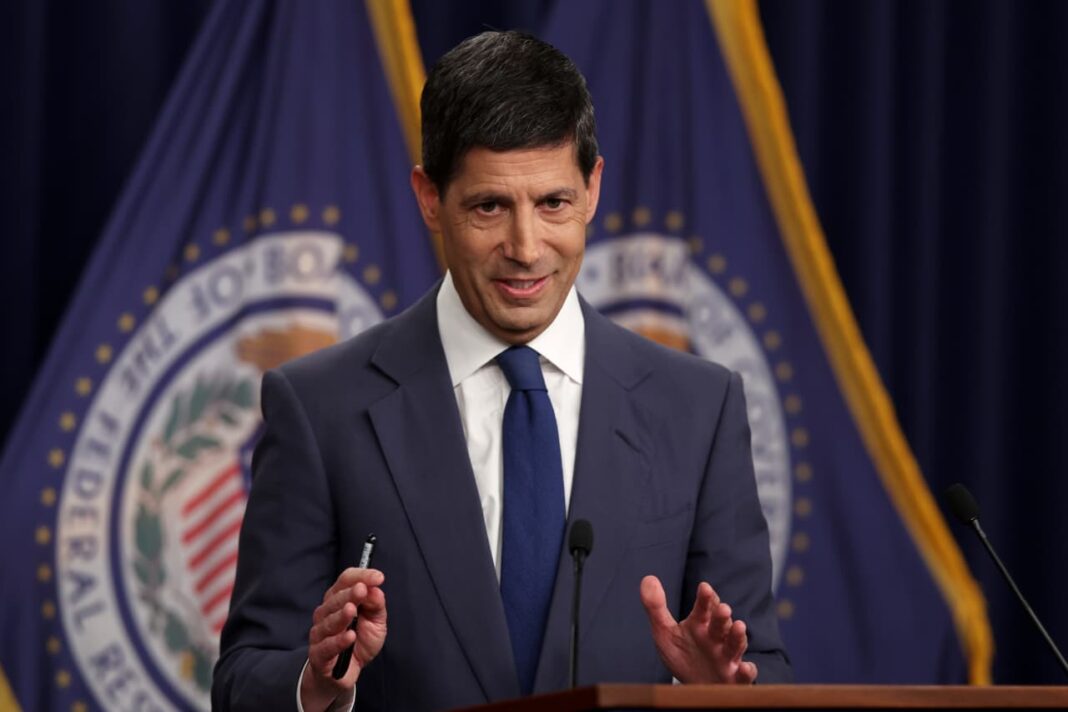
Federal Reserve Chair nominee Kevin Warsh has pledged to bring inflation back to the central bank’s 2% target. The promise faces a significant obstacle in the form of rapidly expanding U.S. government debt. Economists argue that achieving that goal while managing the national balance sheet may be fundamentally incompatible.
The U.S. national debt has surpassed $36 trillion, with annual interest payments now exceeding $1 trillion. Servicing that debt consumes a growing share of the federal budget. Higher interest rates, which are necessary to curb inflation, directly increase the cost of that borrowing.
Traditionally, the Fed relies on higher rates to cool demand and reduce price pressures. But with debt levels at record highs, aggressive rate hikes risk triggering a fiscal crisis. Government borrowing costs would spike, potentially crowding out private investment.
Inflation offers a subtle but powerful relief valve for a heavily indebted nation. When prices rise, the real value of outstanding debt falls. A sustained period of above-target inflation effectively erodes the purchasing power of what the government owes.
This dynamic creates a conflict at the heart of monetary policy. Warsh’s commitment to strict inflation discipline may appeal to markets, but it ignores the structural pressure from fiscal policy. The Treasury’s borrowing needs do not disappear because the Fed declares a target.
Some analysts argue that a dose of higher inflation is the least painful path to reducing the debt burden. Austerity measures would stall growth, while outright default remains unthinkable. Inflation allows the government to pay back its creditors with less valuable dollars.
The political calculus adds another layer of difficulty. Cutting spending or raising taxes to address the debt is deeply unpopular. Inflation, by contrast, is a hidden tax that doesn’t require a vote. It spreads the cost across all dollar holders without a direct legislative decision.
Warsh’s pledge may be sincere, but the math points in a different direction. The Fed cannot control fiscal outcomes, and it cannot force Congress to balance the budget. If debt issuance continues at its current pace, the pressure on the central bank to tolerate higher inflation will intensify.
The market will watch closely for signs of this tension. If Warsh holds the line on 2%, bond markets may test his resolve with higher term premiums. If he blinks, inflation expectations could become unanchored. Either outcome points to a volatile road ahead.
The reality is that the U.S. fiscal position and the Fed’s inflation target are on a collision course. A 2% inflation rate may be a worthy goal in normal times, but these are not normal times. The debt load has changed the rules of the game.