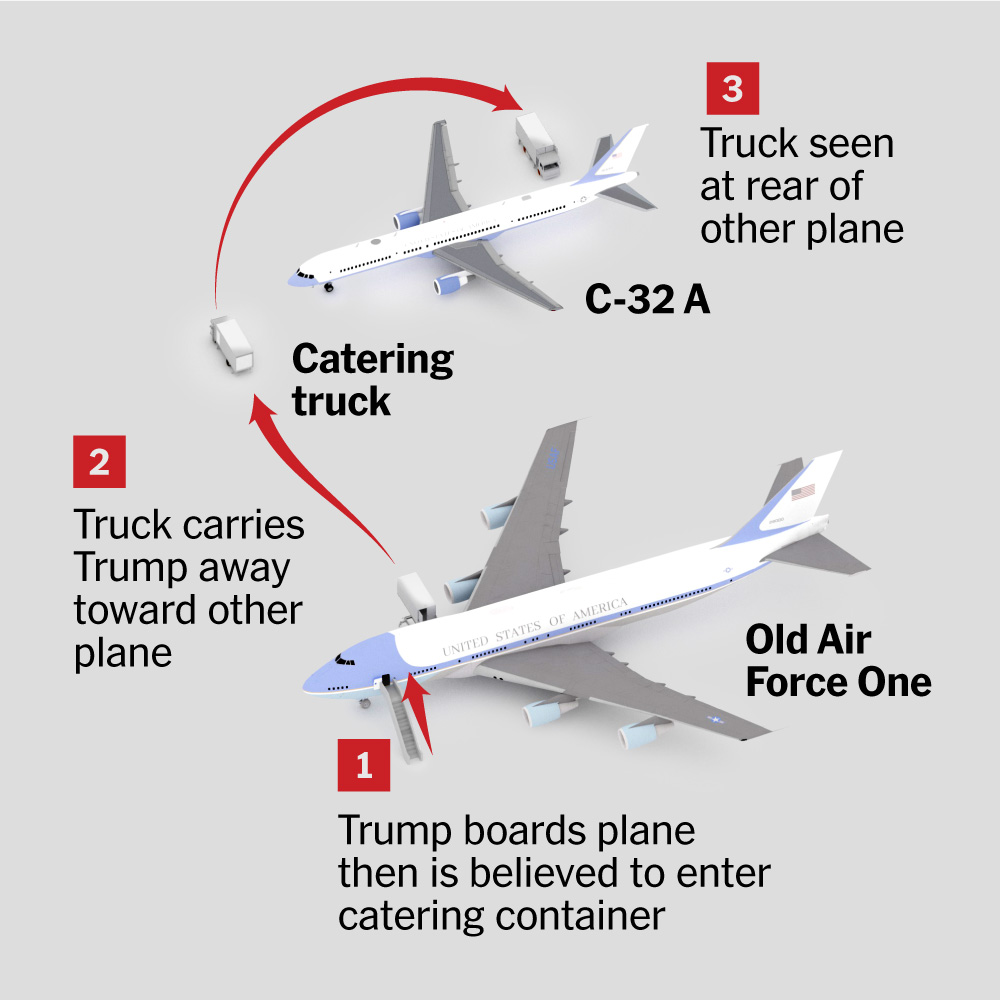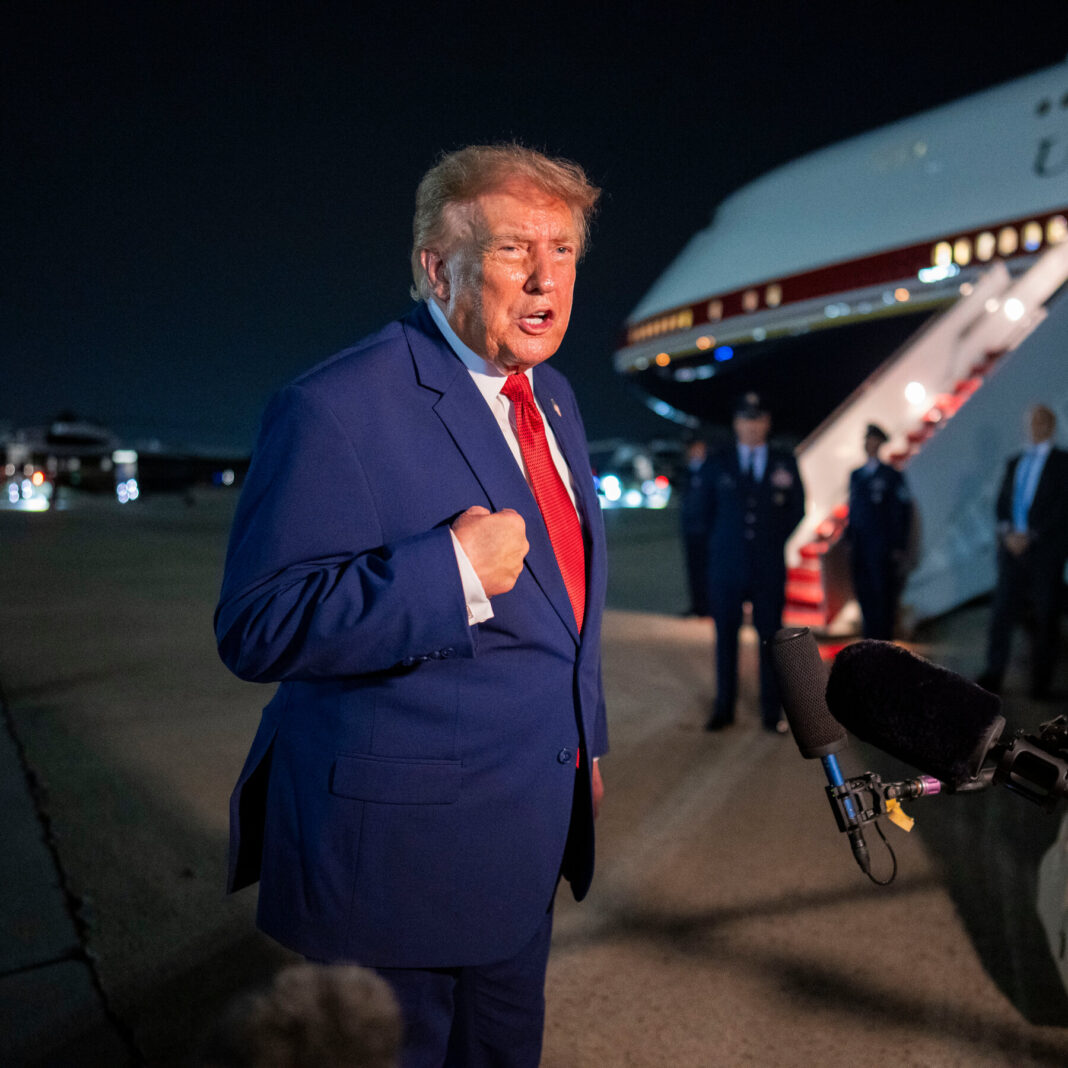
Former President Donald Trump stated that the Secret Service directed a last-minute switch from the primary presidential aircraft to a backup plane. The change, according to Trump, was made due to an elevated threat assessment that specifically targeted the main aircraft. He claimed the decoy plane that the public observed was the one facing the most significant danger.
Trump’s remarks highlight a security protocol rarely discussed in public detail. The former president asserted that intelligence indicated a credible threat against the standard Air Force One configuration. As a result, officials swapped the flight plan without prior announcement. The decoy aircraft, which resembled the primary plane, proceeded under the assumption that it carried the principal passenger.
The former president did not provide specific evidence for the threat claims. His comments come amid ongoing discussions about security measures for high-profile political figures. The Secret Service has not issued a formal response to Trump’s statements. Standard practice for the agency typically involves withholding operational details to protect future missions.
Aviation experts note that decoy flights are a known but rarely confirmed tactic. Such maneuvers aim to confuse potential adversaries monitoring presidential movements. The use of a second identical aircraft allows for a safe diversion if the primary route is compromised. This incident, if accurate, would represent a rare public confirmation of the strategy.
Trump’s account adds to a series of claims about his time in office and post-presidency. He framed the decision as a necessary precaution during a period of heightened tension. The former president did not specify the exact location or date of the swap, leaving operational specifics vague. His narrative suggests that the threat was serious enough to alter standard travel arrangements.
The broader context involves ongoing debates about threats from foreign adversaries. Iran has been a recurring focus in discussions of security risks against former U.S. officials. Trump referenced this backdrop without directly naming any nation in his latest remarks. He indicated that the aircraft change was a direct result of intelligence briefings received before takeoff.
No independent verification of the event has surfaced so far. Journalists have reached out to former Secret Service officials for comment, but most have declined to discuss the matter. The lack of confirmation leaves the story reliant on Trump’s own account. Such disclosures, if unverified, often remain part of the public record without official acknowledgment.
The incident underscores the complex layers of protection surrounding presidential travel. Security teams routinely adapt to evolving threats, making real-time decisions that are invisible to the public. For observers, the distinction between the known flight path and the actual one remains a tightly guarded secret. Trump’s testimony offers a rare glimpse into that hidden process, even if gaps persist in the details.
Former officials caution that publicizing such tactics could undermine their effectiveness. Revealing specific procedures might give adversaries insight into protective protocols. Nevertheless, Trump’s comments could prompt renewed scrutiny of how decoy operations are planned and executed. The debate is likely to continue as long as threats against political figures remain a concern.