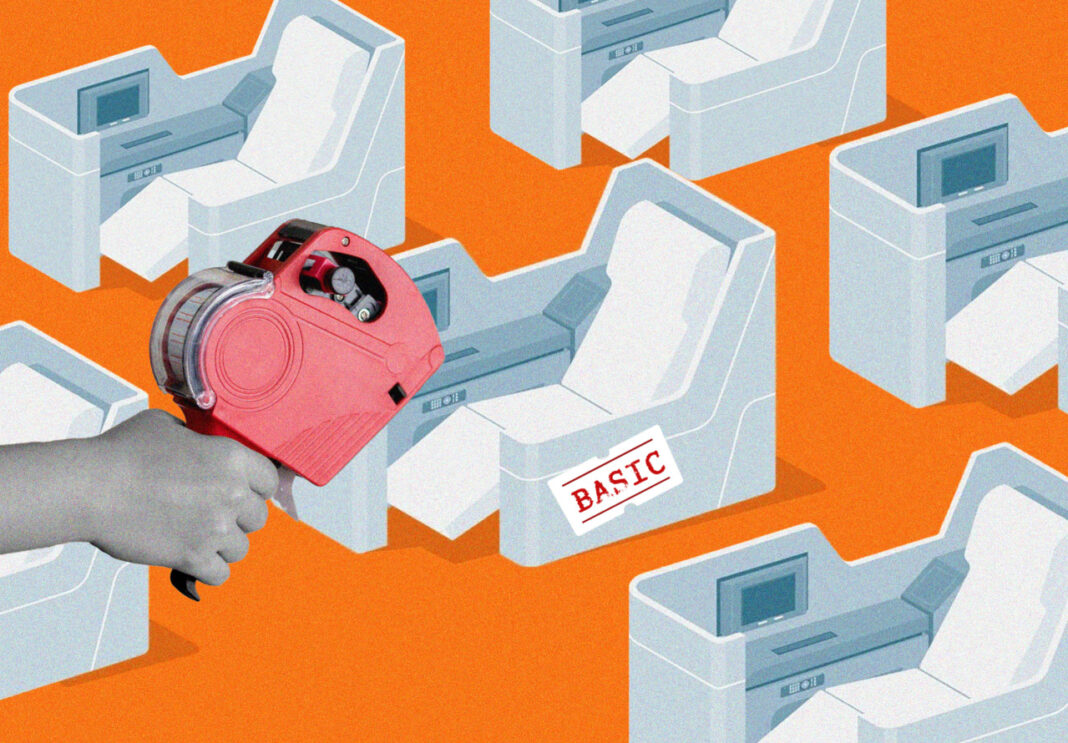
Airlines are introducing a new tier of premium seating, often called “basic first class,” as carriers restructure their most expensive cabins. The move aims to attract price-sensitive travelers seeking upgraded seats without the full traditional experience. Passengers should expect reduced perks compared to standard first-class offerings.
Major U.S. carriers are leading this shift by creating multiple fare classes within the same premium cabin. These new options typically include the physical seat and elevated service but exclude amenities like lounge access, priority boarding, or complimentary upgrades. The pricing structure allows airlines to fill unsold premium seats while maintaining revenue on higher-tier products.
The trend reflects a broader industry strategy to unbundle services across all travel classes. What was once a single, all-inclusive first-class experience now resembles a menu with varying levels of access and comfort. Travelers must carefully review what their ticket includes before purchase.
Early adopters of the model have seen positive results, with demand rising among leisure travelers willing to trade perks for lower fares. Business travelers, however, still frequently opt for full-service first class, particularly on long-haul international routes. The distinction between basic and standard premium seats remains clearer on domestic flights.
Airline executives note that the change allows them to compete more effectively with low-cost carriers and premium economy options. By offering a middle ground, they capture customers who previously avoided first class due to cost. This approach also simplifies inventory management.
For consumers, the key consideration is value. A basic first-class ticket may cost only slightly more than premium economy but delivers a wider seat and better service. Yet the absence of amenities like meals on select routes or baggage allowances can erode that advantage. Comparing total travel costs remains essential.
The industry-wide adoption suggests basic first class is not a temporary experiment. Analysts predict further segmentation as airlines seek to maximize profit from each aircraft. Ultimately, passengers gain more choices, but the term “first class” now carries less uniform meaning than it once did.