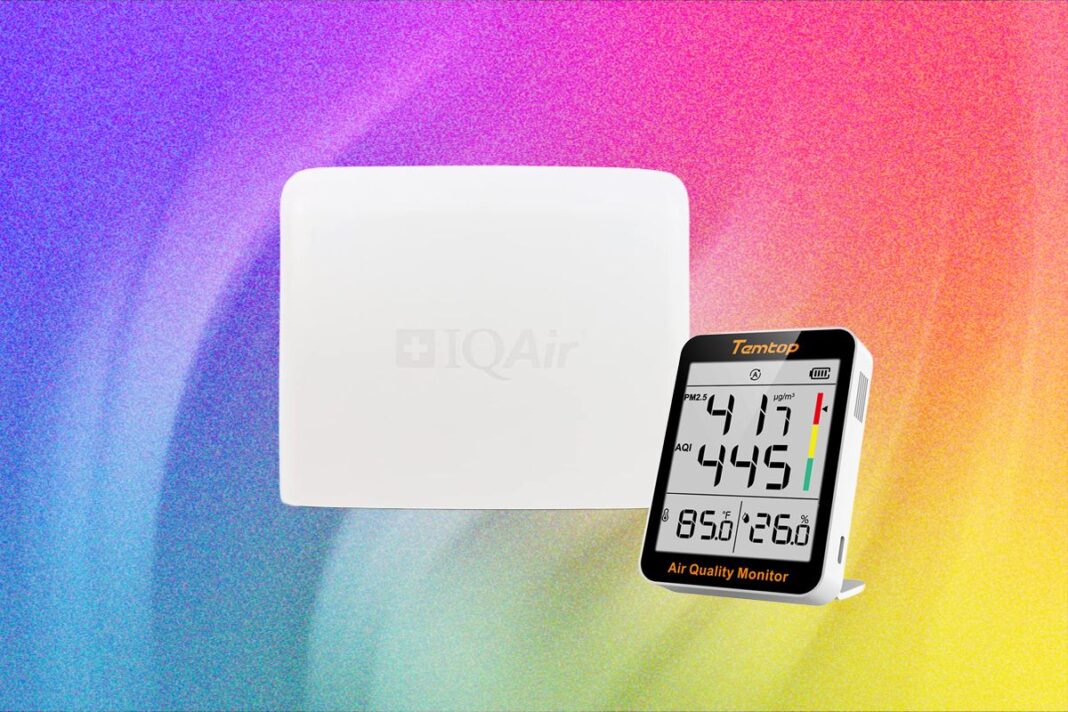
Indoor and outdoor air quality monitors measure pollutant levels that affect daily health and comfort. These devices track fine particulate matter, volatile organic compounds, and carbon dioxide, among other environmental factors. The devices give users a live snapshot of their surroundings, alerting them to potentially harmful spikes in pollution.
WIRED-tested monitors offer a range of sensing capabilities suited to different living situations. Some models focus on bedroom and living room use, with clear displays and simple setup procedures. Others work as part of a broader smart home system, feeding data into existing automation routines. Outdoor units, however, require sturdier enclosures and weather-resistant designs to function across seasons.
Particulate matter, known as PM2.5, represents a primary concern for most households. These microscopic particles originate from cooking, smoke, and outdoor traffic, and they can penetrate deep into lung tissue. Many monitors provide real-time readings for PM2.5, along with historical data to track trends over time. Additional sensors for humidity and temperature help users identify conditions that encourage mold growth.
Volatile organic compounds, or VOCs, come from everyday household products such as paints, cleaners, and air fresheners. High VOC levels can cause headaches or respiratory irritation, especially in poorly ventilated spaces. Monitors equipped with VOC sensors allow homeowners to adjust ventilation or remove sources of these chemicals. Some advanced models also detect carbon dioxide, a useful indicator of stale air and occupancy levels.
Calibration and accuracy remain essential factors when choosing a monitor. Optical sensors, used for particle counting, require regular maintenance to maintain precision over time. Electrochemical sensors, often found in carbon monoxide detectors, can degrade faster depending on environmental conditions. Most quality monitors provide baseline readings that help users observe relative changes, rather than relying solely on absolute numbers.
Connectivity options vary widely among current models. Wi-Fi-enabled monitors sync with smartphone apps, delivering push notifications when pollutant thresholds are crossed. Bluetooth-based devices offer more limited range but typically consume less power. Data logging features allow users to export readings over weeks or months, assisting in pattern recognition and long-term health planning.
Battery life and power sources play a practical role in device placement. Rechargeable units offer flexibility for mobile use, such as checking air quality in a hotel room or office. Plug-in models provide uninterrupted service but anchor users to a single location. Solar-powered outdoor monitors reduce maintenance needs, though performance depends on direct sunlight exposure.
Price points for reliable air quality monitors range from budget-friendly options under one hundred dollars to premium units exceeding three hundred dollars. Higher costs typically correspond to additional sensors, better build quality, and longer warranty periods. For most households, a mid-range monitor delivers sufficient accuracy and features without incurring unnecessary expense.
Regular data review helps users take meaningful action to improve their air quality. Comparing indoor readings with outdoor conditions, for instance, reveals whether filtration systems or natural ventilation work effectively. Seasonal changes, such as wildfire smoke or pollen peaks, also create distinct patterns that a monitor readily documents. Over time, these insights guide practical decisions on purifier placement and cleaning schedules.