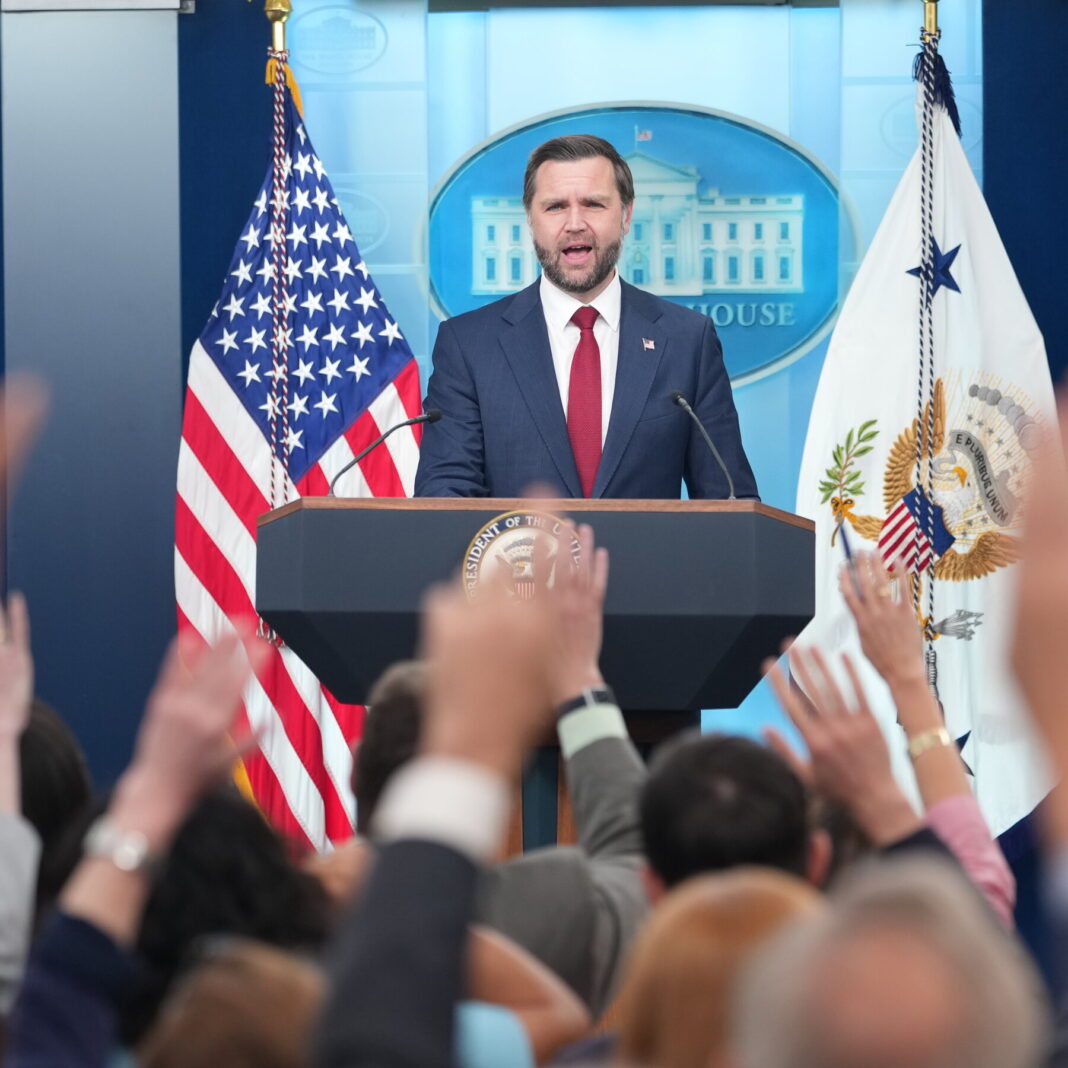
Vice President JD Vance declined to characterize the ongoing situation with Iran as a war during his first White House press briefing. The remarks mark a shift in tone from the administration’s previous public statements on the conflict.
The briefing was the first since Karoline Leavitt departed from her role as press secretary. Vance used the platform to address the status of military operations and diplomatic efforts in the region. He suggested that the timeline for the conflict’s resolution rested largely with Tehran’s leadership.
Vance avoided direct terms like “war” or “armed conflict,” instead framing the situation in more measured language. His comments appeared designed to leave room for negotiation while maintaining a posture of strength. Officials in the room noted the careful choice of words.
The vice president stated that the duration of the current hostilities would depend on decisions made by Iranian authorities. He did not provide a specific deadline or offer new strategic details. His response shifted focus away from domestic political pressures and toward external factors.
Analysts observed that Vance’s phrasing could signal a strategic recalibration. The administration may be seeking to lower public expectations of a prolonged engagement. Others view the comments as an attempt to keep diplomatic channels open without appearing weak.
No further military announcements accompanied the briefing. Press staff did not take follow-up questions on the topic. The White House has yet to release an official transcript of Vance’s full remarks.
The vice president’s statement comes amid rising international scrutiny of the administration’s Middle East policy. Previous briefings under Leavitt had employed firmer rhetoric. Vance’s approach suggests a potential pivot toward de-escalatory language.
Tehran has not issued an immediate public response to the vice president’s comments. Regional experts caution that ambiguity could complicate allied expectations. The situation remains fluid, with no clear end point publicly outlined.