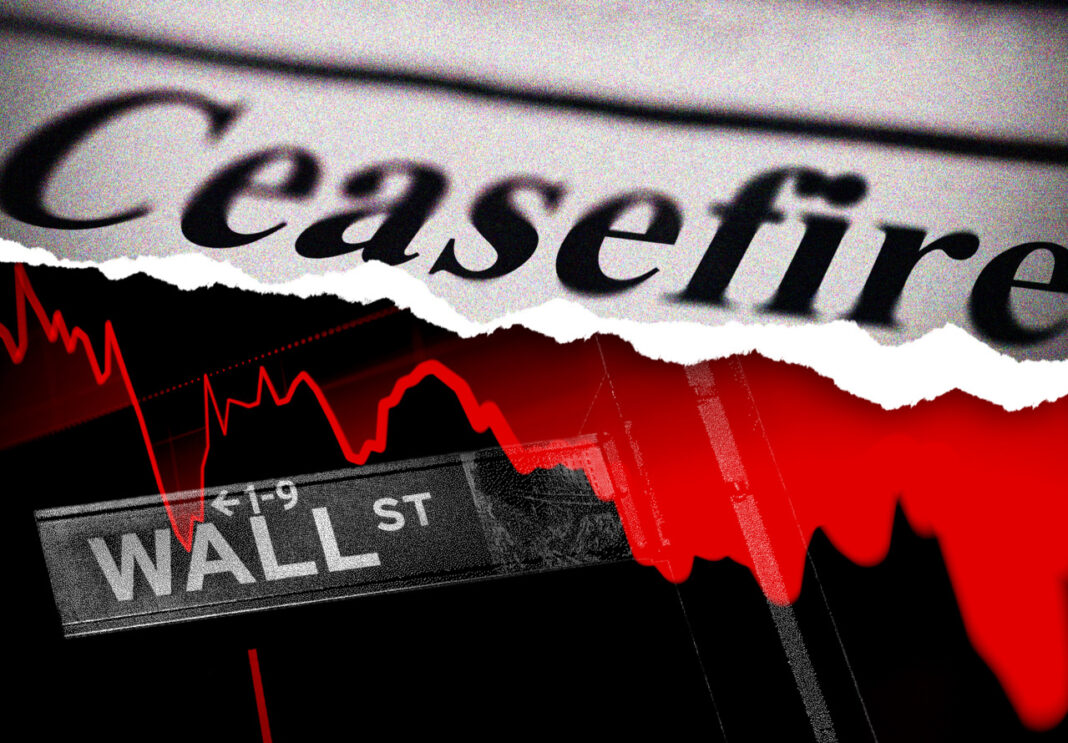
The recent stock market surge, fueled by hopes of a Middle East cease-fire, has left some investors questioning its sustainability. This rapid rally follows a period of significant volatility driven by geopolitical tensions. Many analysts are now examining whether gains have outpaced underlying economic fundamentals.
Market indices climbed sharply on news of a potential truce between Israel and Hamas. This rebound recovered most of the losses incurred during the prior weeks of conflict. The swiftness of the recovery has become a central topic among investment strategists.
Some professionals express caution, noting that geopolitical risks remain elevated despite the tentative agreement. They argue that the rally may have discounted an overly optimistic and stable outcome. The fragile nature of the truce could lead to renewed market instability if it breaks down.
Other analysts point to strong corporate earnings and a resilient U.S. economy as supporting factors. They suggest the rally is not merely speculative but also reflects solid foundational strength. This perspective views the rebound as a justified correction from an oversold condition.
The debate centers on whether current prices accurately reflect ongoing risks. Valuation metrics have become stretched in several sectors following the advance. A period of consolidation or a pullback would not be surprising to many observers.
Investors are advised to maintain a disciplined, long-term strategy amid the uncertainty. Chasing short-term momentum can be perilous when headlines are driving sentiment. Diversification remains a key principle for navigating unpredictable geopolitical events.
The market’s next direction may hinge on the durability of the peace process and incoming economic data. Any escalation in the Middle East would likely trigger immediate volatility. For now, the rally stands as a testament to the market’s quick reaction to shifting geopolitical winds.