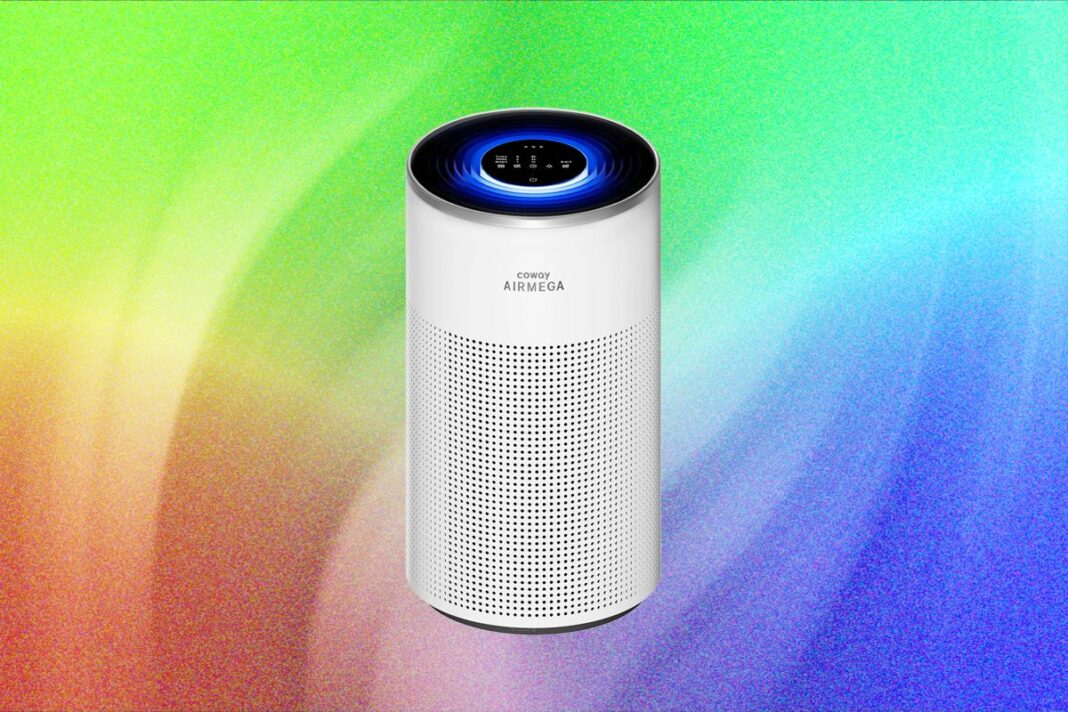
Coway’s latest Airmega Halo air purifier promises cleaner indoor air with minimal noise.
It cleared visible smoke quickly during standard testing.
However, its built-in air-quality readings often conflicted with third-party monitors.
The unit features a sleek, tower-style design that fits easily into most rooms.
A front-facing display shows real-time particulate levels and filter status.
Touch controls are responsive, though the interface takes time to learn.
Coway rates the Halo for rooms up to 1,200 square feet.
It uses a four-stage filtration system, including a HEPA filter and activated carbon.
The fan moves a high volume of air even on lower settings.
Noise levels stay low, measuring around 22 decibels on the quietest mode.
At maximum speed, it produces a noticeable but not disruptive hum.
Sleep mode dims the lights and further reduces fan noise.
The Halo’s sensors struggled with accuracy in smoke and cooking tests.
Readings lagged behind a reference particle counter by several minutes.
In some cases, the display showed “good” air when pollution levels were elevated.
Coway’s app offers remote control and historical air-quality data.
It also sends filter replacement alerts based on usage time, not actual air conditions.
The app works reliably, though setup requires a stable Wi-Fi connection.
Filter replacements cost about $80 per year under typical use.
That is comparable to other purifiers in this price range.
Energy consumption remains low, even during continuous operation.
The Airmega Halo performs well as a physical air cleaner, especially for smoke and dust.
Its unreliable sensor readings and high price temper the overall value.
Buyers who want accurate real-time data may prefer a separate air-quality monitor.