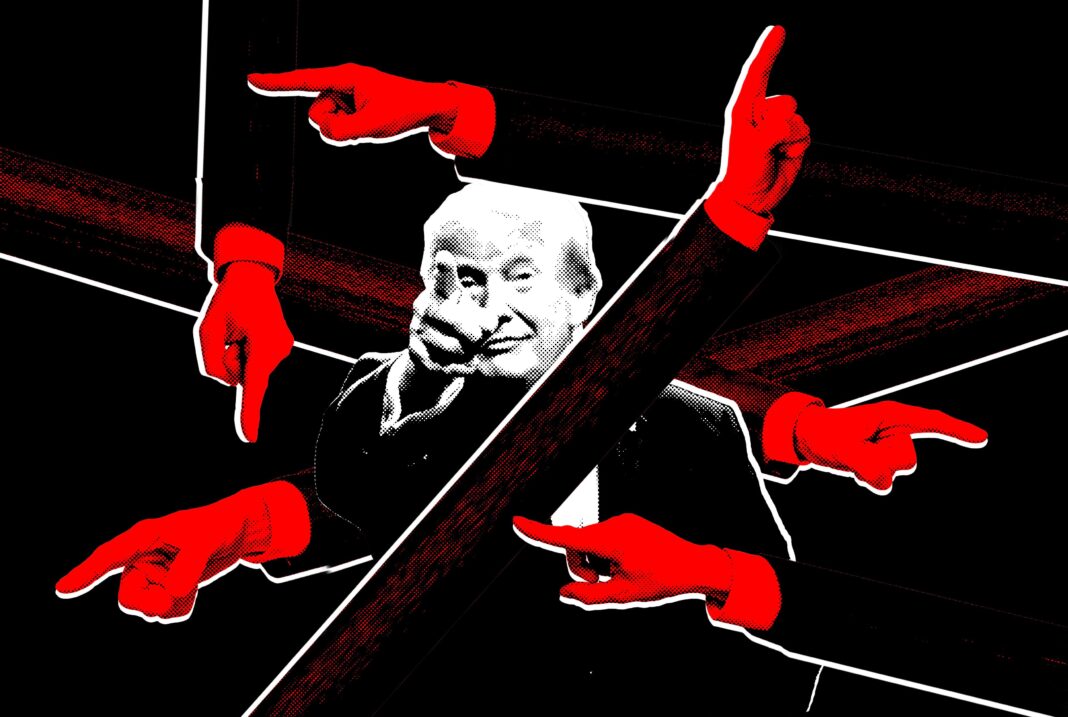
White House officials have begun positioning for potential midterm losses unusually early. A blame game is underway to shape the narrative before votes are cast. The strategy seeks to deflect responsibility away from the president.
Republicans face a difficult electoral map in the upcoming midterms. Party leaders are preparing for the possibility of losing control of Congress. Early messaging suggests a scapegoat may be identified within Republican ranks.
The effort marks a departure from typical political timing. Blame usually follows defeat, not precedes it. This early move signals concern about the party’s prospects.
White House aides have discussed framing losses as the result of factors beyond the president’s control. Internal discussions focus on managing expectations and protecting the president’s standing. The approach aims to limit fallout from unfavorable results.
A scapegoat strategy carries risks. Voters often reject finger-pointing over accountability. The tactic could backfire if seen as evasive.
The blame game reflects broader tensions within the Republican Party. Factions are jockeying for influence ahead of the elections. The White House’s early maneuvering adds another layer to those dynamics.
Midterm elections typically favor the party out of power. The president’s party often loses seats in Congress. This historical pattern looms over current preparations.
The outcome will depend on turnout, economic conditions, and candidate quality. Blame messaging may play a limited role in shaping voter decisions. The White House faces a challenging road ahead regardless of its communication strategy.