
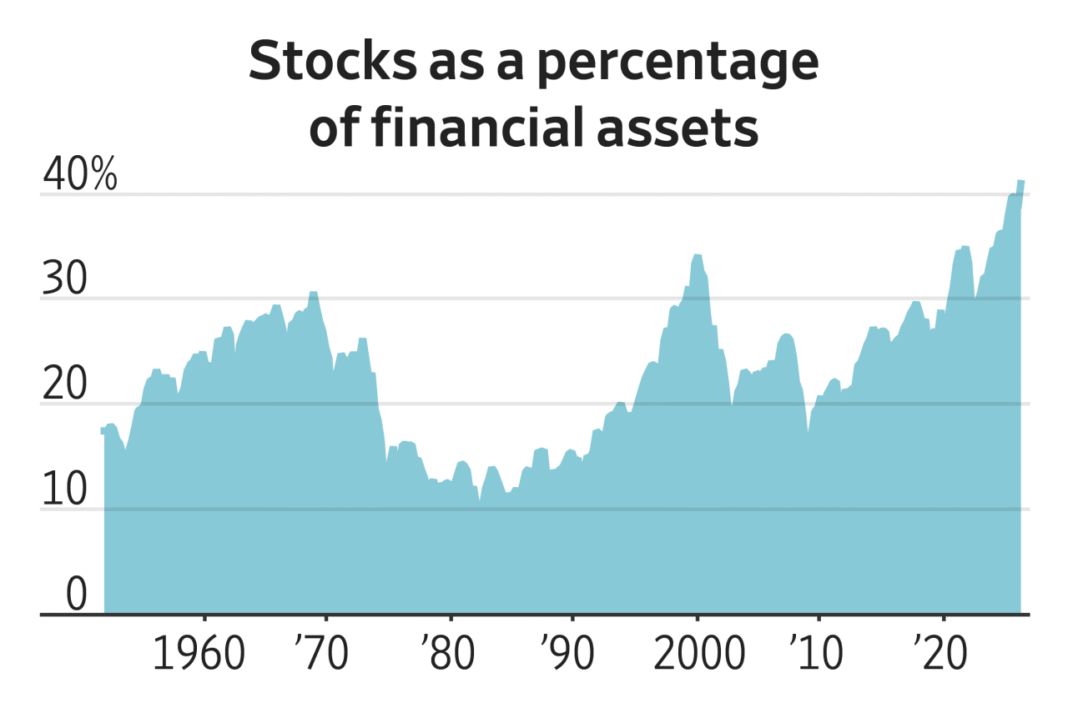
U.S. households now hold more of their wealth in stocks than at any point on record. The shift marks a major change in how Americans save for the future.
A steady wave of money has flowed into U.S. stock funds in recent years. That buying has continued even through a sharp and unsettling market downturn.
Many workers now invest through workplace retirement plans such as 401(k)s. Automatic contributions make stock ownership a default for a growing share of employees.
Low-cost index funds and trading apps have also lowered the barriers to entry. Ordinary savers can now build diversified portfolios with minimal effort and expense.
The trend carries real risks for households. A steep market decline can shrink retirement balances quickly and put near-term goals under pressure.
Financial advisers often point to diversification and long time horizons as basic safeguards. Holding cash reserves can also cushion portfolios when markets turn volatile.
The reach of the stock market into everyday finances appears unlikely to fade. How households manage that exposure will shape their financial security in the years ahead.