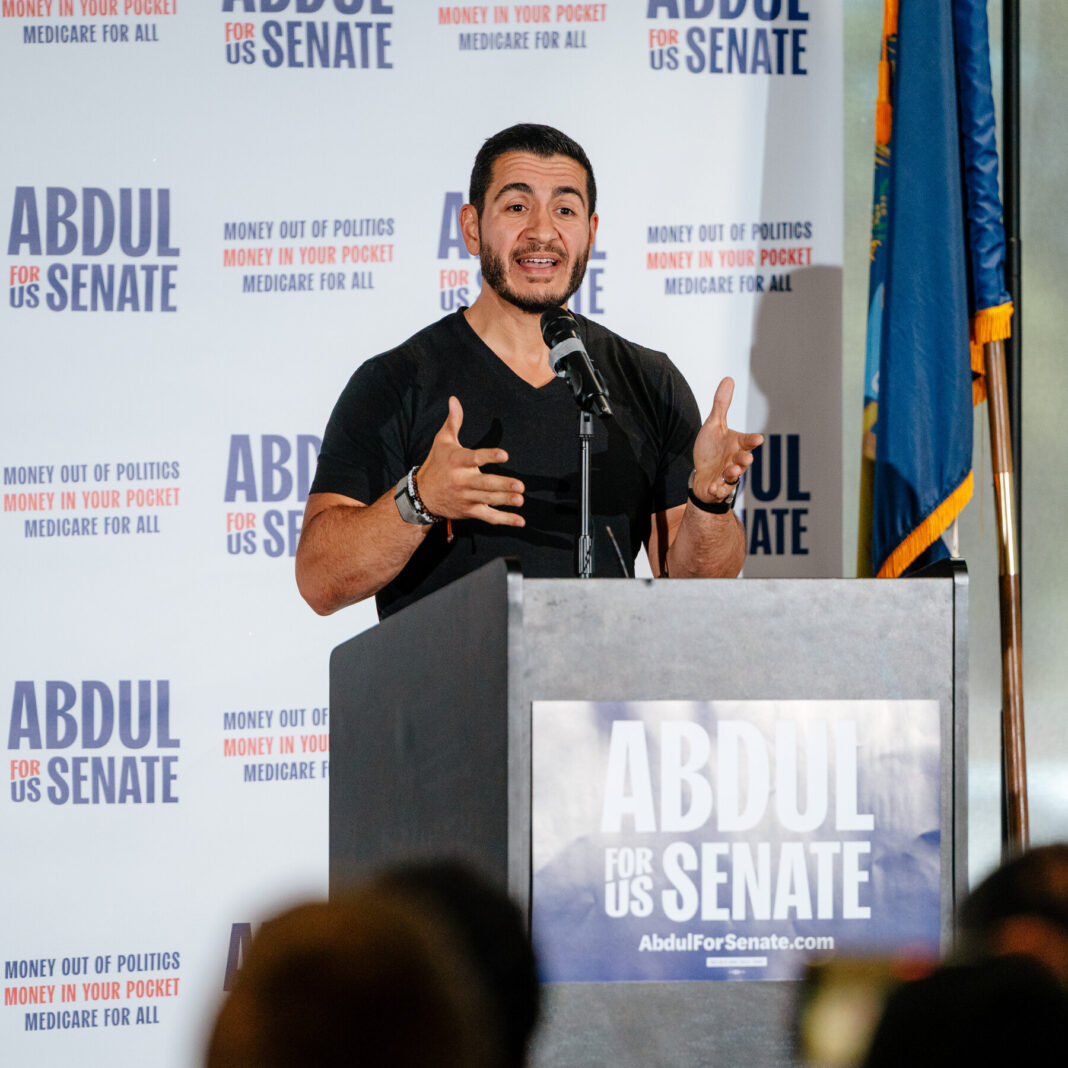
Dr. Abdul El-Sayed, a progressive Democrat running for the U.S. Senate in Michigan, has gained national attention for his sharp criticism of Israel. His campaign has centered on rhetorical strength, a skill that draws both enthusiastic support and sharp backlash.
El-Sayed is a physician and former Detroit city health officer. He became a prominent figure in progressive politics after his 2018 run for Michigan governor. That campaign, though unsuccessful, established him as a rising voice in the party’s left wing.
His current Senate bid focuses on economic inequality, universal healthcare, and foreign policy. El-Sayed argues that U.S. policy toward Israel must shift toward greater accountability. His statements on the matter have generated significant controversy within the state’s political landscape.
Supporters praise his ability to articulate complex issues with clarity and passion. They see him as a candidate who can energize younger voters and communities of color. His rallies often draw large crowds, reflecting a strong grassroots base.
Critics, however, accuse him of using divisive language that alienates Jewish voters and mainstream Democrats. His opponents argue that his approach to foreign policy is too radical for a general election. This tension has become a defining feature of his campaign.
El-Sayed’s medical background informs his policy priorities. He frequently discusses healthcare as a human right and points to his experience managing public health crises. This expertise gives him credibility on issues that resonate with many Michigan voters.
The Senate race in Michigan is expected to be highly competitive. El-Sayed faces several challengers in the Democratic primary, including more moderate candidates. His ability to broaden his appeal beyond the progressive base may determine his success.
Polling shows El-Sayed performing well among younger and urban voters. His support in rural areas remains less certain. He has pledged to travel extensively across the state to make his case directly to voters.
As the primary approaches, his campaign continues to draw intense media scrutiny. Both his policy positions and his public speaking style remain central to the debate. The outcome will test whether his brand of progressivism can win in a key battleground state.