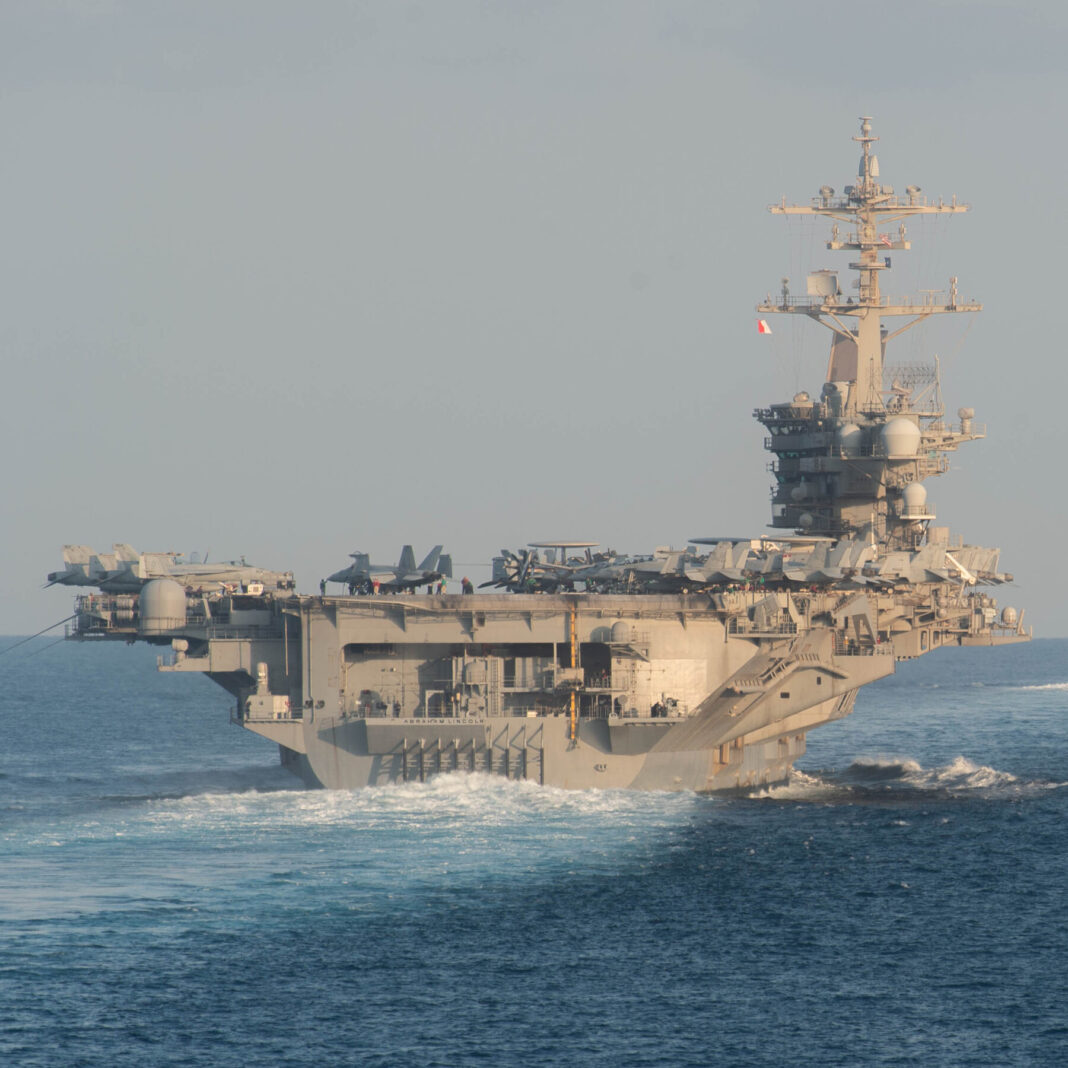
Admiral Brad Cooper, head of U.S. Central Command, praised the crew of the U.S.S. Lincoln after a visit to the carrier. He acknowledged the strain of a deployment that has now stretched nearly nine months. The admiral conceded the mission has been tough on sailors.
Cooper noted that despite the extended time at sea, the ship’s reported mental health issues are lower than on other vessels. He attributed this to strong leadership and unit cohesion among the crew. The admiral did not provide specific figures to support the comparison.
The visit comes amid heightened tensions in the region, with the carrier serving as a key deterrent force. The ship has been operating continuously without a port call during its current patrol. Sailors have faced harsh conditions, including high temperatures and extended watch schedules.
Cooper spent time on the flight deck and in engineering spaces, speaking directly with junior enlisted personnel. He acknowledged that the lack of liberty ports has added to the challenge. However, he emphasized that the crew’s morale remains high overall.
The admiral’s comments mark a rare public admission of the human cost of extended deployments. Military officials typically highlight readiness and capability over hardship. Cooper’s remarks suggest a shift toward more transparent communication about service member welfare.
The U.S.S. Lincoln’s deployment has been extended twice due to regional threats. No new return date has been announced. As of now, the carrier and its strike group remain on station, with no immediate relief planned.
Cooper’s visit signals that senior leadership is closely monitoring the situation. The focus remains on both operational success and the long-term health of the force. The crew continues its mission with no signs of reduced readiness.