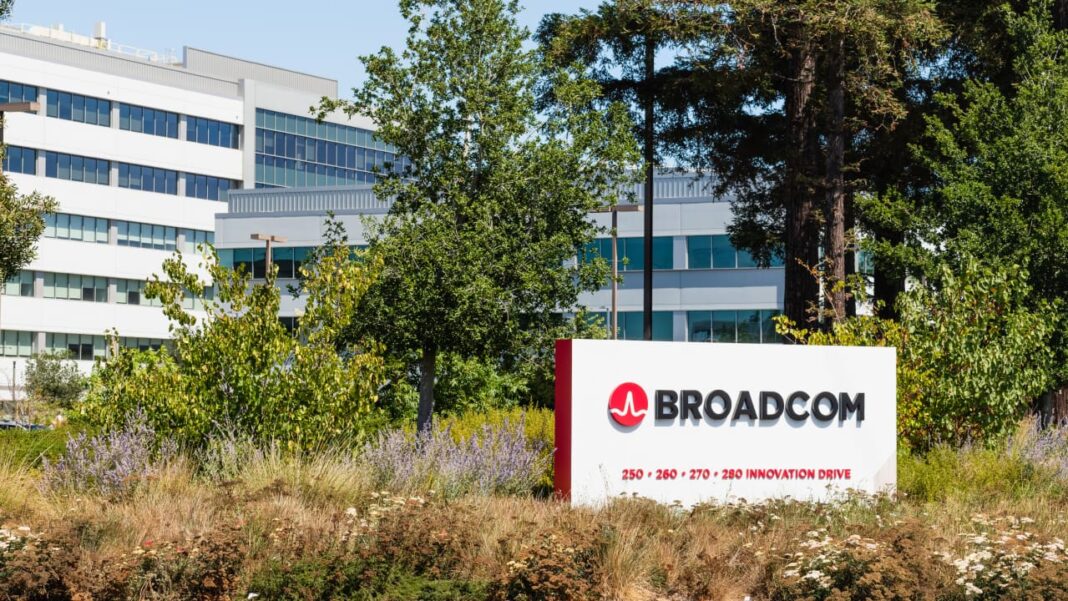
Broadcom’s stock declined in after-hours trading despite the company reporting quarterly results that beat analyst expectations. The muted response extends a challenging period for investors who have watched the shares struggle to maintain upward momentum.
The semiconductor giant delivered stronger-than-anticipated revenue and profit figures for its most recent quarter. Management also provided guidance that aligned with or exceeded consensus estimates. However, the positive financial metrics failed to generate the market enthusiasm often seen after such announcements.
Investors have grown increasingly cautious about the stock’s valuation following a substantial run-up over the past year. Concerns about customer concentration and the pace of AI-related spending have weighed on sentiment. These factors appear to have overshadowed the operational improvements highlighted in the earnings report.
Broadcom’s management pointed to robust demand across its infrastructure software and custom chip segments during the earnings call. Executives emphasized continued growth in orders tied to artificial intelligence data center deployments. Yet, analysts noted that some of this optimism may already be priced into the current share level.
The stock’s recent trajectory reflects a broader pattern of volatility across the tech sector. Even companies reporting solid fundamentals have faced selling pressure as investors rotate toward other opportunities. Broadcom’s situation illustrates the delicate balance between strong execution and market expectations.
Trading volumes spiked following the earnings release, indicating active repositioning by institutional shareholders. Some market participants viewed the pullback as a potential buying opportunity, while others remained wary of further downside. The mixed reactions underscore the uncertainty surrounding near-term price movements as earnings season continues.
This latest dip adds another layer of complexity for Broadcom’s investor base. The company’s long-term outlook remains supported by secular trends in networking and semiconductor design. Still, bridging the gap between financial performance and stock price appreciation may require sustained evidence of growth acceleration in coming quarters.