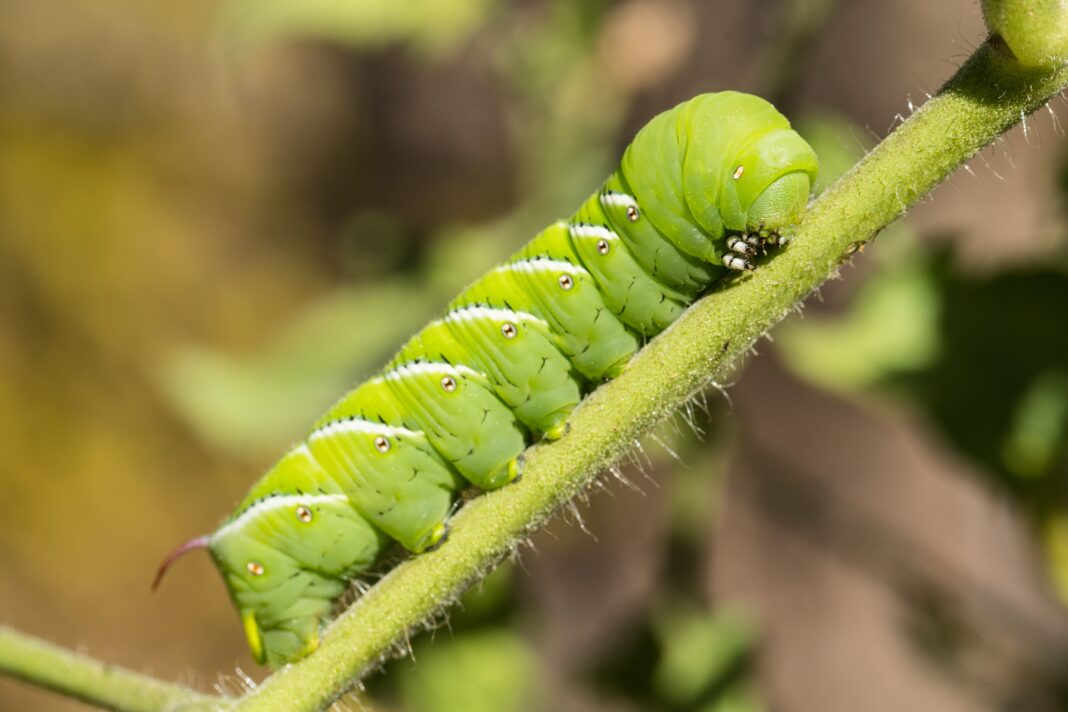
Scientists placed caterpillars inside an ultraquiet chamber to investigate how the insects detect sound without conventional ears. The study aims to unravel a biological mystery that has puzzled researchers for years. Caterpillars lack the auditory structures found in many other animals, yet they respond to vibrations and noises in their environment. The experiment used specialized equipment to isolate and measure the insects’ reactions under controlled conditions.
The chamber was designed to eliminate external noise, allowing researchers to focus solely on the caterpillars’ behavior. Inside this silent environment, the team exposed the insects to precise sound frequencies and observed their responses. The findings suggest that caterpillars rely on sensory hairs or other body parts to perceive acoustic signals. These mechanisms appear to function differently from the ear-based hearing systems seen in vertebrates and many insects.
Understanding how caterpillars hear without ears could have practical applications beyond the realm of entomology. The research may inform the design of more sensitive and efficient microphones. By mimicking the biological processes found in caterpillars, engineers could develop devices capable of detecting sound in unconventional ways. This would be particularly useful in environments where traditional microphones struggle to perform.
The study also sheds light on the evolutionary paths that lead to hearing capabilities. Caterpillars represent an early stage in the life cycle of moths and butterflies, which do possess ears in their adult forms. Comparing the hearing mechanisms across these life stages could reveal how auditory systems develop over time. This knowledge might help scientists trace the origins of hearing in the animal kingdom.
Researchers emphasize that the work is still in its early stages, with many questions remaining unanswered. They plan to conduct further experiments to identify the exact sensory structures involved in caterpillar hearing. Future studies will also explore how these insects use sound in their natural habitats, where predators and environmental conditions play a role.
The implications of the research extend to fields like robotics and sensor technology. Creating artificial systems that replicate caterpillar hearing could lead to innovations in sound detection. These systems might be used in medical devices, environmental monitoring, or even search-and-rescue operations where picking up faint sounds is critical.
The team behind the study hopes their findings will encourage other scientists to investigate hearing mechanisms in other overlooked species. Many animals likely possess unique ways of perceiving sound that remain undiscovered. By broadening the scope of auditory research, the scientific community could unlock new possibilities for technology and biology alike.
For now, the caterpillars have provided a fascinating glimpse into an alternative form of hearing. Their simple yet effective approach to sensing the world offers a reminder that nature often finds solutions beyond human design. The research stands as a testament to the value of studying even the smallest creatures.