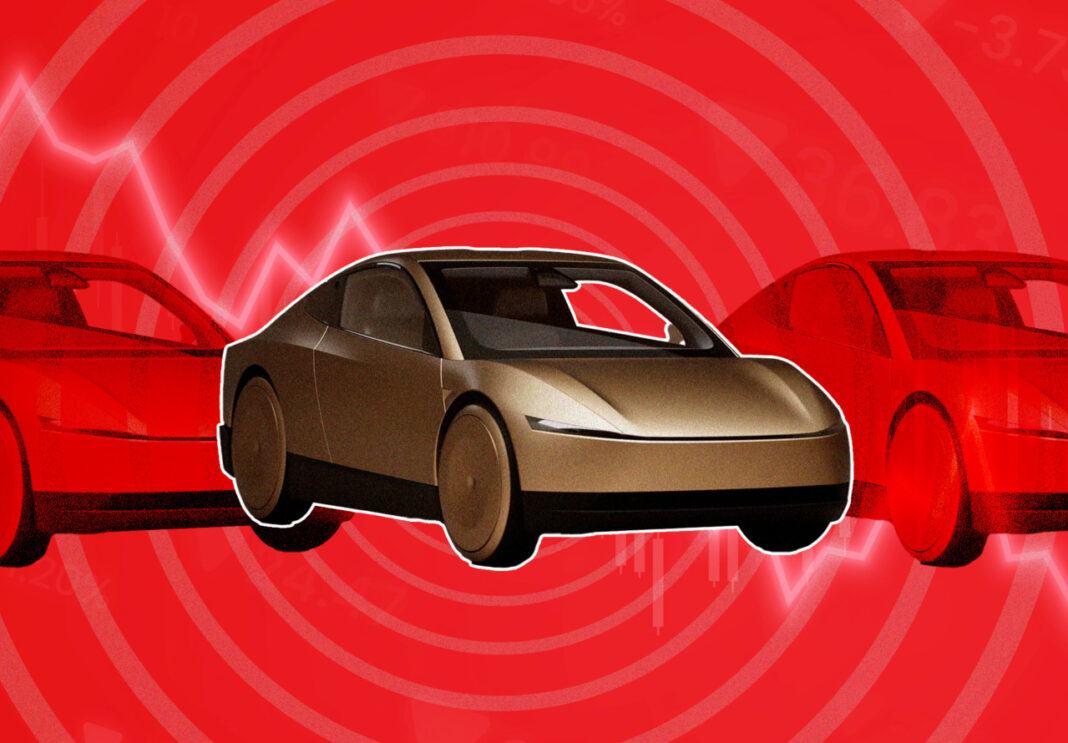
Tesla’s stock declined after the company’s Cybercab launch failed to meet investor expectations. The rollout will not be as extensive as some had anticipated. Shares moved lower as the market absorbed the details of the event.
The company unveiled its robotaxi during a highly anticipated presentation. However, the announcement lacked specifics on production timelines and regulatory approvals. Investors were hoping for a clearer path to commercialization.
Tesla’s approach to the Cybercab differs from earlier projections. The initial rollout will target limited markets rather than a broad national launch. This narrower scope is a key factor behind the market’s reaction.
Analysts noted that the event highlighted competitive pressures in the autonomous vehicle sector. Rivals have already deployed similar services in multiple cities. Tesla’s delayed and restricted entry could impact its competitive standing.
The stock drop reflects broader concerns about the company’s growth strategy. Tesla has leaned heavily on its AI and robotics narrative to support valuation. The Cybercab launch was seen as a critical test of that story.
Management emphasized safety and regulatory compliance as reasons for the cautious approach. They pointed to the need for incremental testing before scaling operations. This stance, while prudent, may frustrate investors seeking faster progress.
The market’s response suggests a gap between Tesla’s vision and its execution. The company remains a leader in electric vehicles, but its autonomous ambitions face real-world hurdles. Short-term volatility is likely as more details emerge.
Future announcements will need to provide concrete milestones. Investors will watch for data on ride-hailing partnerships and manufacturing capacity. Clarity on those fronts could stabilize sentiment.
For now, the Cybercab’s debut lands with less force than hoped. The stock’s movement underscores the high stakes attached to Tesla’s next chapter. The coming months will reveal whether the company can close that gap.