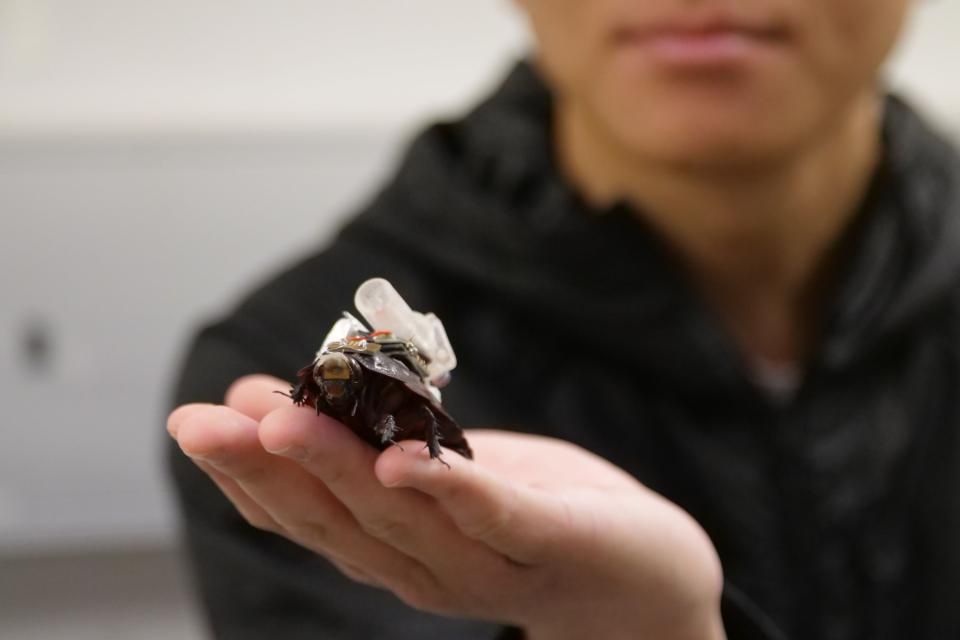
Researchers have developed remote-controlled cyborg cockroaches equipped with cameras and drug-delivery systems. The insects carry implanted electrodes that allow operators to steer their movements. A tiny injection device can release medication on command. The goal is to deploy these hybrids in disaster zones where human access is dangerous or impossible.
The technology builds on previous work with insect biobots. Scientists attach lightweight components to the roaches’ backs without hindering their natural mobility. Electrodes inserted into the antennae or nervous system send signals that guide direction. Video feeds help rescuers assess rubble or collapsed structures in real time.
Medical delivery is a growing focus. The onboard injector holds a small dose of antidote, vaccine, or other treatment. Operators can trigger release remotely when the roach reaches a trapped victim. This approach could provide critical care in the first hours after an earthquake or explosion.
Early trials show promise in controlled environments. Roaches can navigate uneven terrain and squeeze through tight spaces. Their resilience to harsh conditions makes them suitable for search missions. Researchers continue to refine battery life and payload capacity to extend operational range.
Ethical questions remain about using live animals in this way. Scientists emphasize the potential benefits outweigh the discomfort caused. The roaches experience minimal pain due to their simple nervous systems. Animal welfare protocols guide the implantation process.
Funding for this research comes from military and civilian agencies. The technology aims to complement rather than replace human responders and trained dogs. Drones and robots still face power and design limits in confined areas.
The project is still years away from real-world deployment. Researchers must shrink components further and improve control accuracy. Weatherproofing and data transmission also need field testing. Nonetheless, early results demonstrate a viable path toward lifesaving insect-machine hybrids.
Public interest is growing in biobotic solutions for emergencies. Future iterations could include sensors for toxic gases or heat detection. Each advancement moves closer to practical use in natural disasters and industrial accidents.