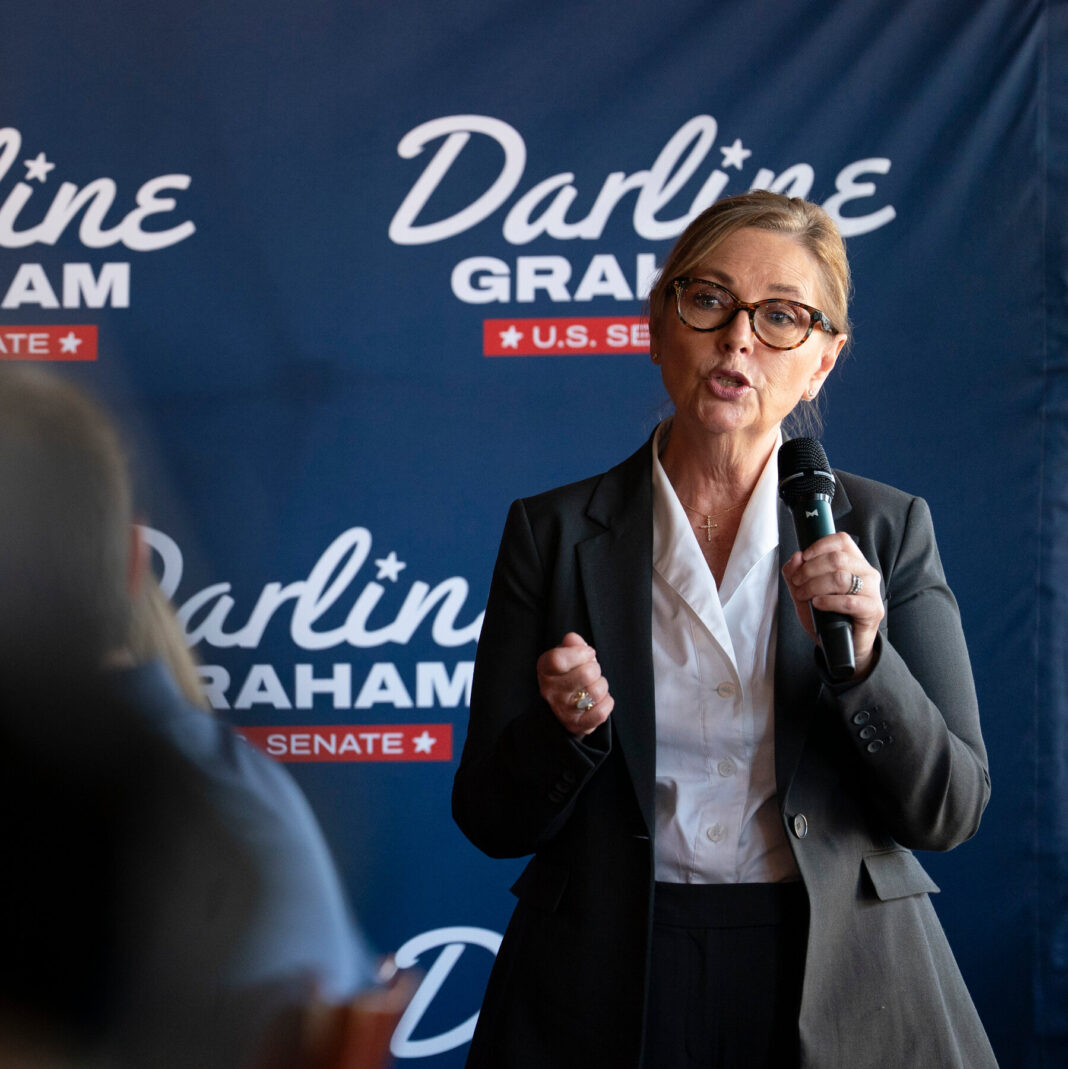
Senator Darline Graham has built her campaign for South Carolina’s open Senate seat around the claim that her lack of political experience is an asset. That argument faced a significant test this week after a shaky performance in a televised debate raised questions among her supporters about her readiness for the office.
The debate, held Tuesday evening in Columbia, marked the first time the political newcomer faced direct scrutiny from opponents on a live stage. Graham, who is seeking to succeed her brother, Senator Lindsey Graham, struggled at several points to articulate specific policy positions on trade and federal spending.
Her most notable stumble came when she was asked to explain her stance on agricultural subsidies, a critical issue for South Carolina’s farming communities. Graham paused for nearly ten seconds before offering a vague response that criticized Washington bureaucracy without detailing a clear plan. The moment quickly circulated on social media, drawing sharp reactions from both allies and critics.
Supporters who have championed her outsider status acknowledged the performance was not ideal. Several county-level Republican organizers said they still back her candidacy but expressed concern that her inexperience could become a liability in a general election. One adviser, speaking on condition of anonymity, described the debate as a “learning moment” for the campaign.
Graham’s team pushed back against the criticism in a statement released Wednesday. The campaign argued that her opponents relied on rehearsed talking points, while Graham offered authentic, unscripted answers that reflected her business background. They pointed to her closing remarks, where she emphasized the need for fresh perspectives in Washington.
Political analysts note that South Carolina voters have historically favored seasoned politicians over newcomers in statewide races. However, recent trends show a growing appetite for candidates who reject traditional political careers, particularly in Republican primaries. The debate misstep may test whether that appetite extends to Graham specifically.
The senator’s brother, Lindsey Graham, has not publicly commented on the debate. He has endorsed her candidacy but has kept a low profile in the campaign, citing a desire to avoid overshadowing her message. His absence from the trail has left some voters questioning how much organizational support she can rely on.
Graham will have another opportunity to reset the narrative at a forum scheduled for next month in Greenville. Campaign staff said she plans to release a detailed agricultural policy paper before that event, aiming to preempt further criticism. Whether that strategy will reassure donors and voters remains uncertain.
For now, the race remains competitive, with Graham holding a slight lead in recent polls despite the debate setback. Her supporters argue that one misstep does not define a campaign, while her opponents see it as evidence that she is not prepared for the demands of the Senate. The coming weeks will reveal which view prevails among South Carolina’s electorate.