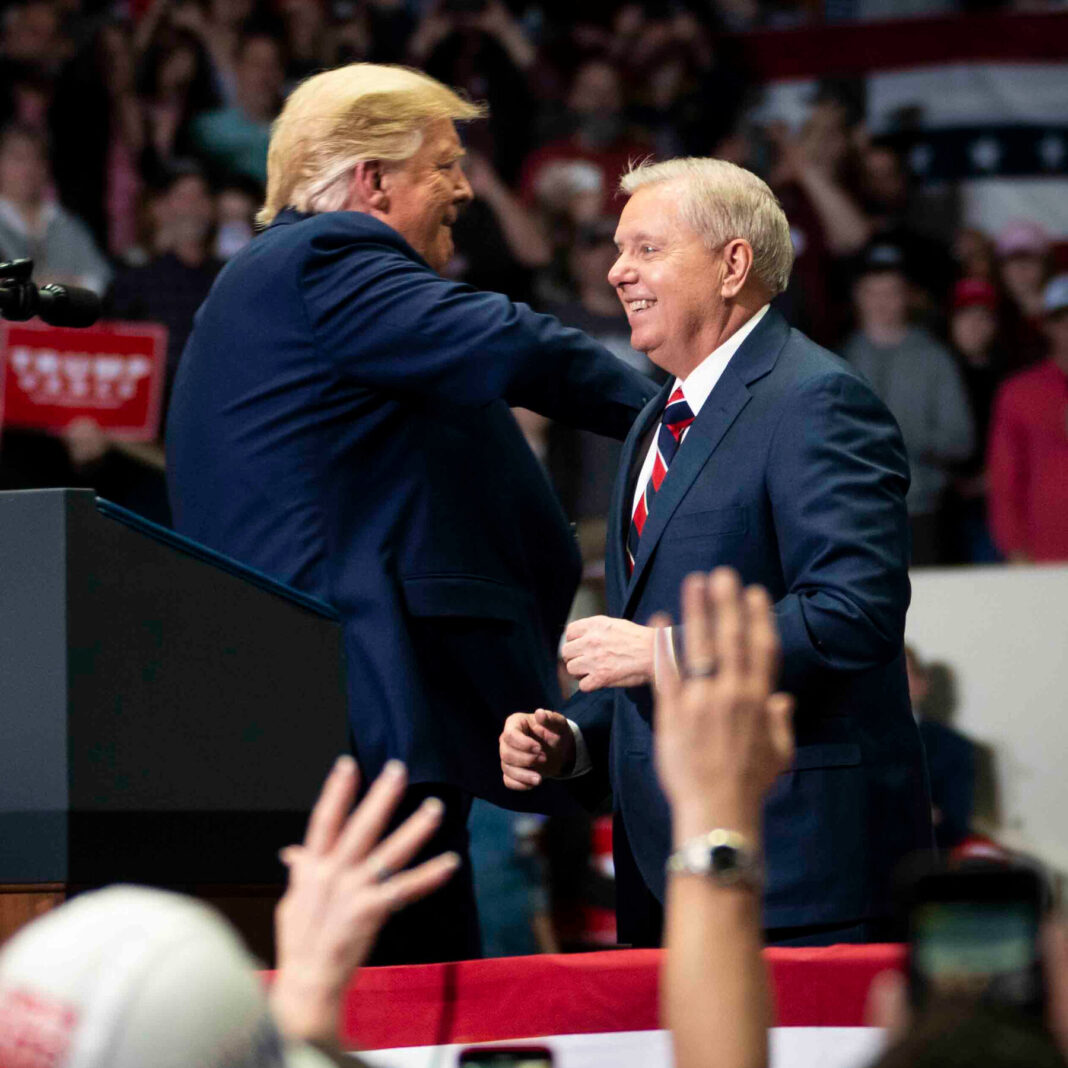
Senator Lindsey Graham’s political transformation defined his enduring influence. He began as a sharp critic of Donald Trump during the 2016 Republican primaries. Graham called Trump a “race-baiting, xenophobic religious bigot” at the time. The two politicians later forged a powerful alliance.
Graham’s shift was not simply ideological but strategic. He recognized Trump’s grip on the Republican base and adapted accordingly. The South Carolina senator became one of Trump’s most vocal defenders in Congress. This move secured his place within the party’s inner circle.
The alliance allowed Graham to remain a key power player. He gained direct access to the White House and influence over judicial nominations. His role on the Senate Judiciary Committee grew significantly. Graham also became a regular golf partner with the president.
Critics viewed the relationship as a complete abandonment of principles. Supporters argued it was pragmatism in a divided political landscape. Graham himself described the bond as a working friendship. He claimed it helped him advance conservative priorities.
The partnership faced significant tests during Trump’s presidency. Graham initially resisted Trump’s efforts to overturn the 2020 election results. He later softened his stance, supporting key procedural challenges. This flexibility allowed him to maintain relevance with both Trump and traditional Republicans.
Graham’s journey highlights the shifting dynamics of modern American politics. Personal loyalty often outweighs ideological consistency in this new landscape. The senator’s ability to navigate these tensions proved essential. It kept him influential even as the party transformed.
The story offers a clear lesson in political survival. Adapting to the dominant force in your party can preserve power. For Graham, the path from critic to ally was a calculated gamble. It ultimately secured his role as a lasting power player.