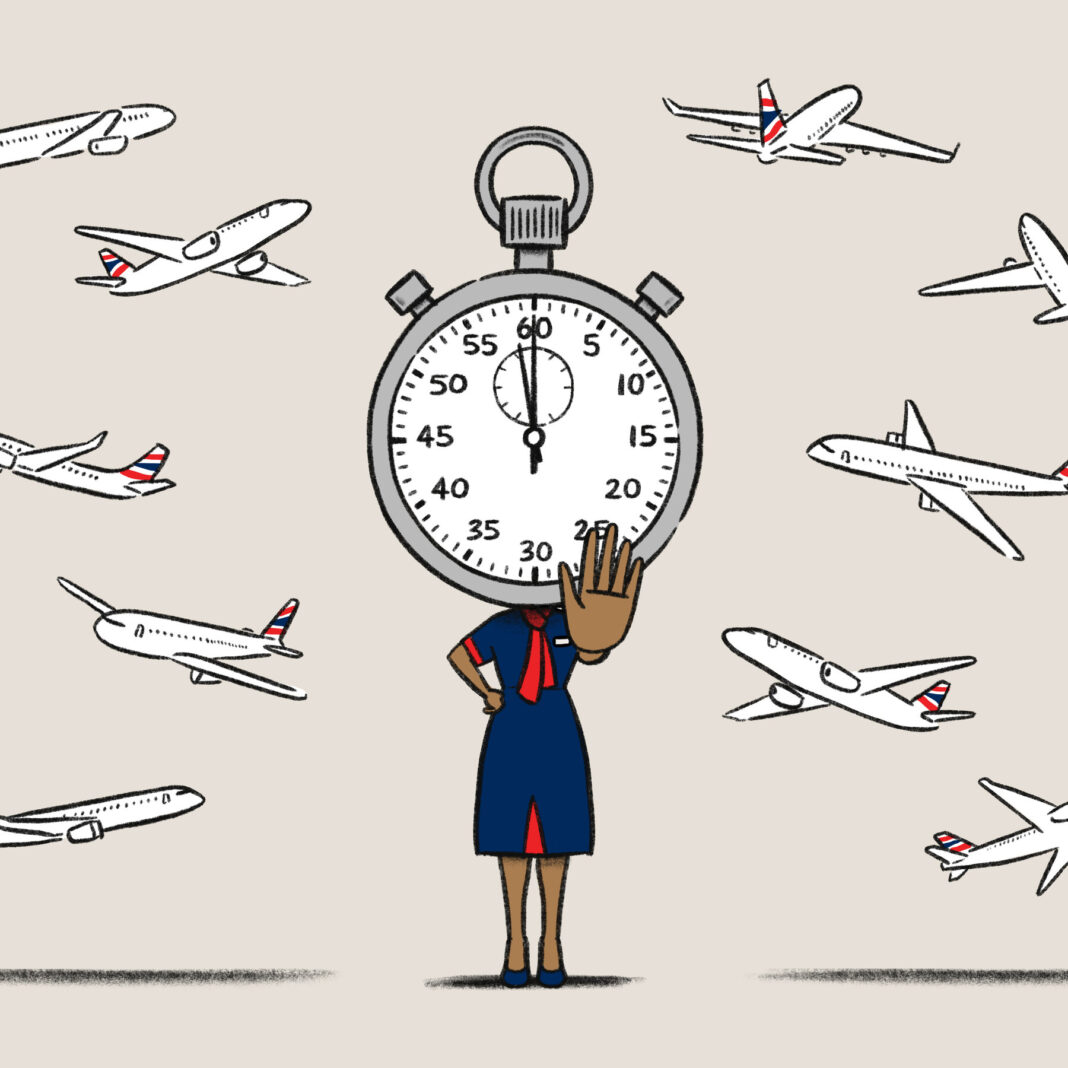
A California couple sprinted through Heathrow Airport to catch their connecting flight, arriving at the gate just minutes before departure. They expected to board without issue. Instead, British Airways had already reassigned their seats to other passengers.
The couple had timed their connection carefully, landing from a transatlantic flight and racing to the next gate. By the time they arrived, the gate agents informed them their seats were gone. The airline had released the seats because the couple had not physically checked in for the second leg.
Airline policies vary on when a seat can be given away after a missed check-in or late arrival. Most carriers require passengers to be present at the gate a specific number of minutes before departure. In this case, the couple met that deadline, but the system had already marked them as no-shows.
The travelers argued they were on time, but the gate crew followed standard procedure. The incident highlights a common frustration for flyers on tight connections. Even a few seconds of delay can trigger automated seat release protocols.
British Airways later acknowledged the misunderstanding but did not offer compensation. The couple had to book new seats on a later flight, at their own expense. The experience underscores the importance of confirming gate status immediately after landing.
Travelers facing similar situations should approach the gate agent before the flight closes. Double-checking boarding status on the airline app can also prevent premature seat reassignment. Quick action is essential when a connection is tight.
Automated systems now handle many boarding processes, leaving little room for human discretion. This case serves as a reminder to remain vigilant through every step of a connecting journey. Patience and proactive communication can save time and money.