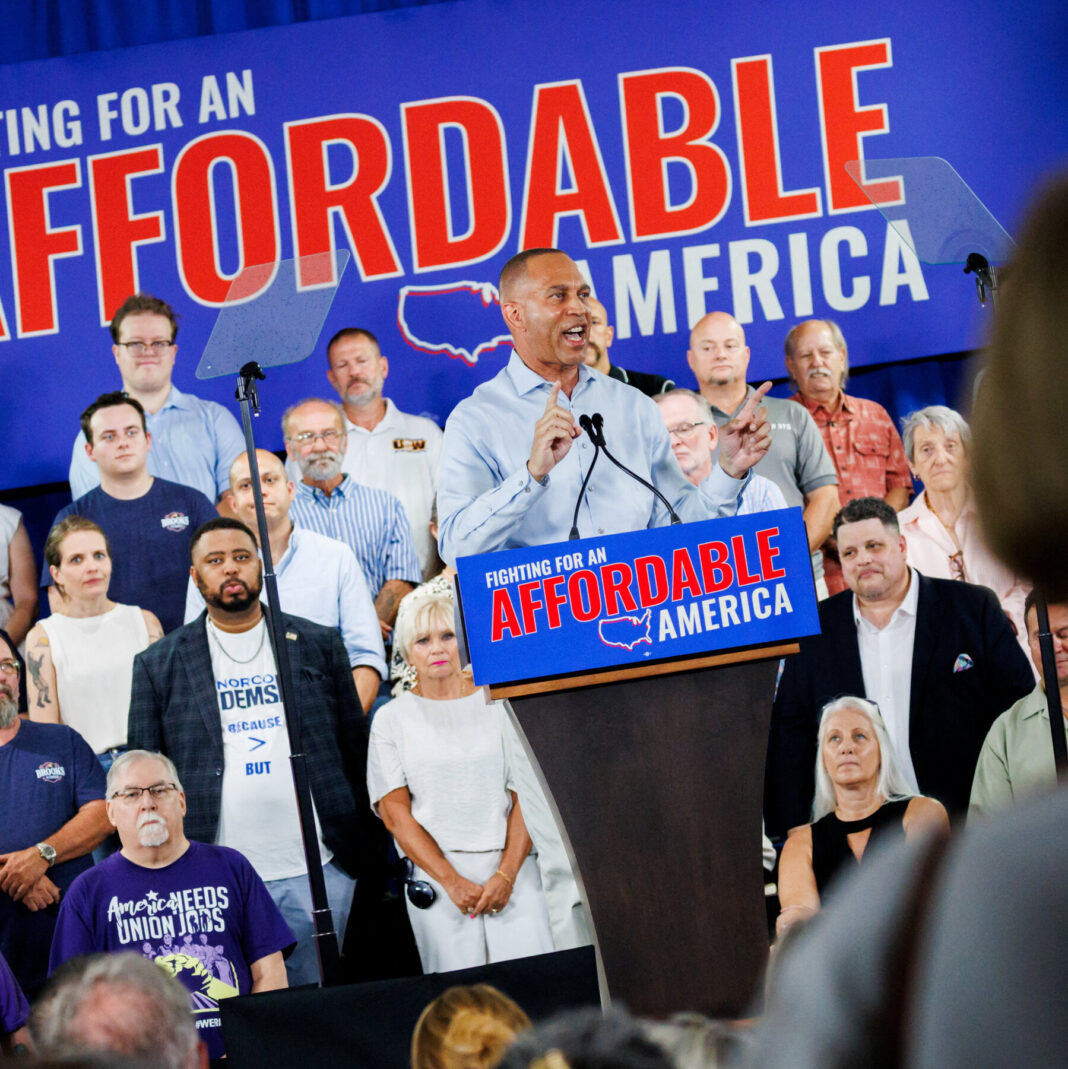
Representative Hakeem Jeffries, the New York Democrat and minority leader, launched the midterm campaign season with a sharp focus on economic concerns. Speaking in a competitive swing district, he centered his message entirely on affordability. The event marked an early push to frame the coming election around kitchen-table issues.
Jeffries avoided broader political themes, instead zeroing in on rising costs for everyday Americans. He highlighted the gap between corporate profits and stagnant wages for working families. The speech was part of a broader Democratic strategy to reclaim voter trust on the economy.
The minority leader pointed to specific policy proposals aimed at lowering expenses. He called for reducing prescription drug prices and capping rent increases. These targeted measures are designed to resonate with voters feeling squeezed by inflation.
The choice of a swing district for the launch was intentional. These areas often decide control of the House, and Democrats need to win back moderate voters. Jeffries’s message sought to bridge the divide between progressive goals and practical economic relief.
Republicans have long held an advantage on economic messaging. Jeffries aimed to flip that narrative by focusing on corporate greed and market consolidation. He argued that Democrats offer a more direct path to reducing household burdens.
The event did not address cultural or social issues that often dominate national debates. Instead, it kept a tight focus on costs, wages, and competition. This disciplined approach signals a shift toward a more pragmatic campaign playbook.
Jeffries’s pitch also included a call to strengthen supply chains and reduce dependency on foreign goods. These elements were framed as both economic security and job creation measures. The goal is to present a comprehensive plan without overwhelming voters.
The midterm sprint has begun with affordability as the central theme. Jeffries and other Democratic leaders will likely repeat this message across the country. Success may depend on whether voters see concrete solutions in their daily lives.