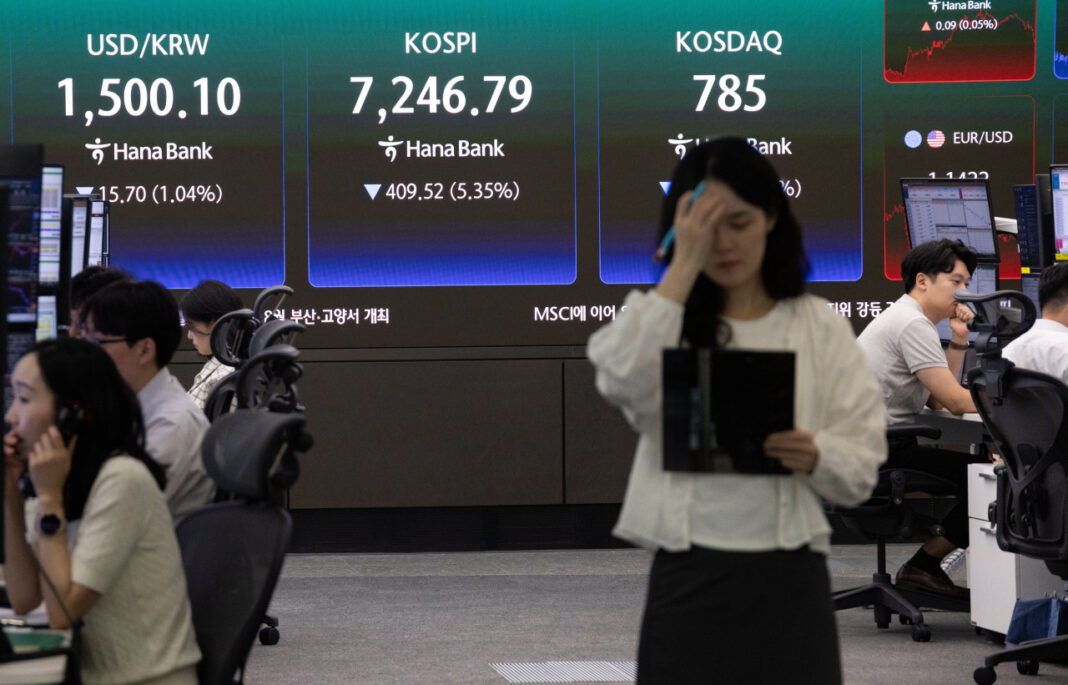
South Korea’s Kospi index has entered a prolonged downturn, erasing $2.5 trillion in market value. The decline has hit investors who had wagered heavily on the artificial intelligence boom. What was once considered the world’s most dynamic stock market has now become a source of financial anxiety.
The index has been sliding for months, with no single crash event but a steady erosion of confidence. Technology shares, particularly those tied to AI hardware and semiconductors, have led the losses. Early enthusiasm for AI-driven growth has given way to concerns about overvaluation and delayed returns.
Domestic retail investors, who poured record amounts into the market during the rally, have borne the brunt of the reversal. Many borrowed money to amplify their bets, leaving them exposed as share prices tumbled. Foreign investors have also retreated, reducing their holdings in South Korean equities.
The rout reflects a broader reassessment of AI-related companies across global markets. South Korea’s heavy concentration in memory chips and electronics made it especially vulnerable. Companies like Samsung Electronics and SK Hynix, which fueled the initial surge, have seen sharp declines in their stock prices.
Economic fundamentals have added to the pressure. Weak export data and a slowdown in China, a key trading partner, have dampened corporate earnings outlooks. The local currency’s depreciation has further unsettled international investors, making repatriated returns less attractive.
Market analysts point to structural issues as well. South Korea’s stock market has long suffered from poor corporate governance and low shareholder returns. The current downturn may accelerate calls for reform, though change is likely to be slow and incremental.
The government has announced measures to stabilize the market, including plans to expand a corporate value-up program. These steps aim to boost dividend payouts and improve transparency. So far, investor response has been tepid, with many awaiting concrete results rather than policy promises.
For now, the Kospi remains under pressure, and the path to recovery is unclear. The market’s future depends on whether AI demand reaccelerates or if global economic conditions deteriorate further. Until then, investors face continued volatility and uncertainty.