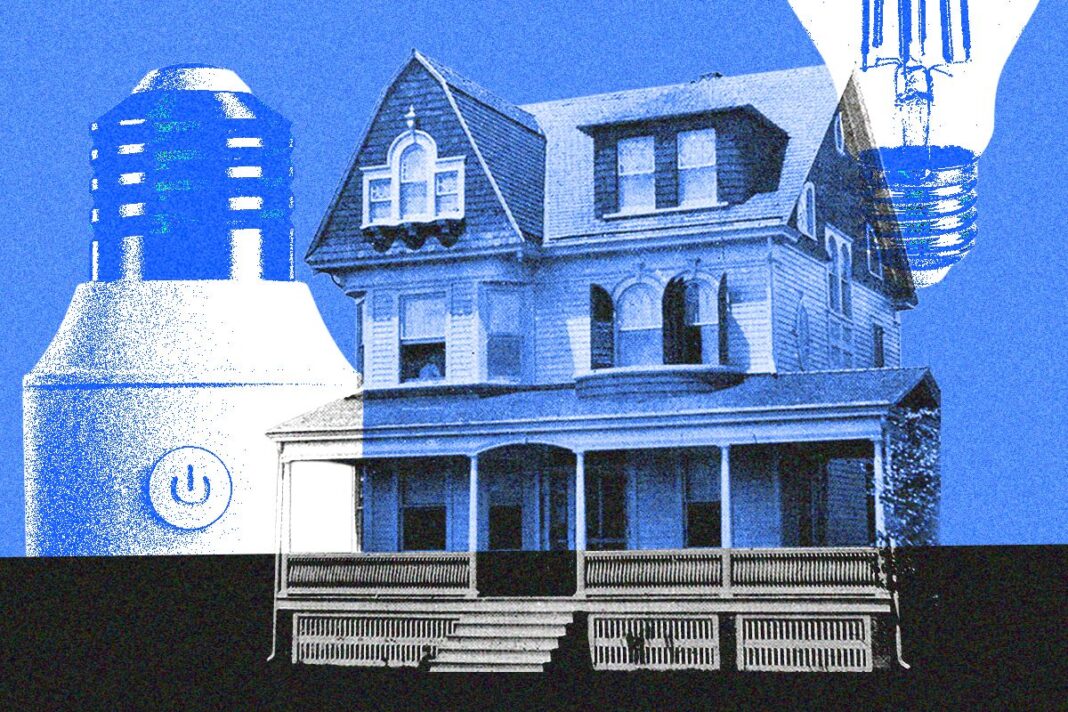
Restoring a 1907 home requires a careful balance between modern convenience and historical preservation. Homeowners often face the challenge of integrating new technology without compromising the architectural integrity of a century-old structure. The goal is to enhance livability while maintaining the home’s original character.
Smart locks offer a practical entry point for upgrading a vintage residence. These devices replace traditional hardware without requiring significant alterations to existing doors. Installation is straightforward, and the aesthetic impact remains minimal when choosing period-appropriate finishes.
Lighting control systems provide another layer of modern functionality in older homes. Wireless dimmers and smart bulbs can be added to existing fixtures, bypassing the need for extensive rewiring. This approach preserves original light fixtures while offering automated scheduling and remote operation.
Climate management presents a more complex challenge in older structures. The lack of modern insulation and ductwork often complicates the installation of standard smart thermostats. However, sensor-based systems can monitor room-by-room conditions to optimize the performance of existing heating and cooling units.
Power outlets and charging stations are often overlooked in historic renovations. Modern adapters and plug-in modules can update dated receptacles without changing their visible faceplates. These simple swaps deliver contemporary convenience while keeping the vintage look intact.
Home security systems have also evolved to suit older properties. Wireless cameras and motion detectors can be mounted discreetly, avoiding damage to original woodwork and plaster walls. Battery-operated options eliminate the need for invasive wiring projects.
Entertainment and connectivity are essential for daily life in any era. Mesh Wi-Fi systems and streaming devices can be hidden in closets or cabinets, ensuring strong signals without cluttering historic rooms. Cable management solutions keep wires out of sight, preserving clean sightlines.
The key to success lies in prioritizing reversible upgrades. Any modification should be removable without permanent damage to the home’s fabric. Adhesive mounts and plug-in devices are preferable to drilled holes and hardwired systems.
Maintenance routines also shift when blending old and new. Regular checks on both the structural elements and the tech devices ensure everything functions smoothly. Some older systems may require professional oversight to remain compatible with modern controls.
Budget considerations matter just as much as aesthetic ones. Prioritizing essential upgrades first, such as security and climate control, allows homeowners to phase in other smart features over time. This approach avoids overwhelming initial costs.
Ultimately, a smart historic home succeeds when the technology becomes invisible. The original charm of the architecture should remain the centerpiece, with modern systems working quietly in the background. This philosophy allows the home to serve current needs while respecting its storied past.